You’re probably already aware that SEO, or “search engine optimization,” is one of the most efficient and affordable ways to boost your website’s visibility and attract more visitors. But did you know there are two distinct types of SEO?
When most people refer to SEO, they’re talking about optimizing a website as a whole, which involves both on-page and off-page SEO. These strategies encompass a wide range of actions you can take to increase a site’s authority and improve its chances of ranking well in search results. However, if your website is brand new, or you’re struggling to rank for your target keywords, you may want to focus specifically on one type: on-page SEO.
On-page SEO is everything you do within your own website to enhance its ranking and performance in search engine results pages (SERPs). It differs from off-page SEO, which involves efforts on other websites to improve your site’s ranking.
Examples of on-page SEO include:
- Crafting keyword-rich content
- Writing optimized titles, headings, and subheadings
- Adding sitemaps
- Creating 301 redirects for deleted content
- Structuring URLs with keywords
- Adding alt text for images
- Regularly publishing fresh content
- Optimizing site speed
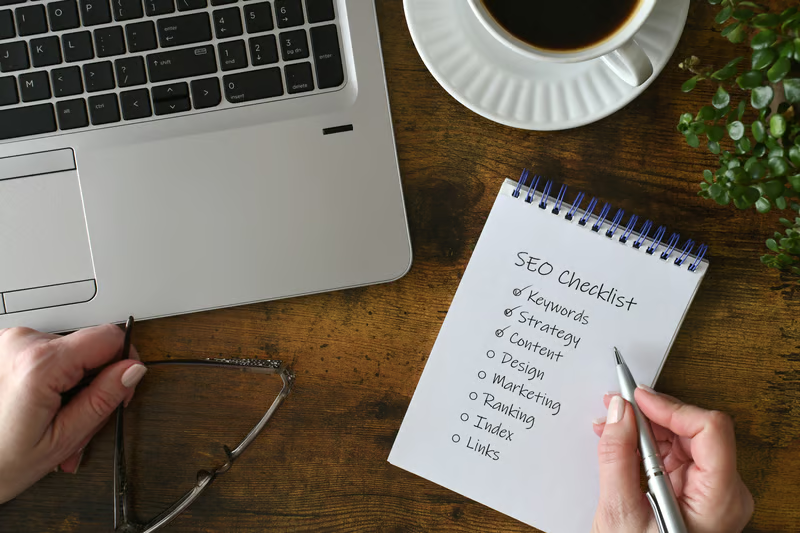
These checklists are designed to help you evaluate the key on-page SEO factors of your site. If you’re interested in learning more about off-page SEO and link building, check the resources section on page seven for some helpful articles.
How to Use This Checklist
We suggest setting aside 1-2 hours to review your website with a printed version of this guide by your side. If you notice any missing elements, jot them down. You can then either address these items one by one or pass the checklist to your digital marketing team to take care of for you.
Content Checklist
Your website’s content is what gives it value both for users and search engines.
Check that your content is high-quality, uses the right keywords for your business or products, has the proper length, and is up-to-date. You should also look at your site’s bounce rate in Google Analytics to ensure that visitors are engaging with your content, not leaving right away.
Checklist
- Quality:
- Correct grammar and spelling
- Content provides real value to the user — unique and useful
- Research:
- Use relevant keywords your audience is searching for
- Include long-tail keywords that describe your products or services
- Focus on low-competition, high-search-volume keywords
- Words:
- Page content should be at least 350 words
- Include keywords found in your research
- Content remains natural and not keyword-stuffed
- Link to other relevant pages on your website
- Use keyword-rich headings, subheadings, and titles
- Engagement:
- Users stay on the page and engage with the content — low bounce rate
- Users navigate to other relevant pages for more information
- Freshness:
- Content is current and regularly updated
- Reflects the latest search trends
HTML Checklist
While you may not see the HTML behind your website, search engines do. Proper, clean HTML can enhance your SEO efforts. Check that your page titles are unique and review your header tags and rich snippets. Remember, while a meta description doesn’t directly impact SEO, it helps users understand what your page is about when they’re comparing search results, so we recommend including one on every page.
Checklist
- Website Crawlability:
- HTML and XML sitemaps are submitted to search engines
- Crawl efficiency is improved with proper internal linking and a robots.txt file
- Duplicate Content:
- No direct duplication of content from other sites
- Avoid duplicate content caused by URL parameters
- Use 301 redirects for old or duplicate content
- Correct canonical tags are implemented for actual duplicate content
- Website Speed:
- Optimize your site for fast loading times
- Use external CSS and JavaScript files
- Implement caching systems
- Use a Content Delivery Network (CDN)
- Compress and optimize images
- URL Structure:
- URLs should be descriptive, containing relevant words
- Use lowercase letters in URLs
- Keep URLs concise (aim for five words or fewer)
- Use hyphens to separate words, not underscores or special characters
- Mobile:
- Google recognizes the mobile version of your site
- The website should feature a responsive design
Additional Resources
Interested in learning more about on-page SEO or website optimization? Or perhaps you’d like to dive into off-page SEO topics like link building? Check out these additional free resources from WebFX to improve your website’s performance and traffic.
- CEO’s Guide to SEO
Short on time? This quick guide explains the basics of SEO in a way that’s easy to understand — even for the busiest CEO. - Our Suite of SEO Tools
A collection of free tools to help with everything from keyword research to finding broken links, plus discovering new opportunities to rank higher. - How to Scale Your Website Traffic
If you’re already getting traffic and want to increase it, this guide will show you how to turn “a little” into “a lot.” - How to Build Your First Link
New to link building? This guide walks you through simple strategies for building your first links and crafting effective outreach emails for guest posts. - Best Link Building Strategies
Want to master link building? We outline the best strategies that top marketers use to grow their backlink profiles.