

Lead generation is the key to connecting with your ideal clients and sparking their interest in your agency.
It’s a crucial component for building a solid client base and boosting your revenue.
Demonstrate Your Expertise with High-Quality Content
Producing high-quality content allows you to highlight your expertise, giving potential clients a compelling reason to engage with your agency.
This content can serve as a lead generation tool across various marketing channels, such as your SEO-optimized website, email marketing campaigns, PPC ads, and social media platforms.
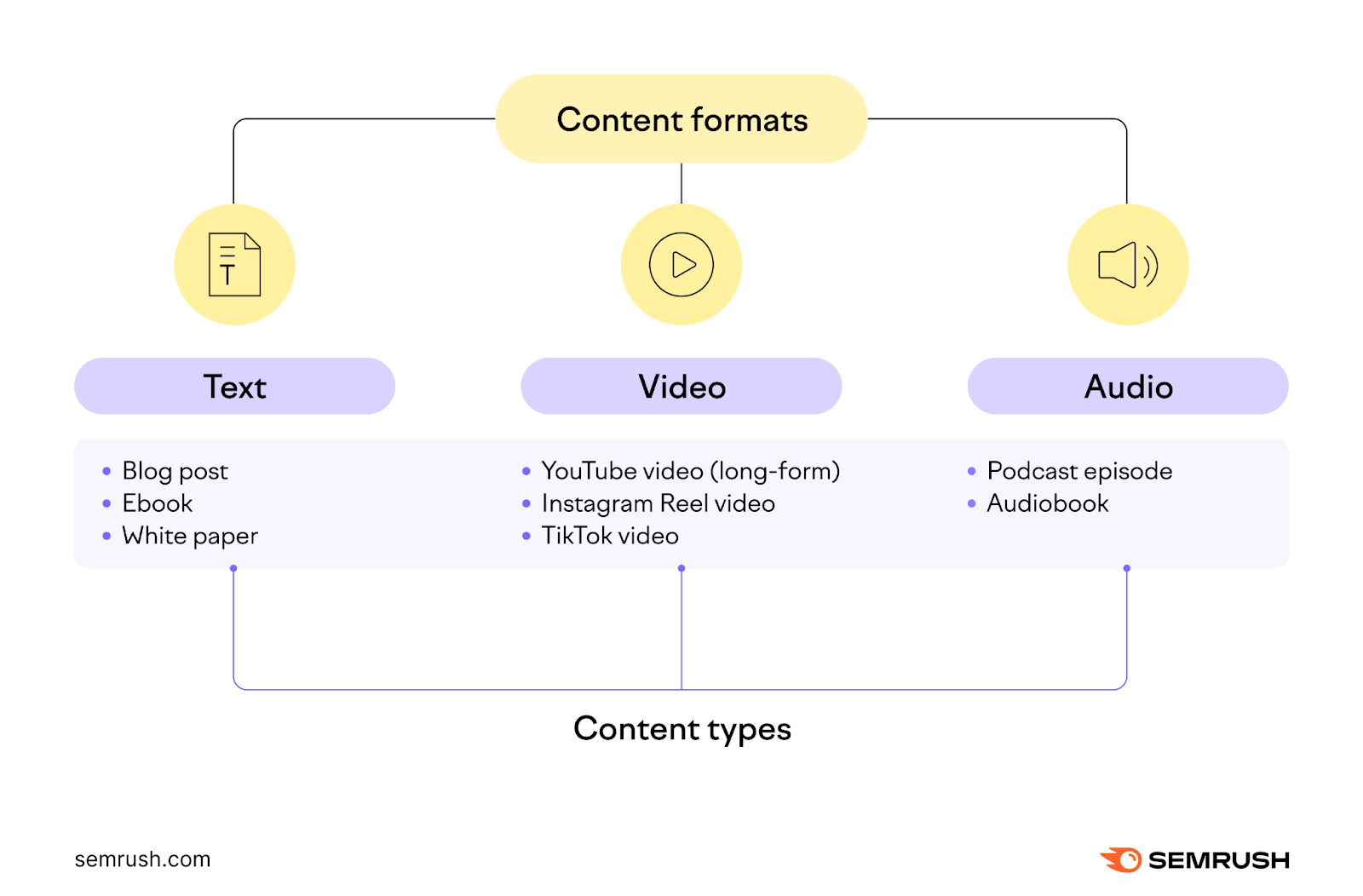
Examples of content your agency could create to attract leads include blog posts, ebooks, and white papers. You can also diversify your content by using different formats like text, video, or audio.
Important: Google is increasingly prioritizing helpful, user-focused content in its search results. To boost your chances of generating more leads through organic search, focus on creating website content that is people-first, trustworthy, and designed to assist users.
To ensure your content is deemed helpful, it should:
- Offer original insights, reporting, or analysis
- Provide a thorough and in-depth exploration of the topic
- Deliver more value compared to the top-ranking pages
- Be free from spelling or stylistic errors, ensuring it looks polished and professional
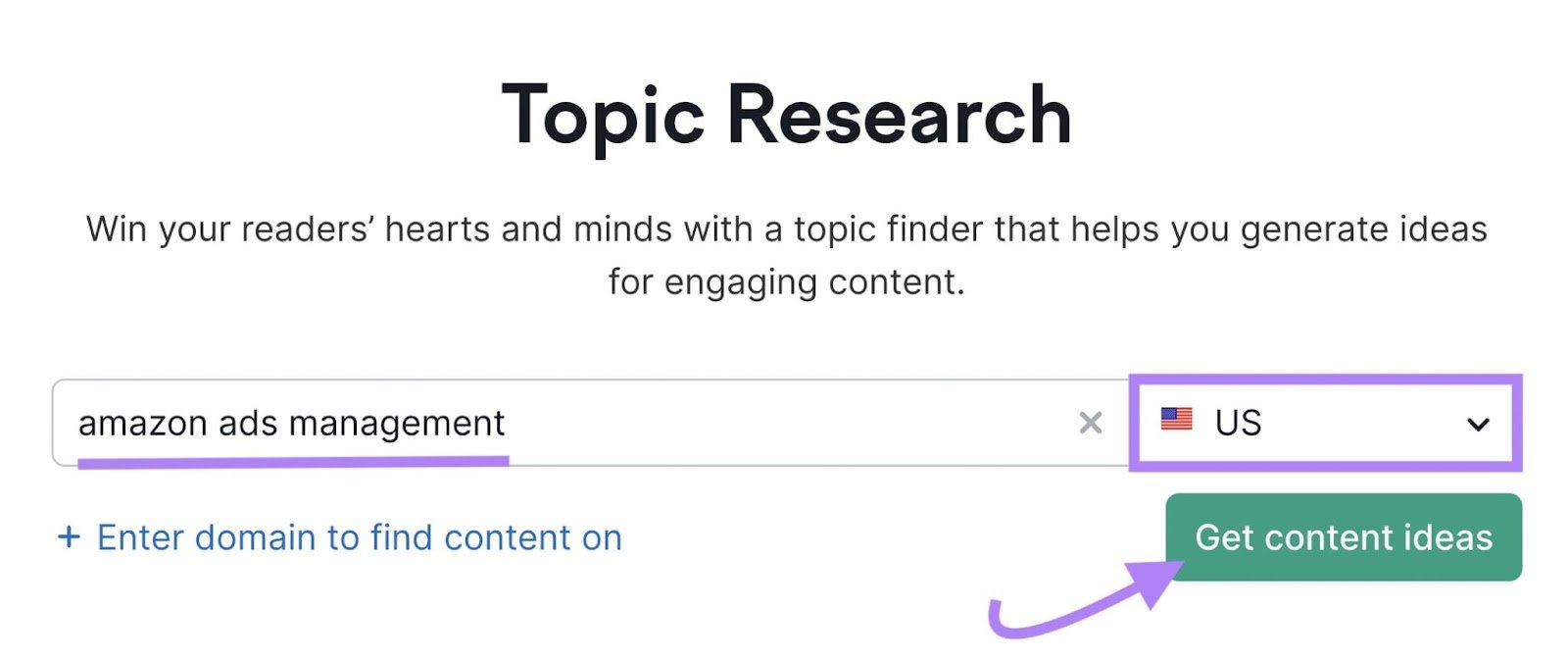
For content inspiration, consider using Semrush’s Topic Research tool.
Simply enter a relevant topic related to your marketing services, choose your target location, and click “Get content ideas” to discover popular and relevant content topics.
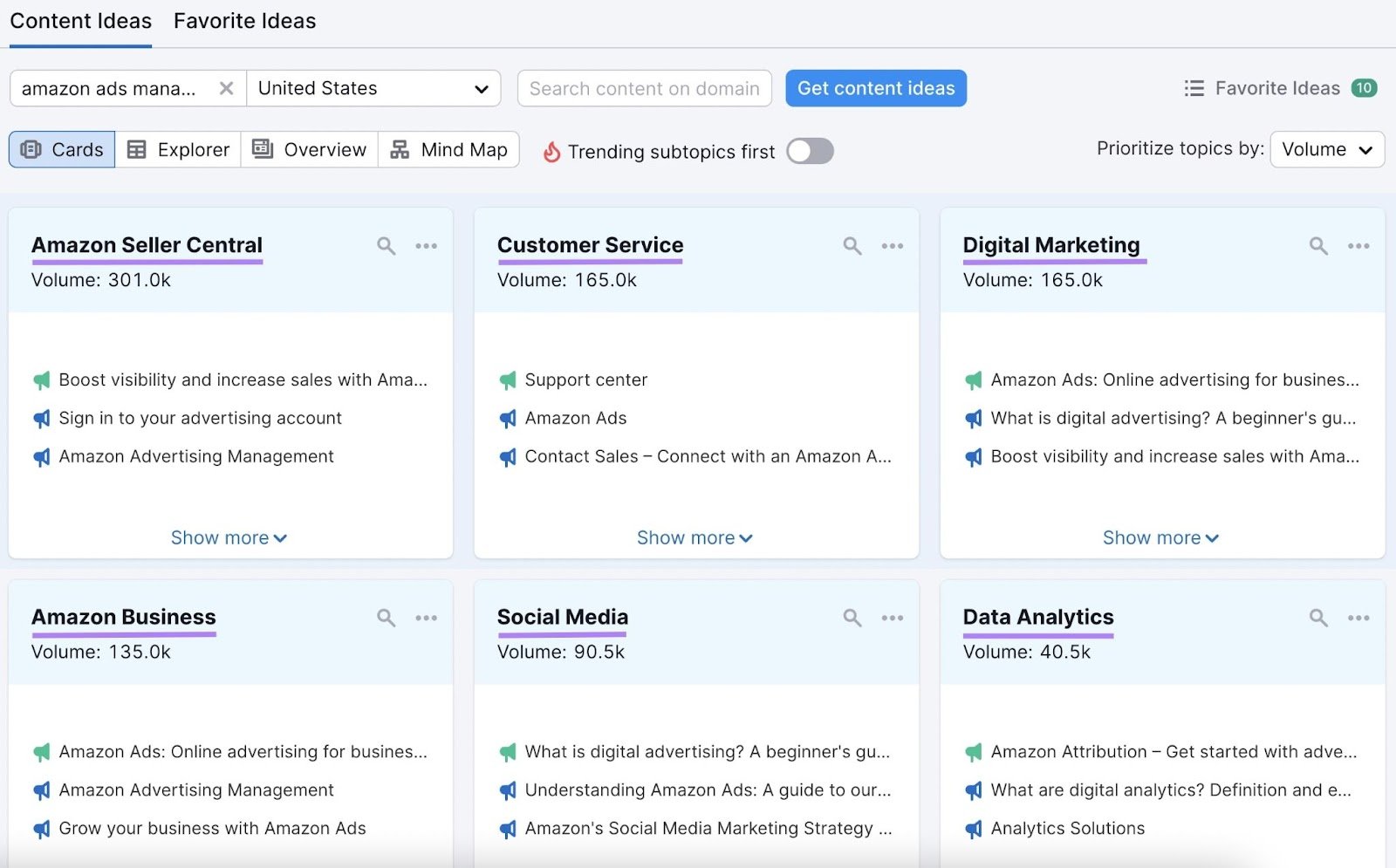
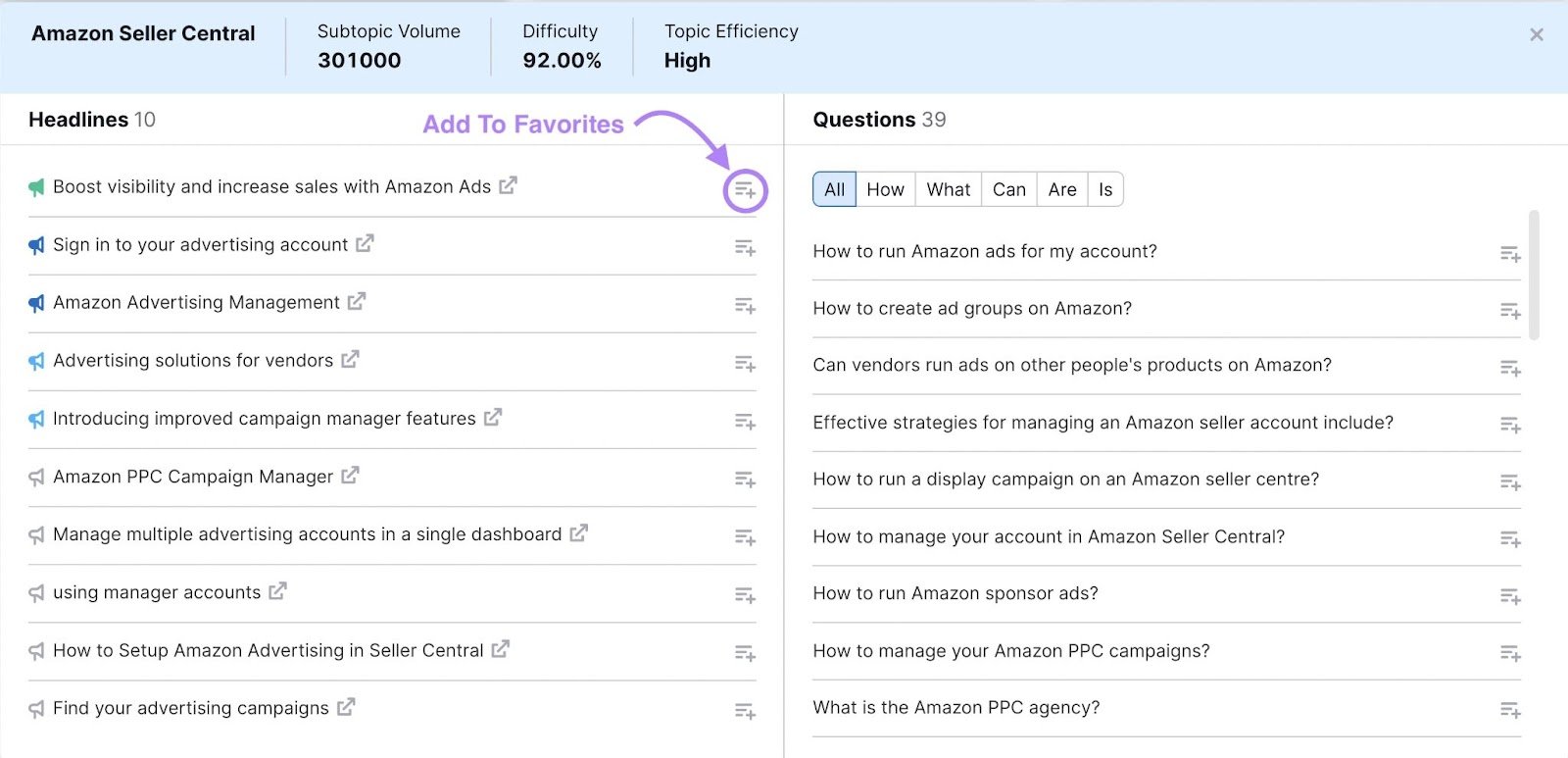
You’ll see a list of subtopics related to your seed topic. Like this:
Click “Show more” beneath any subtopic to expand the view.
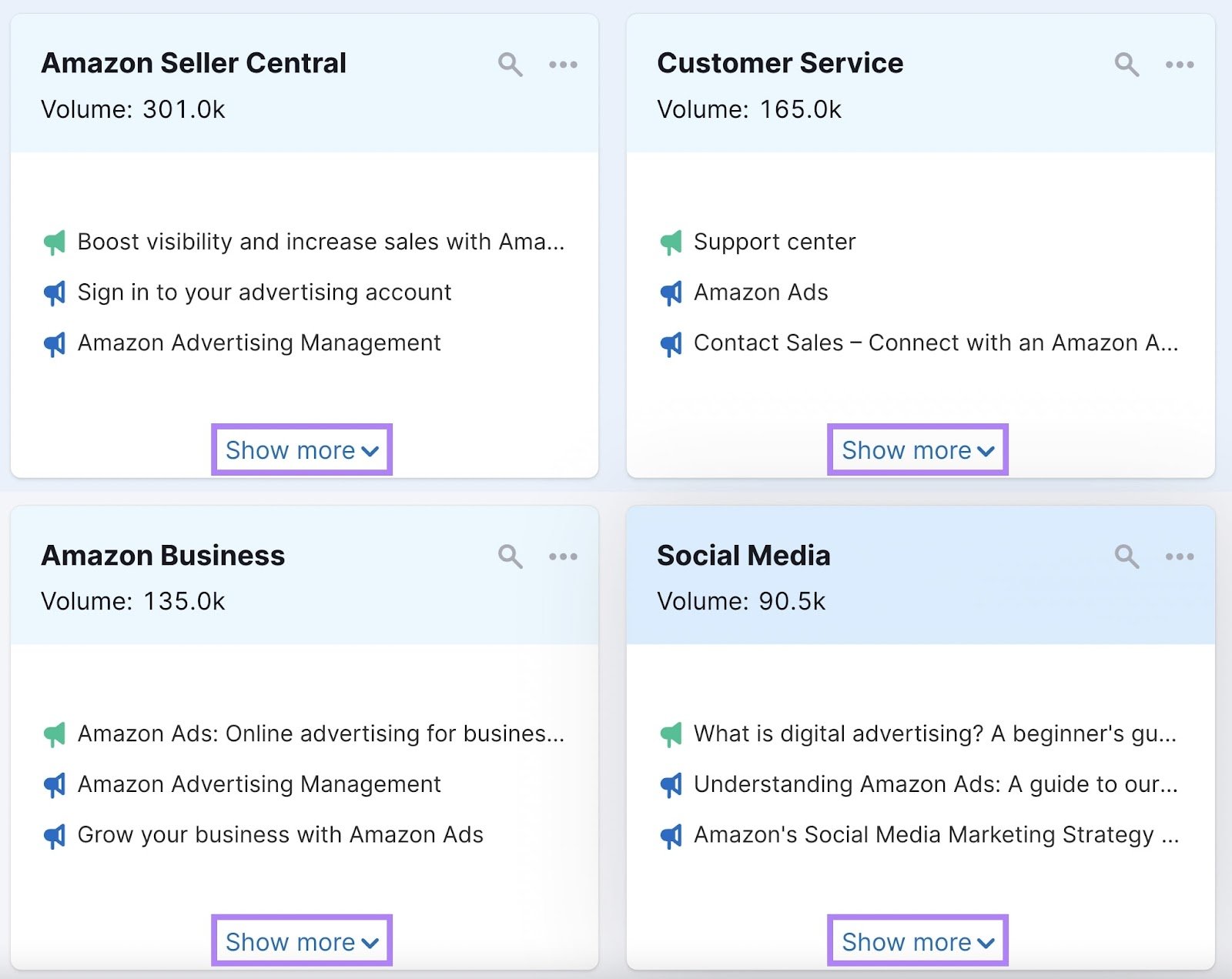
On the expanded card, you’ll see a list of headlines and questions related to the subtopic you can use as inspiration for your content creation.
When you begin creating content, prioritize delivering value to your target audience. You can also naturally highlight your agency’s offerings when it aligns with the topic.
By doing this, you’ll position yourself as an expert in the field, increasing the likelihood that potential clients will reach out to learn more about your services.
Optimize Your Contact and Service Pages
Your agency’s website is often the first point of contact for potential clients. By optimizing your contact and service pages for conversions, you can increase the chances of turning website visitors into qualified leads.
For instance, Big Leap’s contact page effectively uses a submission form, clear calls to action (CTAs), and a compelling unique value proposition (UVP) to boost conversions.
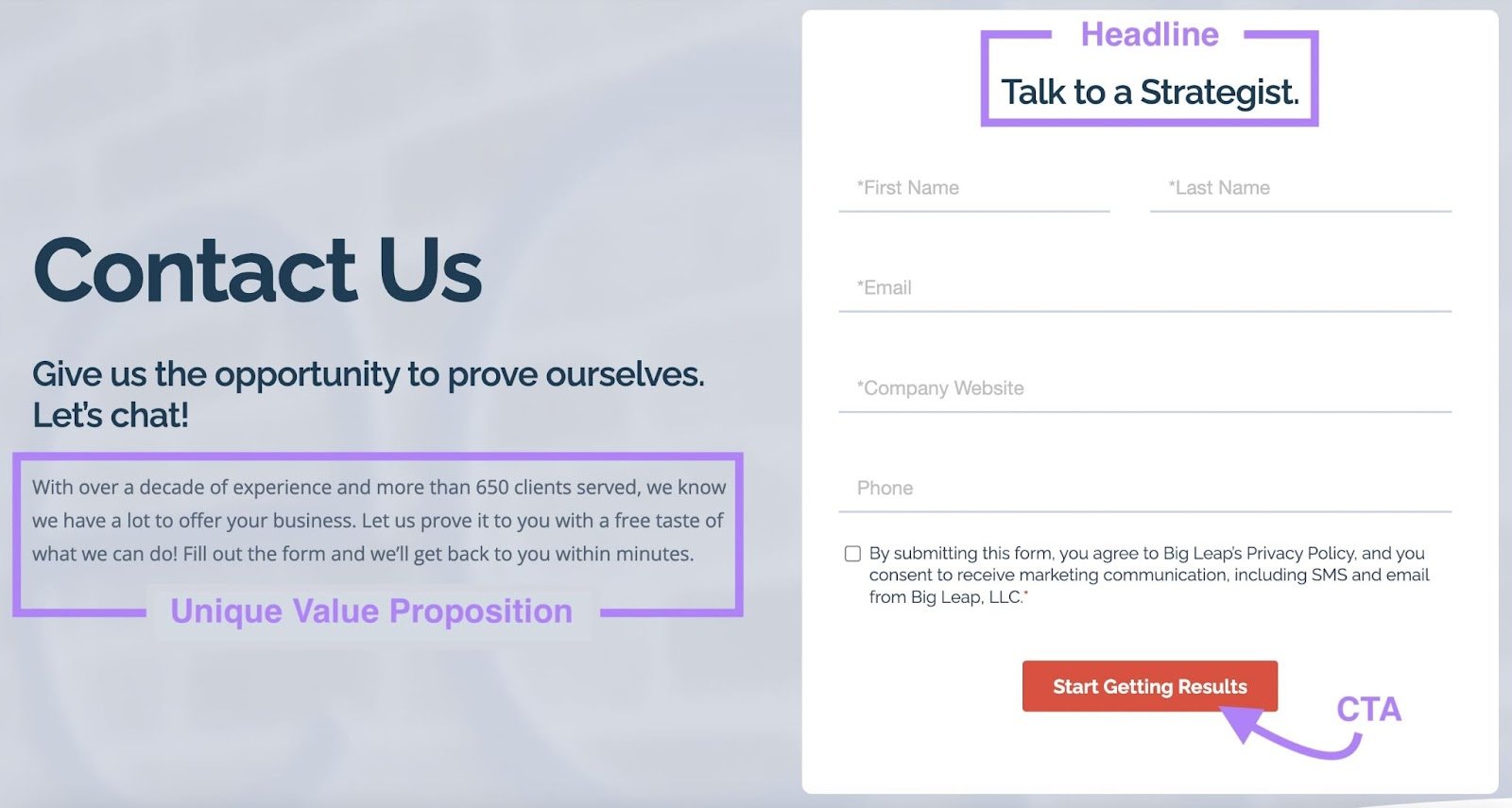
Best Practices for Contact Pages:
- Offer multiple ways for users to get in touch (e.g., phone number, calendar link, chatbot, etc.)
- Include a link to your contact page in both the header and footer of your website
- Use clear CTAs with action-driven phrases like “Contact us,” “Schedule a call,” or “Book a meeting”
- Highlight your unique value proposition (UVP) to encourage visitors to fill out a form or reach out
Likewise, ensure your service pages are also optimized for conversions—just like the one from Fortunatos.
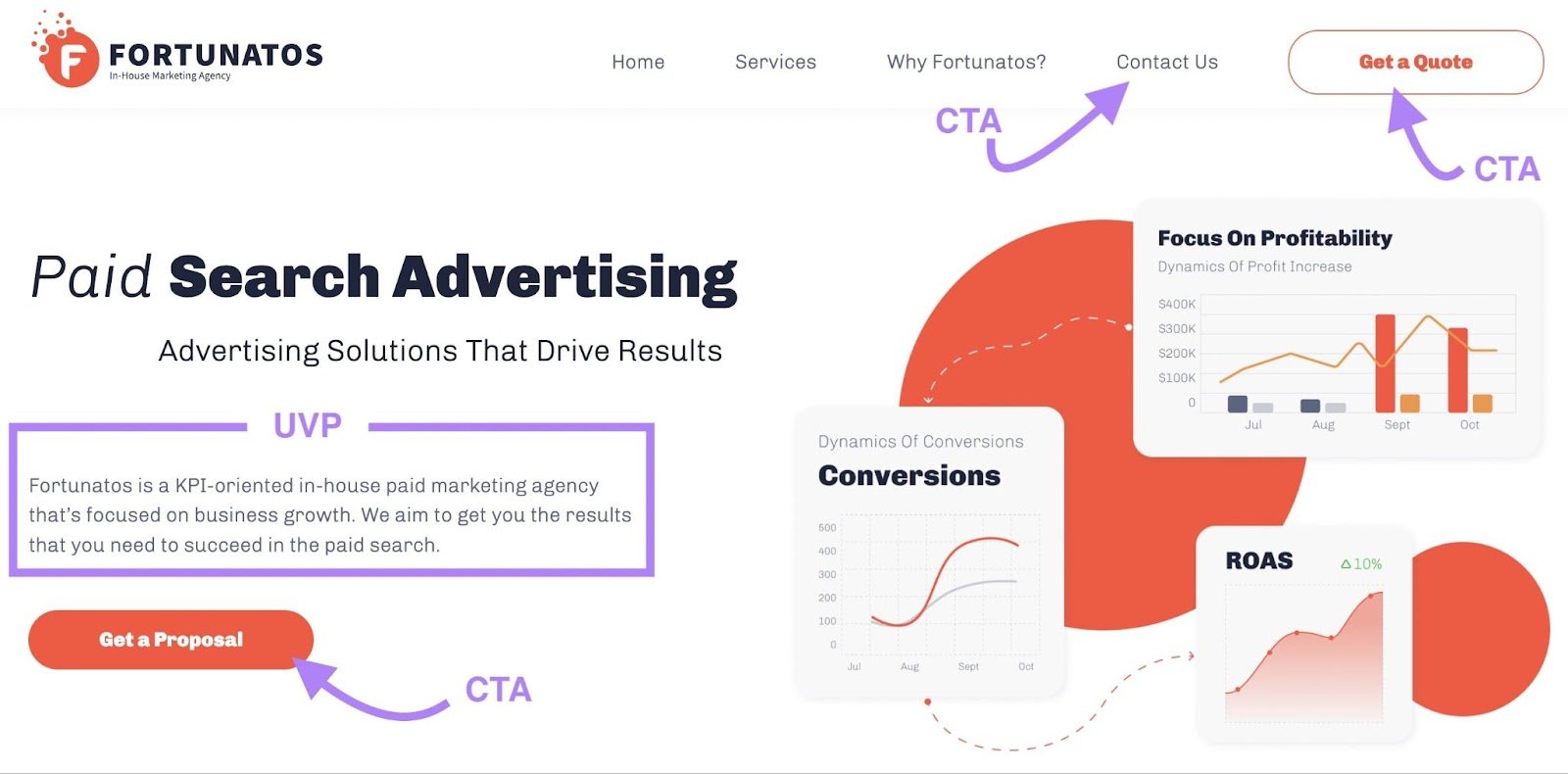
They encourage visitors to convert with a clear CTA, a compelling UVP, and a description of how their services can benefit clients—all placed above the fold (meaning users don’t have to scroll to see it).
These pages should also be optimized for mobile, as many potential clients may discover your agency through their mobile devices.
Mobile optimization best practices include using responsive design, ensuring fast load times, and utilizing dynamic serving.
Additionally, consider running A/B tests on different versions of your landing pages to identify which optimizations improve lead generation.
To run an A/B test:
- Create two versions of a page (e.g., a contact or service page)
- Modify a single element on one version (e.g., button color, CTA text, etc.)
- Display both versions to an equal-sized audience (tools like Landing Page Builder can help)
- Track which version results in more leads over the same period
Create Effective Forms
Submission forms make it easy for website visitors to submit their contact information, giving you the chance to follow up and start a conversation about your services.
For inspiration, check out this submission form from Pixated.
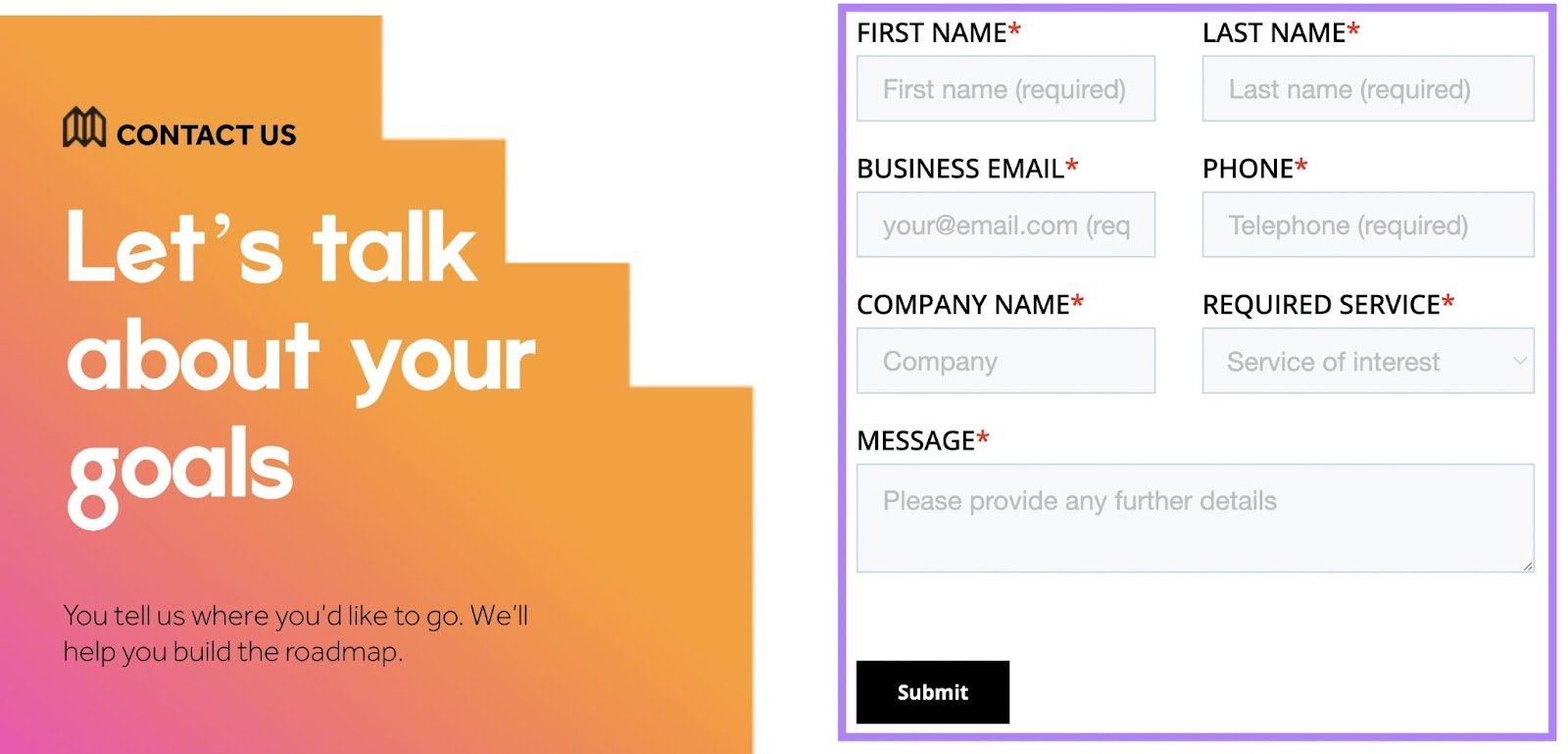
They place the form above the fold, making it easy for website visitors to share their information without needing to scroll.
Forms should be simple to use and have a clear, logical layout.
Including essential fields like “Services” or “Message” can provide your sales team with valuable insights into the prospect, which they can use to tailor their follow-up outreach.
The fields you choose can also help you qualify leads, which is the process of assessing how likely a prospect is to convert into a customer.
Here are some useful required fields to consider:
- Budget
- Company size
- Website URL
Understanding a prospect’s budget or company size can give you insight into their revenue potential or whether they’re a good fit for your agency. This allows you to prioritize leads that have the highest likelihood of conversion.
With a prospect’s website URL, you can immediately begin evaluating their web presence and craft a tailored message about how your agency can improve their results.
However, be mindful not to overdo it—too many fields can discourage visitors from completing the form.
Create Lead Magnets
A lead magnet is a valuable resource that you offer in exchange for a potential customer’s contact details.
For instance, Iconic Digital provides a free website audit and voucher in return for an email address and phone number.

You can use various types of content as lead magnets, but some of the most effective for digital marketing agencies include:
- Free website audits or reports
- Marketing trends and industry insights reports
- Original research and findings
- Actionable marketing guides
- Marketing checklists
Place your lead magnets on your homepage, in exit-intent pop-ups, or in other strategic spots on your site. You can also promote them through marketing emails and social media posts.
Don’t forget to track the performance of your lead magnets so you can refine them over time and create even more compelling offers.
Conduct Cold Email Outreach
Cold email outreach allows you to directly engage with individuals who fit your ideal customer profile. This opens the door for conversations that could lead to responses.
Try using Lead Finder to discover and prospect potential leads who may be interested in your services.
Use the tool’s data to craft more targeted and persuasive email pitches.
To get started, visit the tool and choose an option in the “Technology” field—select a technology commonly used in your niche or one that your agency specializes in.
Next, pick your target country, choose the relevant industry or industries, and click “Find
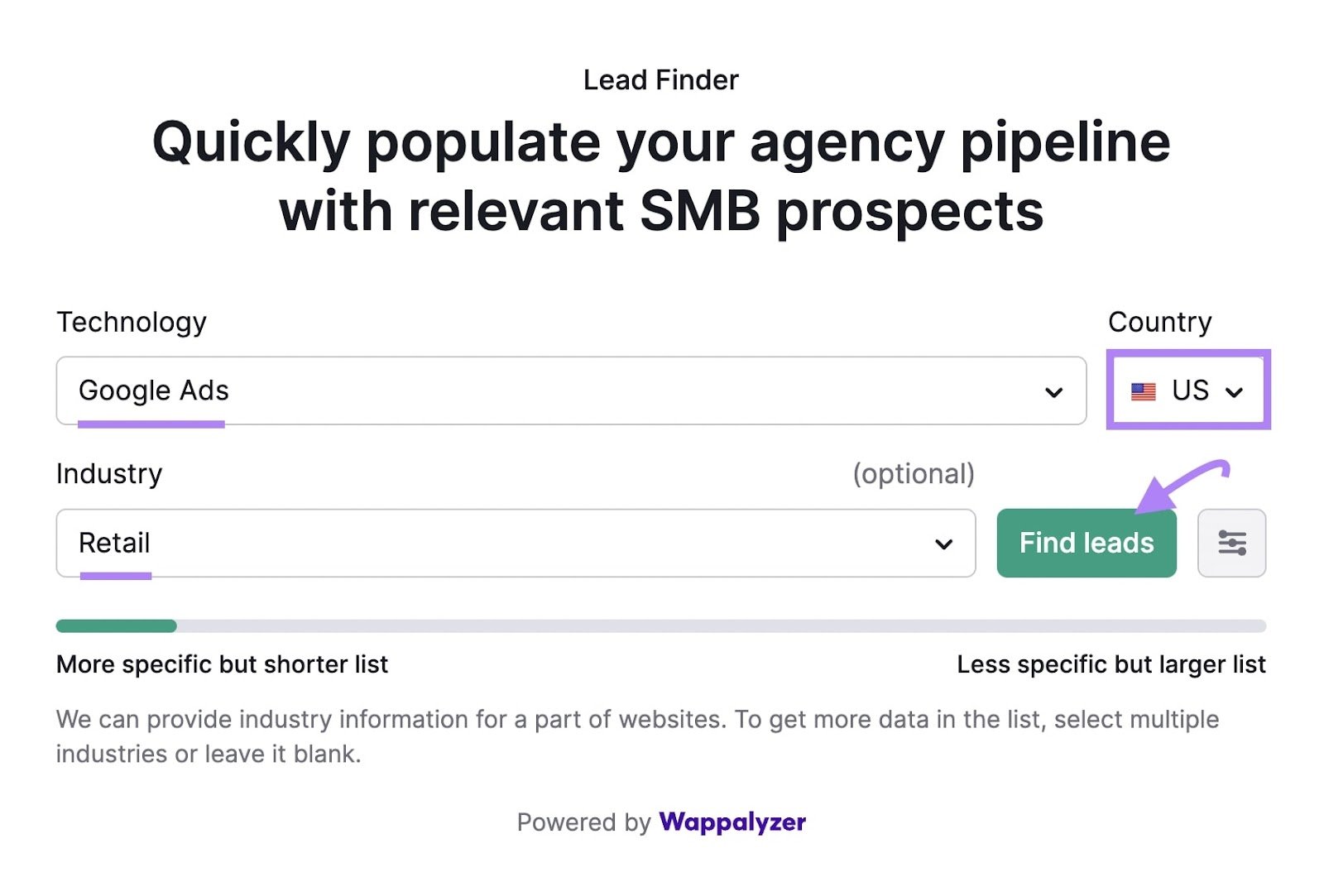
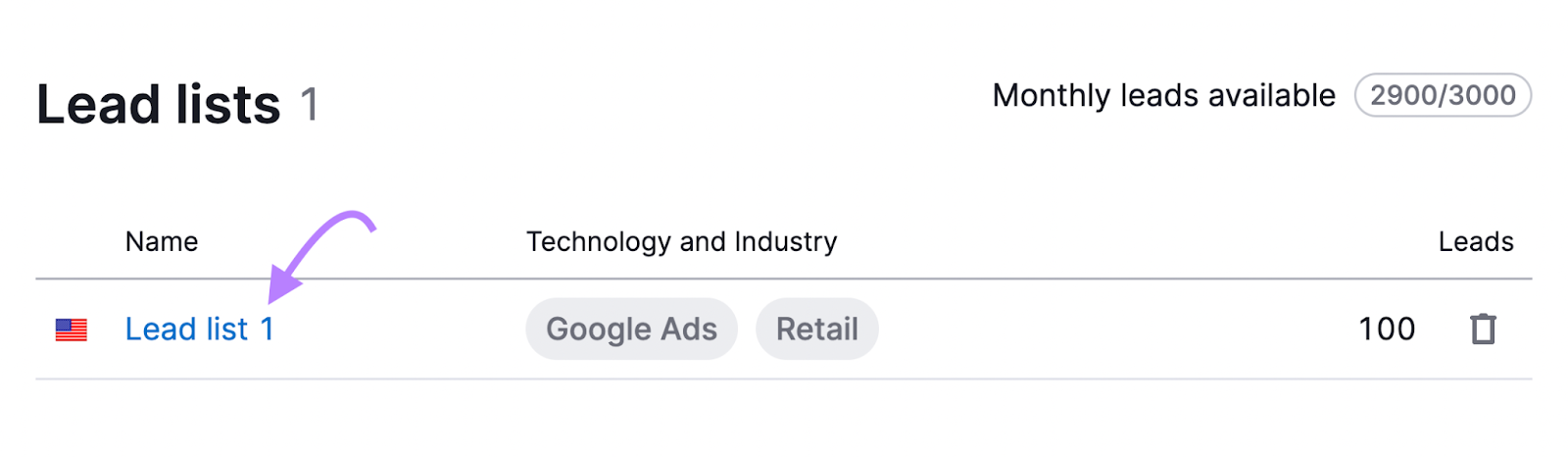
When your list is ready, it will populate in the “Lead lists” table farther down on the page.
Click “Lead list #” to open it.
In the report, you’ll find a list of websites along with their “Lead Scores.”
A higher score signifies a higher likelihood of making a purchase and stronger online visibility, helping you pinpoint the most valuable prospects.
Simply click the blue “View details” button next to a prospect to access more detailed information about them.
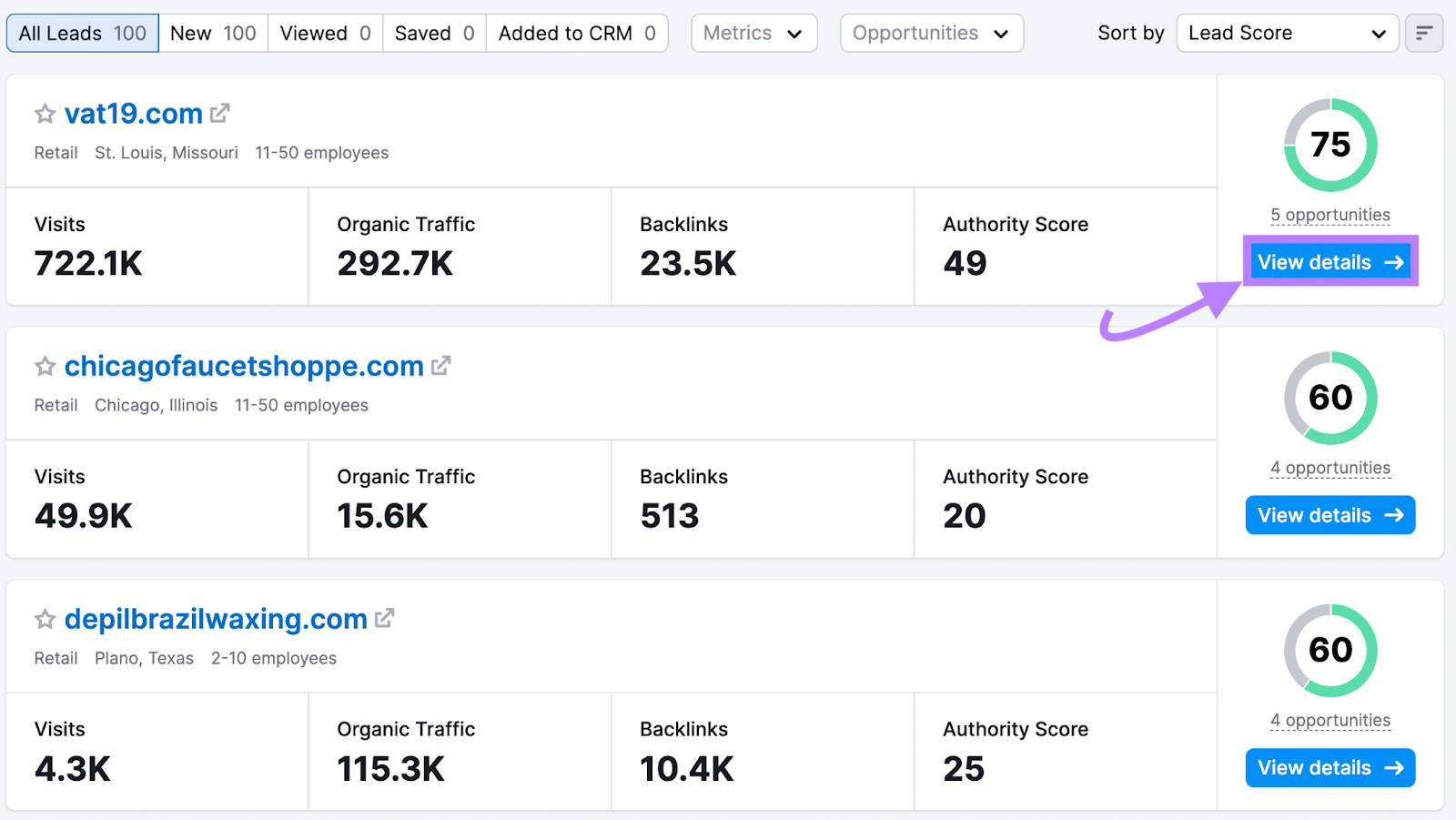
For example, this prospect shows three opportunities that an agency could support the prospect with. One related to advertising, one related to backlinks, and one related to organic traffic.
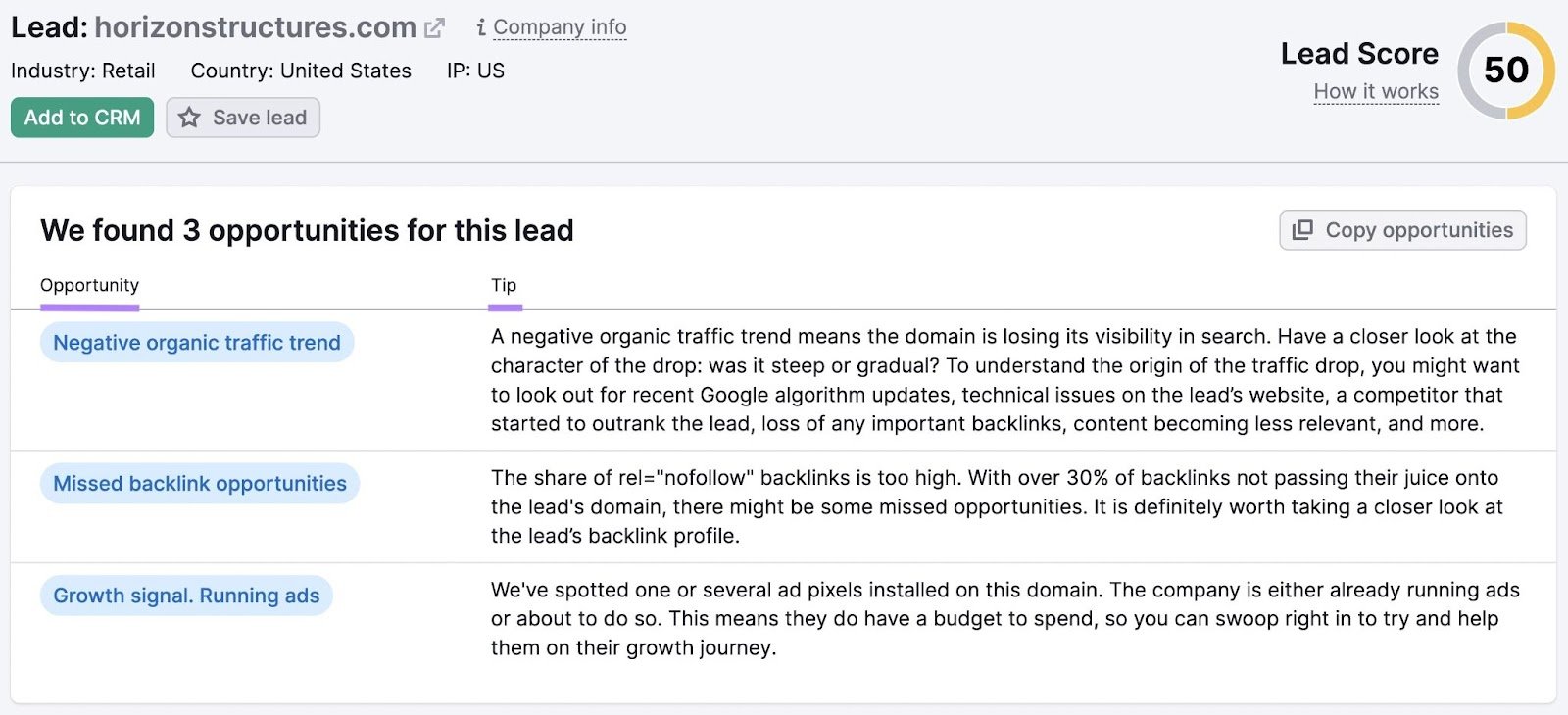
If your digital marketing agency offers those services, consider reaching out to them with a message crafted with a cold email template. To introduce your agency and let them know how you can provide value.
Get Listed on Reputable Directories and Websites
Having your agency featured in marketing agency directories and other relevant listings makes it easier for potential clients to find you.
For instance, popular third-party sites like Clutch, Capterra, and Crunchbase offer free listings for digital marketing agencies.
Make sure your directory listings include essential details like your agency name, website URL, service offerings, and location.
Depending on the platform, some directories may ask for additional information—like this listing on Clutch, which requires agency size and hourly rates.
Being listed on reputable directories can drive referral traffic to your site and offer valuable social proof that enhances your reputation.
Ensure that your business listings are consistent and accurate across all directories where your agency appears. This not only prevents confusion for prospects but also helps boost your agency’s credibility in Google’s eyes.
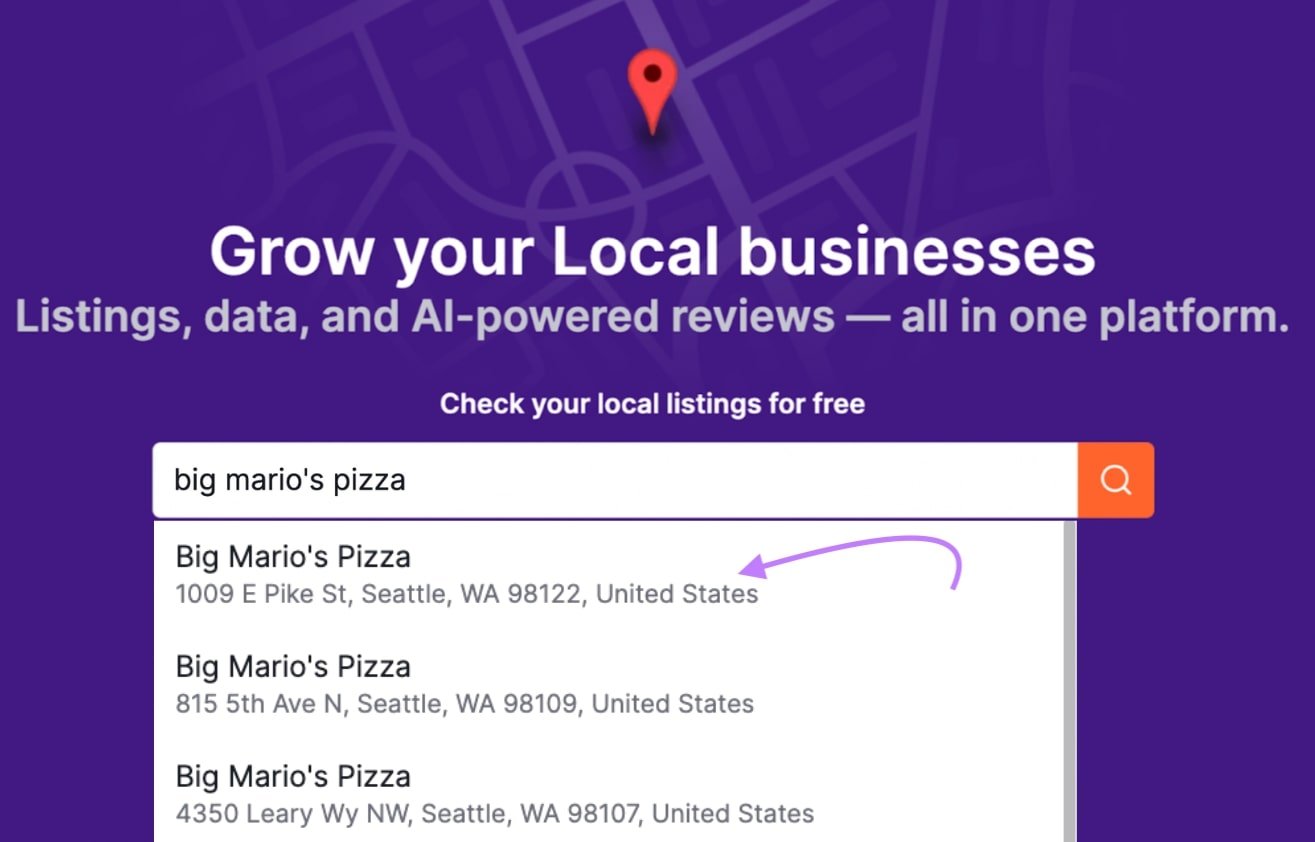
You can easily monitor your listings using Listing Management. Simply enter your business name, website, or phone number into the tool. Once you locate your business, click on it for more details.
You’ll get a summary of your overall online presence, total reviews, and business listings. Including those that require fixes.
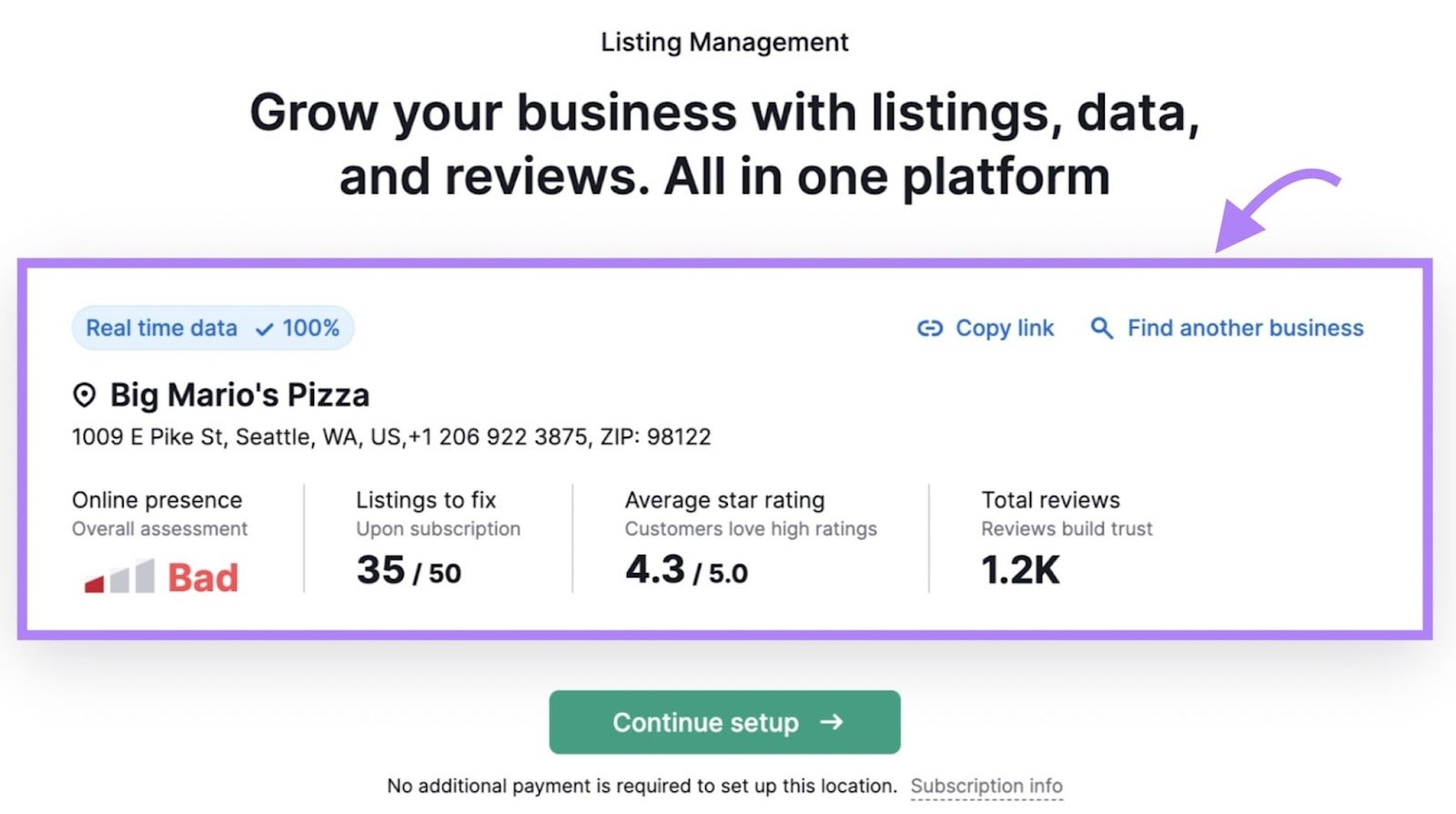
The above website has 35 listings to fix.
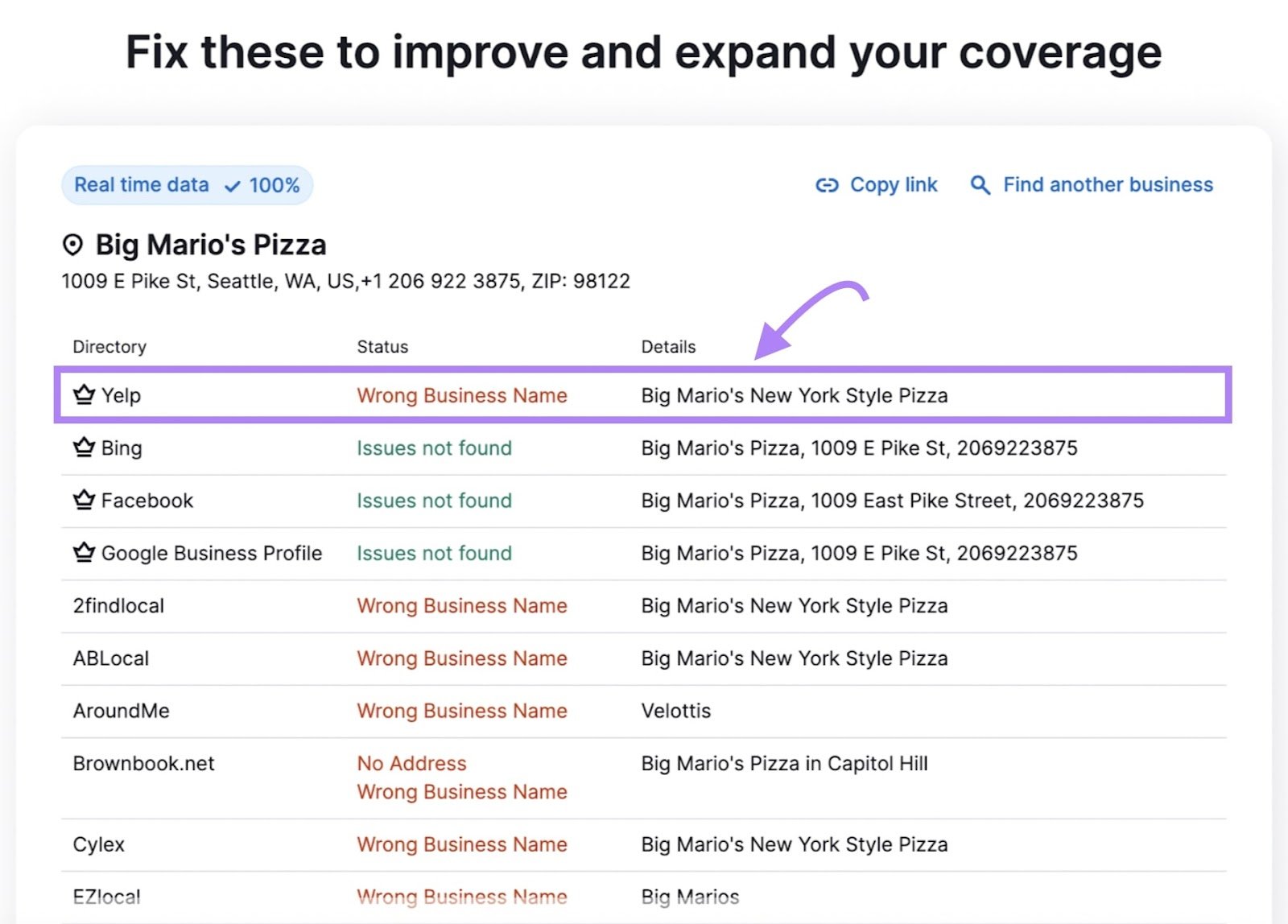
To resolve those issues, scroll down to “Fix these to improve and expand your coverage.” The “Status” column will tell you which issue was identified.
To make edits to your listings directly from your dashboard, scroll to “Let your local visibility soar.” Then, click “Continue setup.”
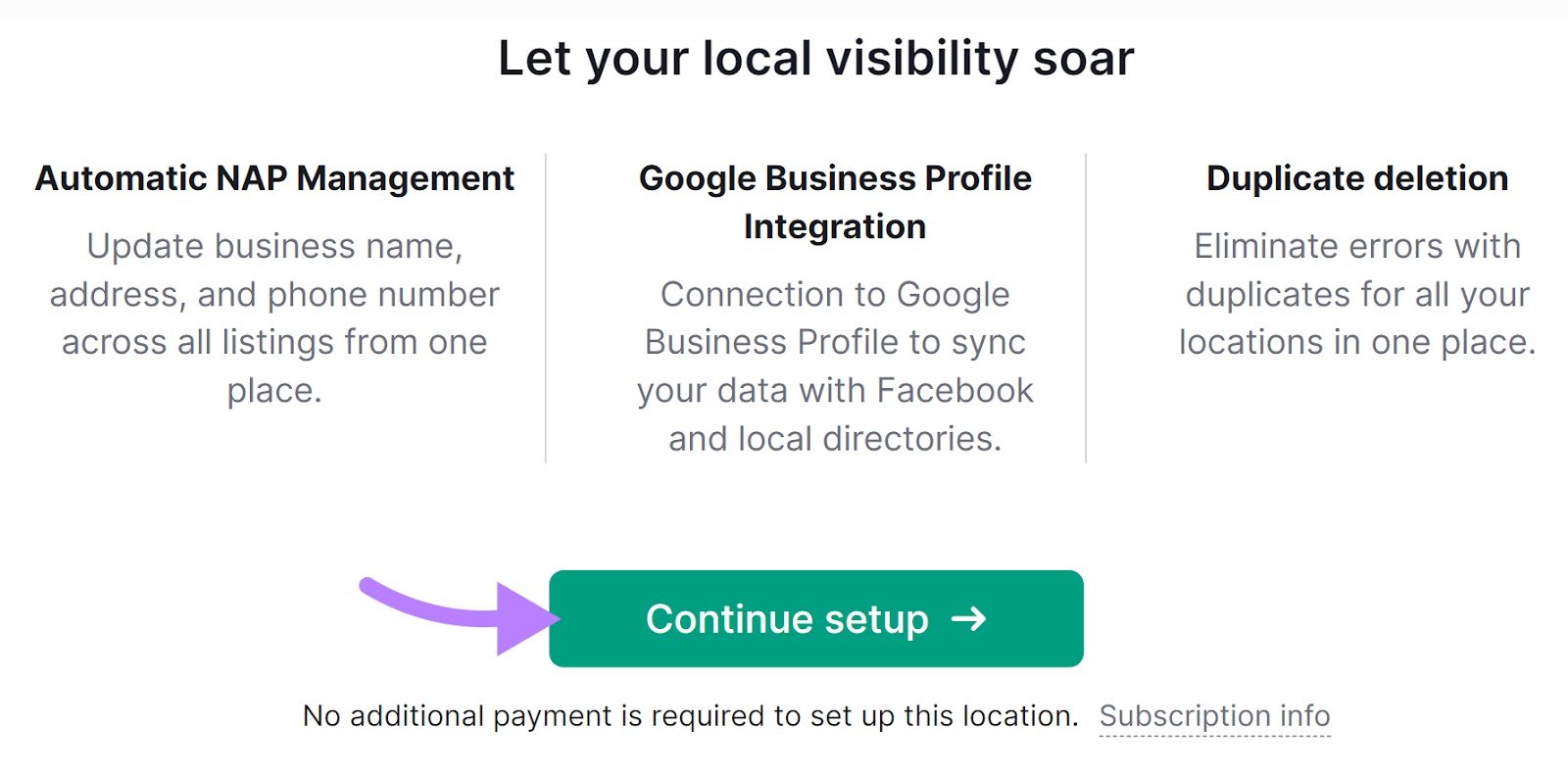
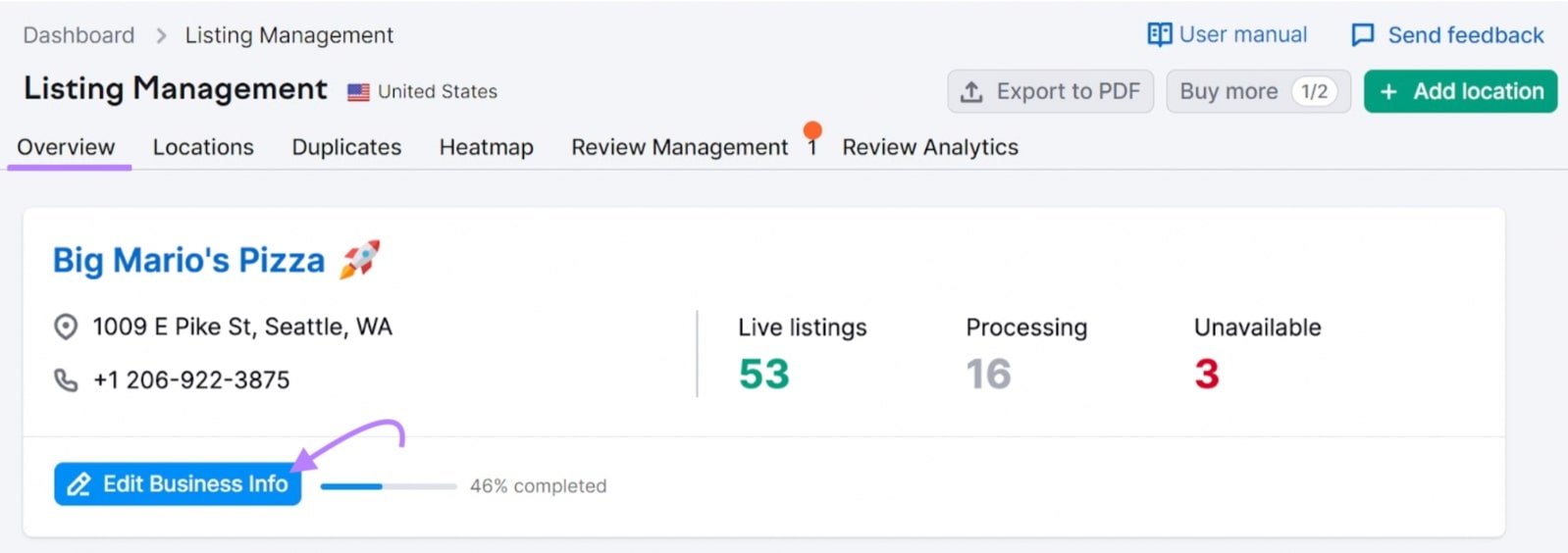
You’ll then have access to the Listing Management dashboard. (If you don’t yet have a subscription to Semrush Local, you’ll be prompted to sign up before proceeding).
Click “Edit Business Info” to finish setting up your profile.
Encourage Clients to Leave Reviews
Positive reviews are powerful tools for lead generation, as B2B buyers often rely on customer feedback when evaluating products or services.
If you have a client who’s had a great experience with your agency, ask them to leave a review.
Guide them to the review platforms that will have the most impact, such as your directory listings, Facebook business page, or Google Business Profile.
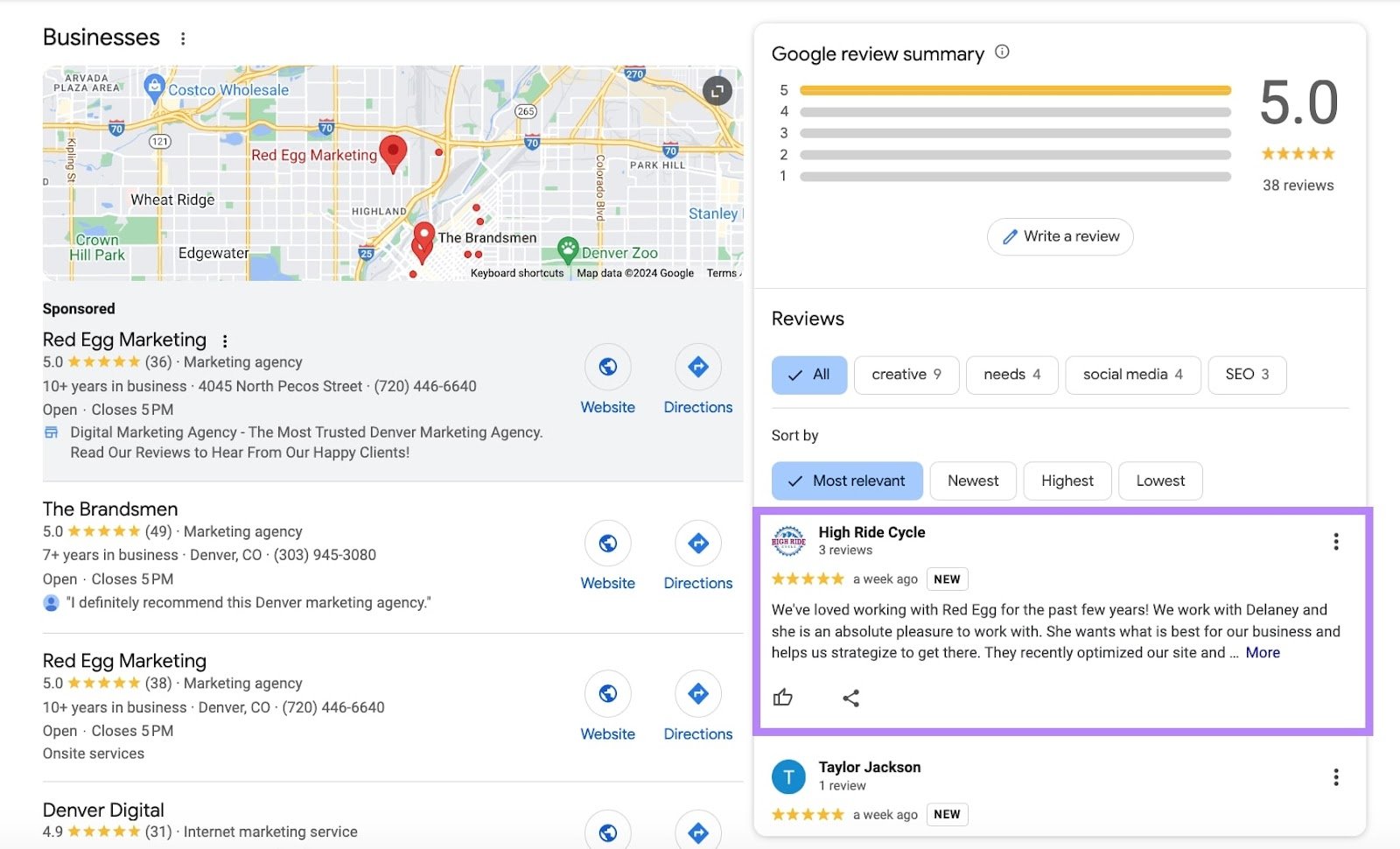
The more reviews your agency gets, the more social proof you build in the eyes of potential customers.
So, it’s good to track reviews across all of the websites where your agency is listed.
Publish Case Studies and Testimonials
Case studies and testimonials highlight the real-world results of your digital marketing efforts and can be highly effective for lead generation. They show potential clients the value of your services, making it easier to convince them to take the next step.
To write a compelling case study, focus on how you helped clients achieve their marketing objectives.
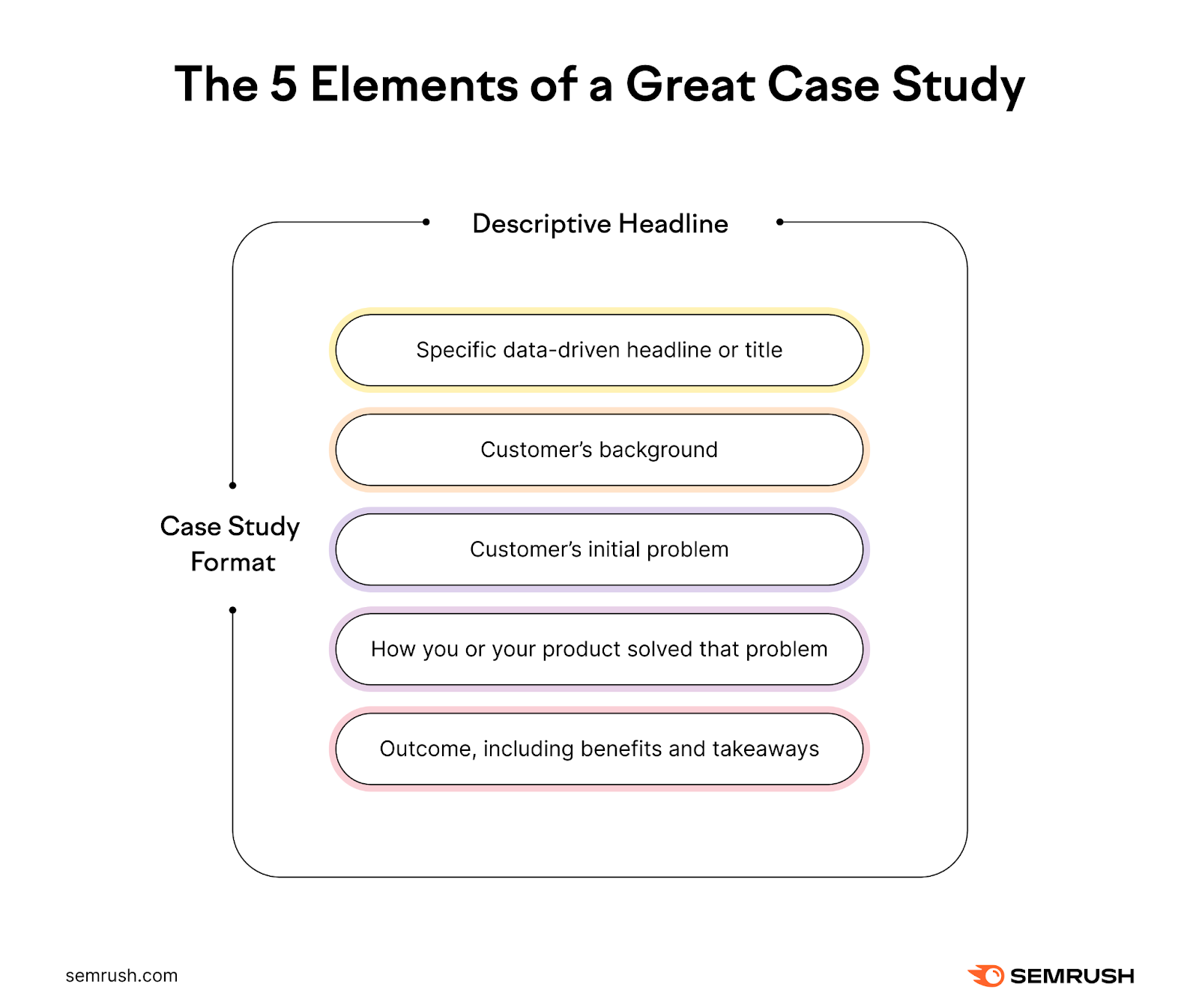
Here’s a format you can use to craft impactful case studies:
- Headline: A captivating headline that highlights a key result (e.g., “How Company X Increased Organic Traffic by 600%”)
- Customer Background: Key details like the industry, budget, or duration of the marketing campaign
- Problem: A brief explanation of the challenge that led the customer to seek your services
- Process: A description of the services your agency provided, such as SEO, Google Ads, or content marketing
- Results: Tangible outcomes, presented through data such as clicks, conversions, or other relevant marketing KPIs
Customer testimonials act as social proof, helping to build trust with potential leads. Consider showcasing them on your website to add credibility.
You can simply ask a past client for a written testimonial or, for even more impact, request a video review—like these testimonials from Jumpfly.
Run LinkedIn Ads
LinkedIn Ads are an excellent choice for digital marketing agencies aiming to reach B2B audiences. The platform collects detailed information about users’ roles and companies, allowing for highly targeted ads.
With LinkedIn’s business-focused targeting options, you can zero in on your ideal customer profile, ensuring your ads reach decision-makers and stakeholders who influence their company’s marketing services.
To get started, create a Campaign Manager account. Simply enter an account name, link your agency’s LinkedIn page, and click “Agree & create account.”
Once your account is set up, you can create ad campaigns with business-specific targeting to boost lead generation from your ads.
These targeting options help you zero in on marketing professionals within the industries you’re aiming to reach. Here are some key targeting attributes to consider:
- Company Targeting: Company industry, size, name, etc. (e.g., “Technology,” “500+ employees,” “Asana”)
- Job Targeting: Job title, seniority level, member skills (e.g., “Marketing Director,” “Director,” “Marketing”)
- Interest Targeting: Member groups and interests (e.g., “Project Management Passion,” “Social Media”)
Attend or Host Industry Events
Attending industry conferences and events is an excellent way to connect with potential clients in person, creating more memorable interactions than those over email or social media.
You’ll also have the chance to meet other marketing professionals, which can be valuable since agencies often refer leads to trusted partners who offer complementary services.
These events also offer great opportunities to establish your agency as a thought leader in the marketing field by:
- Submitting a team member to speak as a keynote
- Sponsoring a panel discussion
- Hosting an exhibitor booth
If resources and team size allow, you can even host your own events, webinars, or podcasts to engage prospects and build authority in your niche.
Establish a Referral Program
Referral programs incentivize your current or past clients to recommend your agency to new prospects, helping you generate leads with minimal effort on your part.
For example, Adapting Social offers a 20% commission for client referrals, motivating others to refer business your way.
Unlike some marketing channels, you can design a referral offer that fits comfortably within your budget.
And because people often trust recommendations they receive from their personal or professional network, prospects that come through referrals can be highly motivated to convert.
Apply for and Highlight Awards and Certifications
Awards and certifications demonstrate to potential clients that your agency is proficient in the services you offer, and that your expertise has been recognized beyond your own organization.
Make sure to showcase any relevant certifications or awards prominently on your website.
For example, PBJ Marketing displays their certifications in the footer of their website, ensuring potential prospects see them on every page they visit.
Some certifications your agency can apply for include:
- Semrush Agency Partner
- Google Partner or Premier Partner
- Meta Media Certified Company
Additionally, consider applying for marketing awards throughout the year. These programs often have multiple categories and may require you to detail your services, client work, or revenue growth as part of the application process.
For prospects, these awards serve as compelling evidence that your agency is recognized as a leader in the industry.
Elevate Your Lead Generation Efforts
Marketing is a competitive field, and clients come and go, making lead generation an ongoing effort for running a successful agency.
To boost your lead generation, consider using these tools:
- Topic Research for discovering fresh content ideas
- Lead Finder for lead prospecting and cold email outreach
- Listing Management for monitoring your directory listings and tracking customer reviews