
Ranking on Google has become more competitive than ever. Publishing great content alone is no longer enough—you also need to prove that your website deserves to rank.
One of the strongest ways to demonstrate credibility is through high-quality backlinks.
When authoritative websites link to your content, search engines view those links as signals that your information is useful, trustworthy, and worth recommending to users. Although Google’s ranking systems now rely on hundreds of signals—including helpful content, page experience, user intent, topical authority, and semantic understanding—backlinks continue to play a significant role in determining which pages deserve top positions.
In this comprehensive guide, we’ll explain:
- What backlinks are
- Why backlinks are still important in 2026
- How Google evaluates backlinks
- Which backlinks actually improve rankings
- Common mistakes to avoid
- Proven link-building strategies
- Frequently asked questions
Whether you’re a business owner, marketer, or SEO professional, this guide will help you build a backlink strategy that delivers sustainable organic growth.
According to Google Search Essentials, Google recommends creating helpful, people-first content while avoiding manipulative SEO practices.
Book a 15-minute introductory SEO strategy call
What Are Backlinks?
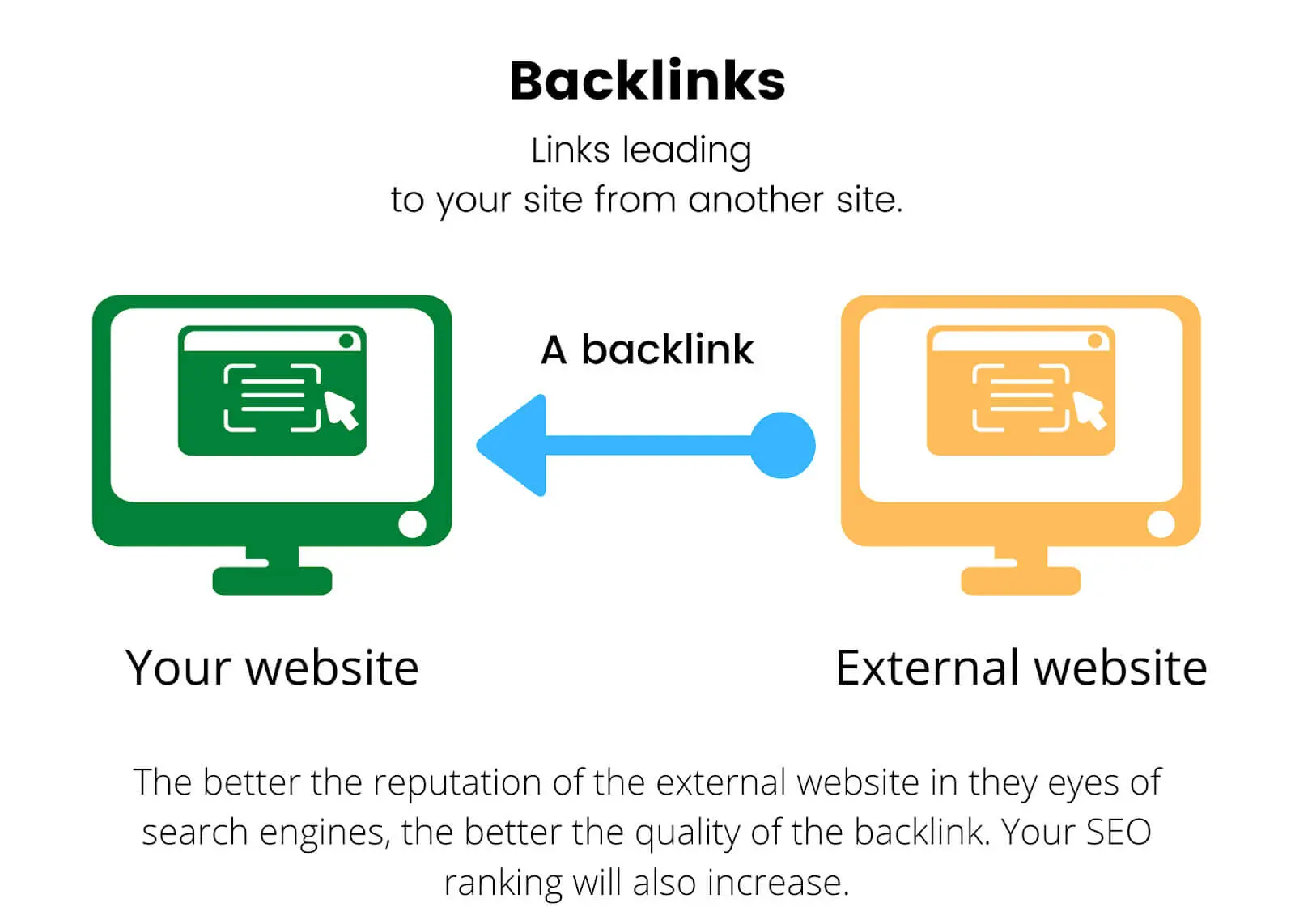
A backlink is a hyperlink from one website to another.
Whenever another website links to your content, it creates a backlink pointing to your website.
For example:
If a respected digital marketing blog references your article about Local SEO and links to it, that hyperlink becomes a backlink for your website.
Backlinks are often called:
- Incoming links
- Inbound links
- External links
Search engines use these links to discover new pages and evaluate the authority of websites.
Book a 15-minute introductory SEO strategy call
Why Google Uses Backlinks as a Ranking Signal
Google’s mission has always been to provide users with the most helpful and trustworthy information.
Imagine thousands of websites publish articles about the same topic.
How does Google decide which one deserves the #1 position?
One important signal is whether respected websites recommend that content through backlinks.
Think of backlinks like professional recommendations.
If multiple trusted industry experts recommend the same business, you’re naturally more likely to trust it.
Google evaluates backlinks similarly.
The more trustworthy websites that reference your content naturally, the more confidence Google gains in your website.
Book a 15-minute introductory SEO strategy call
Are Backlinks Still Important for SEO in 2026?
Yes—but quality matters far more than quantity.
Google’s algorithms have become dramatically more sophisticated.
Today, Google evaluates:
- Relevance
- Context
- Authority
- Trust
- User value
- Natural link patterns
- Website quality
- Spam signals
A website with 20 highly relevant backlinks from authoritative industry websites will often outperform another site with 2,000 low-quality or spammy links.
Backlinks are no longer a numbers game.
They’re a trust game.
Book a 15-minute introductory SEO strategy call
How Google Evaluates Backlinks Today
Google doesn’t simply count backlinks.
It evaluates multiple quality signals.
1. Relevance
Links from websites in your industry carry much more weight.
For example:
A backlink from an SEO blog to your SEO article is significantly more valuable than a backlink from an unrelated cooking website.
2. Website Authority
Links from respected websites generally pass more authority than unknown or low-quality sites.
Examples include:
- Government websites
- Universities
- Established news publications
- Industry-leading companies
- Well-known business organizations
3. Editorial Placement
Editorial backlinks that are naturally included within useful content are considerably stronger than links placed in footers, sidebars, or random directories.
4. Context
Google understands the surrounding content.
A backlink inside an article discussing SEO strategies is more valuable than the same link placed on an unrelated page.
5. Natural Link Profile
Healthy backlink profiles grow naturally over time.
Google expects diversity in:
- Anchor text
- Referring domains
- Link sources
- Content types
Artificial patterns can trigger spam detection systems.
Book a 15-minute introductory SEO strategy call
Understanding Link Equity (Previously Called Link Juice)
SEO professionals often refer to “Link Equity” instead of the older term “Link Juice.”
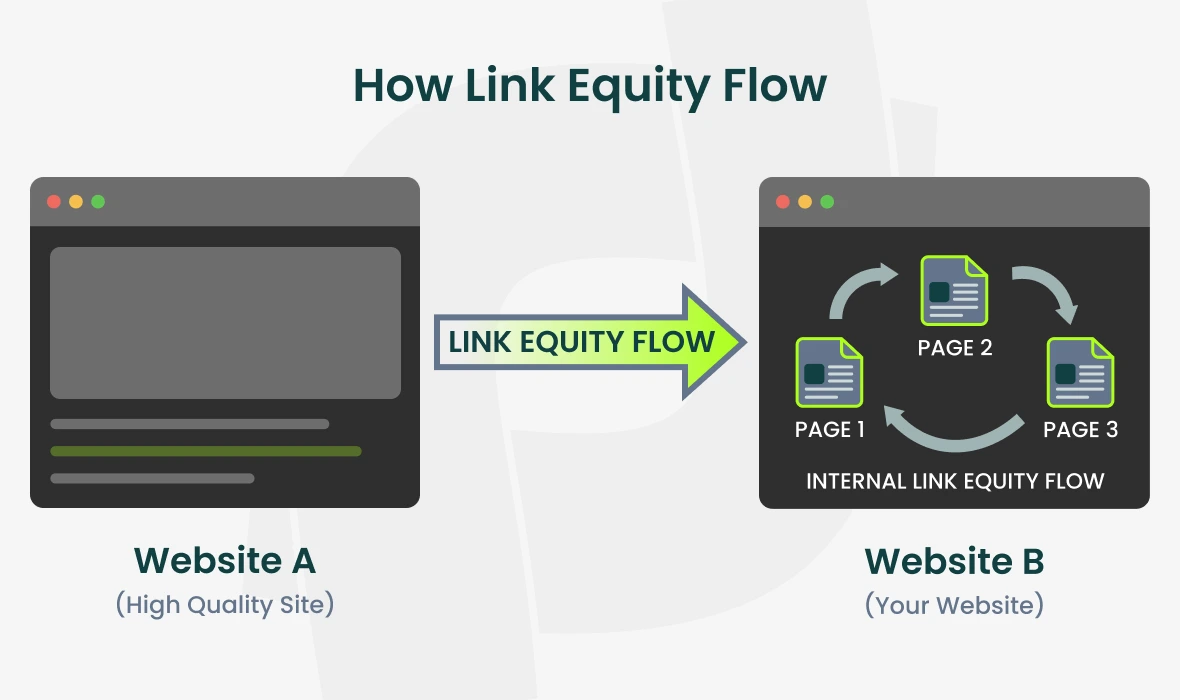
Link equity is the authority and trust transferred from one webpage to another through hyperlinks.
However, not every backlink passes the same amount of value.
Several factors influence link equity:
- Website authority
- Topic relevance
- Placement within content
- Page authority
- Number of outbound links
- Crawlability
One editorial backlink from a respected publication may provide significantly more value than hundreds of low-quality links.
How Backlinks Improve SEO
Increase Search Rankings
High-quality backlinks remain one of Google’s strongest ranking signals.
They help search engines understand that your content deserves visibility.
Improve Domain Authority
Although Domain Authority is a third-party metric rather than a Google ranking factor, earning quality backlinks generally improves your website’s overall authority and competitive strength.
Faster Indexing
Search engine crawlers discover new pages by following links.
Strong backlinks can help important pages get discovered and indexed more efficiently.
Referral Traffic
Backlinks don’t only improve rankings.
They also send real visitors from other websites.
If those visitors find your content valuable, they may become customers or subscribers.
Build Brand Credibility
Being referenced by respected publications enhances your reputation with both users and search engines.
Trust builds rankings—and conversions.
Book a 15-minute introductory SEO strategy call>
The Types of Backlinks That Actually Help SEO
Editorial Links
The highest-quality backlinks.
These happen naturally when another website references your content because it provides value.
Guest Post Links
Publishing useful articles on relevant industry websites remains an effective white-hat strategy when focused on expertise rather than manipulation.
Digital PR Links
News coverage, research reports, surveys, original statistics, and expert commentary often earn powerful backlinks.
Resource Page Links
Many organizations maintain curated resource pages.
If your content genuinely helps their audience, you may earn valuable editorial backlinks.
Local Citations
For local businesses, backlinks from chambers of commerce, industry associations, business directories, and local organizations strengthen local SEO.
Book a 15-minute introductory SEO strategy call
Backlinks That Can Harm Your Website
Avoid shortcuts.
Google’s spam policies are increasingly effective at identifying manipulative link practices.
Risky backlink sources include:
- Purchased links
- Private Blog Networks (PBNs)
- Spam directories
- Automated link-building software
- Link farms
- Irrelevant blog comments
- Excessive reciprocal linking
- Hidden links
A handful of quality backlinks will always outperform thousands of spammy ones.
How to Earn High-Quality Backlinks in 2026
Publish Original Research
Data-driven content naturally attracts citations.
Examples include:
- Industry surveys
- Case studies
- Original statistics
- Benchmark reports
Create Linkable Assets
Develop content people genuinely want to reference.
Examples:
- Ultimate guides
- Free tools
- Templates
- Calculators
- Checklists
- Infographics
Build Topical Authority
Instead of writing isolated articles, create comprehensive content clusters around your expertise.
Google increasingly rewards websites demonstrating deep topical knowledge.
Digital PR
Share expert opinions, company data, and industry insights with journalists and publications.
Quality media mentions often generate powerful backlinks.
Update Existing Content
Refreshing older articles with current statistics, visuals, and expert insights encourages new backlinks while maintaining existing rankings.
Book a 15-minute introductory SEO strategy call
Backlinks and EEAT: Why Trust Matters More Than Ever
Google emphasizes Experience, Expertise, Authoritativeness, and Trust (E-E-A-T) when evaluating content quality.
Backlinks support E-E-A-T because they demonstrate that other trusted websites consider your content worth referencing.
However, backlinks alone aren’t enough.
Strong E-E-A-T also requires:
- Author expertise
- Accurate information
- Original insights
- Transparent business information
- Updated content
- Positive reputation
- Reliable sources
When combined, these signals strengthen your website’s overall credibility.
Book a 15-minute introductory SEO strategy call
Common Backlink Myths
Myth 1: More backlinks always mean higher rankings
False.
Quality consistently beats quantity.
Myth 2: Every backlink passes SEO value
False.
Some links pass little or no ranking value depending on context and attributes.
Myth 3: Buying backlinks is a safe shortcut
False.
Paid, manipulative links violate Google’s spam policies and can negatively impact rankings.
Myth 4: Backlinks are the only ranking factor
False.
Google evaluates hundreds of ranking signals, including helpful content, user intent, page experience, technical SEO, internal linking, topical authority, and content freshness.
Book a 15-minute introductory SEO strategy call
Final Thoughts
Backlinks continue to be one of the strongest indicators of trust and authority in modern SEO.
However, successful SEO in 2026 isn’t about collecting as many links as possible—it’s about earning recommendations from relevant, trustworthy websites by consistently publishing exceptional content.
Focus on creating genuinely helpful resources, building topical authority, improving user experience, and developing relationships within your industry.
When your content becomes a valuable resource that others naturally reference, high-quality backlinks follow—and so do stronger rankings, increased visibility, and sustainable organic growth.
Frequently Asked Questions
Do backlinks still matter in 2026?
Yes. While Google uses many ranking signals, high-quality backlinks remain an important indicator of authority and trust.
How many backlinks do I need to rank?
There is no fixed number. The quality, relevance, and authority of backlinks matter much more than the total count.
Can bad backlinks hurt my website?
Spammy or manipulative backlinks may negatively affect your site’s performance. Focus on earning natural links from reputable websites.
What’s the difference between internal links and backlinks?
Internal links connect pages within your own website, while backlinks are links from external websites pointing to your content.
How long does it take for backlinks to improve rankings?
It varies. Depending on crawl frequency, competition, and website authority, improvements may take several weeks to several months.
Are nofollow backlinks useless?
No. While they may pass limited ranking signals, they can still drive referral traffic, improve brand visibility, and contribute to a natural backlink profile.