
ChatGPT is a fast assistant for SEO research, drafting, structuring and routine technical tasks. It is not a ranking tool. Agencies that get results in 2026 use it to speed up preparation and analysis, then add original expertise, verified data and human editing before anything goes live. Google’s May 2026 guidance on generative AI features reportedly adds nothing beyond traditional SEO basics, so the fundamentals still decide who gets seen. Google’s AI features and your website page is the place to start. practicalecommerce
Introduction
Most agencies are no longer asking whether to use ChatGPT. They’re asking why their AI-assisted content ranks for a week and then disappears, or why a client’s page looks fine but never shows up in an AI-generated answer.
The usual cause is the same. The tool was used to produce more content, not better content. A tool that makes anything easy to publish makes the same thing easy for every competitor, so what separates sites now is original insight, accurate detail and clear structure.
This guide covers what ChatGPT does well for search engine optimisation in 2026, where it fails, a workflow your team can copy, and how to write pages that Google’s AI features are more likely to use as sources. It’s written for agency owners and in-house marketers who need results and a process they can defend to clients. If you’d rather have a specialist team handle it, see our SEO services.
What Does “Using ChatGPT for SEO” Actually Mean?
Using ChatGPT for SEO means using a large language model to support the research, planning, drafting, optimisation and analysis steps of search marketing, while people stay responsible for strategy, accuracy and quality.
It’s useful to separate three jobs:
- Thinking work: clustering topics, spotting intent, finding gaps in a competitor’s page.
- Production work: outlines, first drafts, meta titles, FAQ ideas, schema drafts.
- Checking work: auditing existing pages against a brief, summarising crawl exports.
ChatGPT is strong at the first two and only adequate at the third unless you give it real data. It has no built-in view of your client’s rankings, search volumes or competitors’ backlinks. Without a connected data source, anything it says about those numbers is a guess. Use Google Search Console for your own site’s real data.
What Changed in 2026: AI Overviews, AI Mode and the Return to Basics
Search results now include AI-generated summaries, and many agencies assumed this needed a separate “AI SEO” toolkit. Google’s own position says otherwise.
- Google published guidance on optimising for its generative AI features on 15 May 2026, and it applies to AI Overviews and AI Mode. The ongoing reference is Google’s AI features and your website documentation. practicalecommerce
- The guidance says there is no special schema for AI Overviews and no need to split articles into artificial chunks. startupfortune
- Pages must be indexed and eligible to show in Search with a snippet to appear as supporting links. The baseline requirements sit in Google Search Essentials. thekatynews
- There is no ideal page length, and Google cautions against creating a page for every possible query variation. withsurface
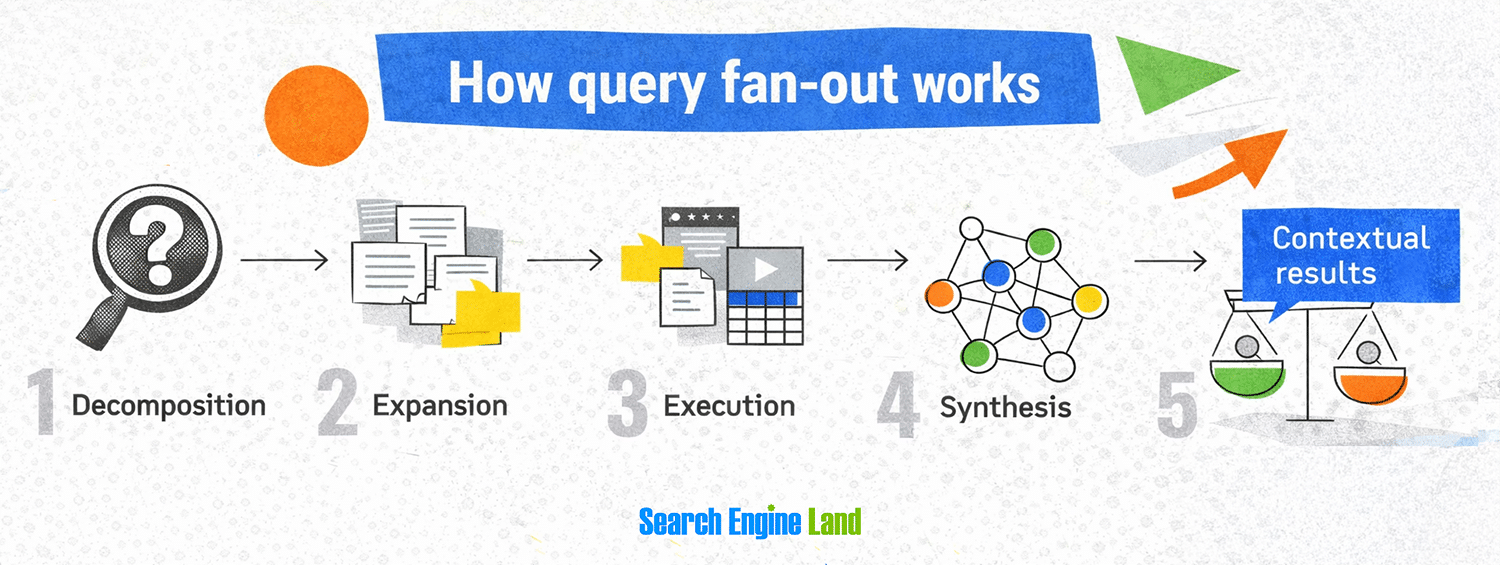
- These features sit on Google’s core ranking and quality systems, using retrieval-augmented generation and query fan-out. w3era
Query fan-out means the AI breaks one question into several related searches and pulls from many pages. A page that answers one narrow question well can be cited even if it isn’t the top organic result. A page that covers a topic thinly won’t be.
For agencies, this changes priorities more than tactics: technical health, clear structure and original substance matter more than volume. If you’re unsure where your site stands, our technical SEO audit covers crawlability, indexing and page experience.
Where Does ChatGPT Genuinely Help SEO Agencies?
Research and Content Briefs
Give it a topic, the audience and the competing pages’ headings, and ask for gaps: what the top results skip, which questions go unanswered, which claims are unsupported. This is faster than manual reading and surfaces angles worth owning.
Example: For a Melbourne accounting client, ask: “Here are the headings of the top five pages for ‘small business tax deadlines Australia’. List questions a sole trader would still have after reading all five.”
Search Intent Mapping
Paste a list of queries from Search Console and ask it to group them by intent (learn, compare, buy, local). Treat the output as a first sort, then check the actual search results yourself. For location-led queries, pair this with our local SEO services approach.
Drafting and Structuring
Use it for outlines, first drafts of low-risk sections and alternative phrasings of headings. Don’t publish its draft as is. A raw draft lacks first-hand detail, and Google’s people-first guidance still warns against content made mainly to attract search traffic and against extensive automation across many topics. Read Google’s people-first content guidance and its page on using generative AI content before changing your process. For editorial support, see our content marketing services.
On-Page Elements
Meta titles, meta descriptions, alt text and FAQ candidates are good fits because they’re short and easy to check. Ask for five variants, then pick and edit one.
Technical Support Tasks
Useful and low-risk: drafting regex for Search Console filters, writing redirect mapping logic, producing JSON-LD for a human to validate, and explaining the output of a crawl export. Always test in a staging environment, and validate markup with Google’s Rich Results Test and the Schema Markup Validator. Google’s structured data introduction explains what each type does.
Reporting and Client Communication
Summarising a month of Search Console and GA4 exports into plain English saves hours. Give it the data and check every number it repeats.
Outreach Support
It can draft personalised outreach emails and suggest relevant angles. Send fewer, better-targeted emails. Mass-generated outreach damages reputation faster than it earns links.
Where Does ChatGPT Fall Short?
Knowing its limits is what protects your clients.
| Weakness | What goes wrong | How to handle it |
|---|---|---|
| Invented data | Fabricated statistics, studies or quotes | Verify every figure against the original source |
| No live SEO metrics | Guesses at volume, difficulty and rankings | Use Search Console, Semrush, Ahrefs or similar tools |
| Generic output | Content that reads like every other result | Add first-hand examples, original data, expert quotes, as shown in our case studies |
| Outdated knowledge | Old algorithm advice presented as current | Cross-check against Google Search Central |
| Local blind spots | Wrong Australian laws, suburbs, regulations | Have someone with local knowledge review |
| Brand voice drift | Bland or inconsistent tone | Provide a voice guide and real writing samples |
What Does a Human-Reviewed AI SEO Workflow Look Like?
This is the sequence we recommend. Adapt it to your team.
- Start with real data. Pull queries and pages from Search Console, plus competitor SERPs. Never start with a blank prompt.
- Define the goal and reader. Who is searching, what do they need, what should they do next?
- Use ChatGPT for the brief. Gaps, questions, structure, entities to cover.
- Add the human layer first. Before drafting, list what only your team knows: client results, screenshots, process steps, opinions and mistakes.
- Draft, then rewrite. Use AI for a skeleton, then edit for accuracy, voice and original contribution.
- Fact-check and source. Every statistic needs a link to a primary source.
- Technical pass. Titles, headings, internal links, schema, image alt text and page speed. If the site itself is slow or hard to crawl, our web design team can fix the foundations.
- Publish with author and dates. Show who wrote it, who reviewed it and when it was last updated.
- Measure and refresh. Review rankings, impressions, AI citations and conversions at 30, 60 and 90 days.
Which Prompts Work Best for SEO Tasks?
Good prompts give context, constraints and a format. These three are starting points.
- Content gap analysis
“Act as an SEO strategist for [industry] in Australia. Here are the headings from the top 5 results for [query]. List the questions a [audience] would still have, and which sections need examples or original data.”
- Intent clustering
“Group these 80 queries by search intent (informational, comparison, transactional, local). Flag any that should share a page and any that need their own.”
- Page review
“Compare this draft against this brief. List missing subtopics, unsupported claims, repeated points and sentences that sound generic.”
Save prompts that work in a shared library so the whole team uses the same standard.
How Do You Get Cited in AI Overviews and AI Answers?
There’s no trick, but there are habits that make a page easier to select and trust.
- Answer the question early. A short, direct answer under the heading, then depth. This helps users and extraction alike.
- Keep key facts in visible text. Don’t hide important information in images or scripts.
- Use clear headings and short paragraphs. Make each section make sense on its own.
- Show real expertise. Original data, screenshots, process detail and before-and-after examples give AI systems and readers something to cite.
- Make the page eligible. Indexable, crawlable and snippet-eligible, per Google’s AI features documentation.
- Link topics together. Google recommends crawlable, descriptive internal links that help users and Google understand related pages. Connect this guide to our SEO services page and related posts such as how to get more Google reviews.
- Match structured data to what’s on the page. Schema should describe visible content, not add claims.
- Keep dates honest. Show published and updated dates, and update only when content actually changes.
- Check other AI crawlers. ChatGPT and Perplexity use their own crawlers. Review OpenAI’s crawler documentation and Perplexity’s bot guide, and make sure your robots.txt isn’t blocking them if you want citations there.
Google’s guidance applies to its own AI features and not necessarily to other assistants, so track visibility on each surface separately where it matters to the client.
What Are the Risks and Compliance Issues in Australia?
Quality and spam policies. Google allows AI-assisted content that is helpful and original. Scaled, low-value pages made to manipulate rankings break its spam policies regardless of how they were written.
Consumer law. Claims in AI-written copy are still your client’s claims. The ACCC enforces against misleading conduct and fake reviews, so never let AI invent testimonials, awards or results. See the ACCC’s guidance on online reviews.
Privacy. Don’t paste client customer data, passwords or confidential documents into public AI tools. Check the OAIC’s guidance on privacy and the use of commercially available AI products, and put an AI-use clause in client agreements.
Governance. The Australian Government’s Voluntary AI Safety Standard is a useful framework for writing your agency’s AI policy.
Social repurposing. If you adapt content for Facebook or Instagram, check Meta’s rules on AI-generated content in the Meta Business Help Centre.
Transparency. Google notes that explaining how content was created can help readers. A short note about your editorial process builds trust.
How Do You Measure Whether AI-Assisted SEO Is Working?
Rankings alone no longer tell the full story.
- Search Console: impressions, clicks and queries per page, particularly long-tail growth.
- Engagement and conversion: calls, form fills, bookings, revenue. If paid search supports the same goals, our Google Ads management team can align the two.
- Brand visibility: branded search growth and mentions in AI answers (check manually and with tracking tools).
- Efficiency: hours saved per deliverable, with quality held constant. This is the number clients and finance teams care about.
Expect that some informational queries will deliver fewer clicks as AI summaries answer them directly. Being named as a source still builds awareness, so judge results by leads, not traffic alone.
What Are the Most Common Mistakes?
- Publishing unedited AI drafts
- Trusting AI-reported search volumes or “difficulty” scores
- Building a page for every keyword variation
- Skipping author bios and review credits
- Ignoring technical basics while chasing “AI hacks”
- Keeping a prompt library but no quality checklist
Conclusion: Use AI to Go Faster, Not to Sound Like Everyone Else
ChatGPT has become a normal part of agency workflows, and used well it saves real time on research, structuring and routine tasks. It doesn’t replace the things that earn rankings and citations: accurate information, first-hand experience, clean technical foundations and a clear point of view.
Key takeaways:
- Treat ChatGPT as an assistant for preparation and analysis, not a publisher.
- Google’s 2026 guidance points back to SEO fundamentals for AI Overviews and AI Mode.
- Verify every statistic, and never rely on it for live SEO metrics.
- Add original expertise before and after every draft.
- Measure leads and revenue, not just traffic.
Frequently Asked Questions
Can ChatGPT replace an SEO agency?
No. It speeds up tasks such as research and drafting, but strategy, data analysis, technical work, relationship building and accountability for results still need experienced people. See what a full-service team covers on our SEO services page.
Is AI-generated content bad for SEO?
Not by itself. Google judges content on helpfulness and originality, not how it was produced, as explained in its guidance on generative AI content. Unedited, generic or scaled content made to game rankings performs badly.
Does ChatGPT give accurate keyword volumes?
No, not on its own. It can suggest topics and clusters, but volume and difficulty data must come from tools like Google Keyword Planner, Search Console, Semrush or Ahrefs.
How do I get my content into Google AI Overviews?
Make sure the page is indexed and snippet-eligible, answer the question clearly, show real expertise, and use good internal linking and page experience. Google says no special markup or tactics are required. See AI features and your website.
Do I need special schema markup for AI Overviews?
No. Google’s guidance says there’s no AI-specific schema. Standard structured data such as Article, FAQ and Organization still helps search engines understand the page, as long as it matches visible content.
Will ChatGPT and Perplexity cite my website?
They can, if their crawlers can access your pages and the content is clear, original and trustworthy. Check your robots.txt against OpenAI’s and Perplexity’s bot documentation, and monitor citations manually.
Is it safe to put client data into ChatGPT?
Avoid pasting personal or confidential information into public tools. Use business or enterprise plans with appropriate data controls, and follow the OAIC’s AI privacy guidance and your client contracts.
How long does AI-assisted SEO take to show results?
The same as regular SEO: early movement in weeks, solid results in three to six months. AI shortens preparation time, not Google’s evaluation time.