
Introduction
Type a product name into Google and you’ll often see star ratings, prices, and stock status sitting right inside the search result — before anyone clicks through. Ask the same question in ChatGPT, Gemini, or Perplexity, and you’ll notice the answer often cites a specific source with startling precision. Neither of these happens by accident. Both are powered by the same underlying technology: structured data.
Structured data used to be a “nice-to-have” for SEO specialists chasing rich snippets. In 2026, it has become something bigger — the primary language websites use to communicate directly with AI systems, from Google’s AI Overviews to large language models like Claude, ChatGPT, and Gemini that increasingly cite web content as sources. If your site isn’t speaking that language clearly, you’re not just missing out on star ratings. You’re becoming invisible to the tools more people are using to search every day.
This guide breaks down what structured data actually is, how to implement it correctly using JSON-LD, which schema types matter most right now, and — critically — how structured data connects to your visibility in AI-generated answers, not just traditional blue links.
Book a 15-minute SEO audit call
What Is Structured Data, Really?
Structured data is a standardized vocabulary — commonly known as Schema, maintained collaboratively by Google, Microsoft, Yahoo, and Yandex — that describes the content on a webpage in a format machines can parse without guesswork. Instead of a search engine trying to infer that a page is about a recipe, a local business, or a product review, structured data states it explicitly: “this is a Recipe. Its prep time is 20 minutes. Its rating is 4.8 out of 5, based on 340 reviews.”
Think of it as adding labels to a filing cabinet. A human can flip through unlabelled folders and eventually figure out what’s inside each one. A computer can’t — it needs the label on the outside to know what it’s looking at instantly. Structured data is that label, applied to entities like people, organizations, products, events, and articles.
Google has spent over a decade shifting from matching keywords to understanding entities and meaning — a shift often referred to as the move toward semantic search. Structured data is the most direct way to feed that semantic understanding, because you’re not hoping the algorithm interprets your content correctly; you’re telling it directly.
When implemented well, structured data can unlock rich results (also called rich snippets) — enhanced search listings that show extra detail like ratings, prices, FAQs, or event dates directly in the search results page. Rich results take up more visual space, tend to draw more attention, and are associated with higher click-through rates compared to standard blue-link listings.
Book a 15-minute SEO audit call
Why Structured Data Matters More Than Ever in 2026
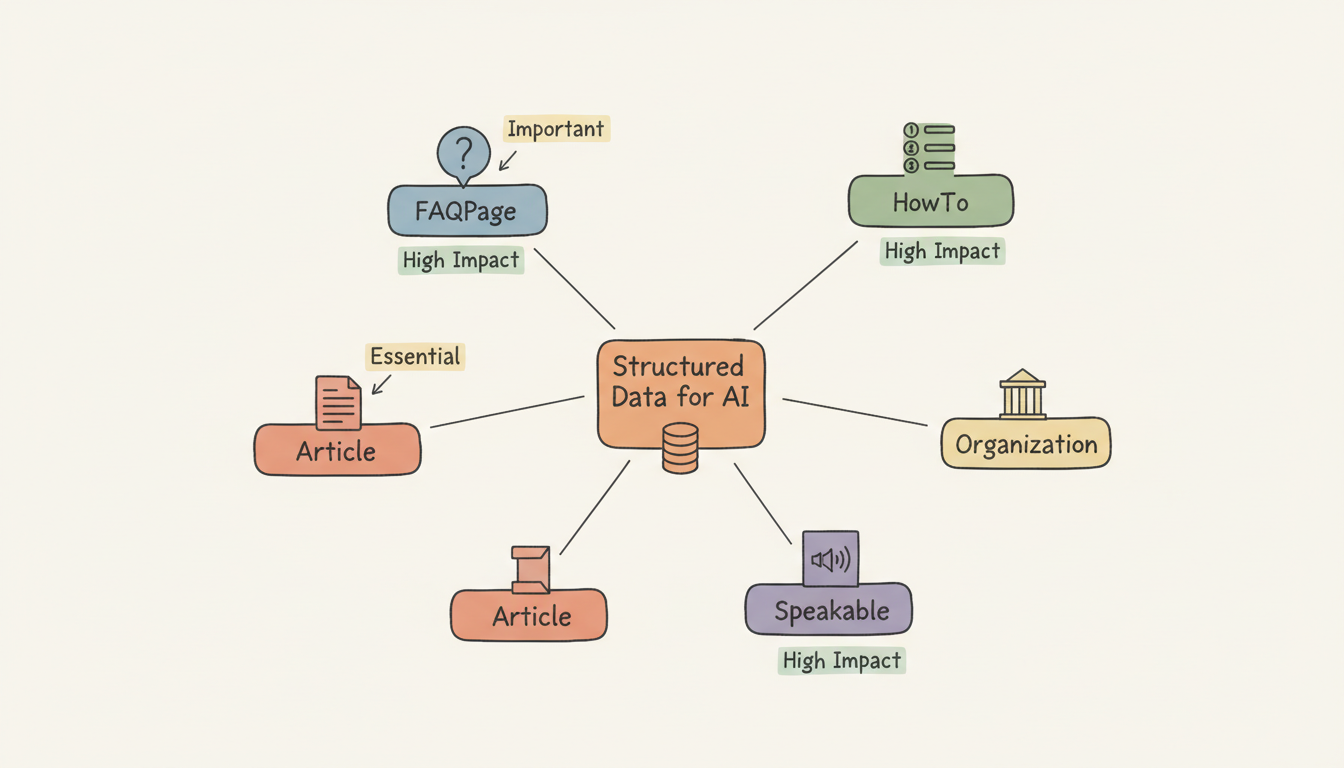
The single biggest shift in the last two years is this: structured data is no longer just for Google’s classic search results — it’s how AI systems decide what to trust and cite.
AI Overviews, Gemini, ChatGPT search, Perplexity, and Claude’s web search all rely on retrieving and summarizing content from the web. These systems have a strong preference for content that is unambiguous, well-organized, and clearly labelled — exactly what structured data provides. A page with clean JSON-LD markup answering “what is this, who made it, when was it published, is it accurate” gives an AI system a much easier path to citing it confidently than a page where that information has to be guessed from paragraphs of prose.
In practice, this means structured data now supports two goals at once:
- Traditional SEO — rich results, better CTR, clearer indexing signals.
- AI/answer engine visibility — a better chance of being the source an AI Overview or chatbot pulls from and links back to.
Sites that treat these as separate problems are already falling behind. The technical foundation is the same for both.
JSON-LD, Microdata, and RDFa: Which Format Should You Use?
There are three accepted formats for implementing structured data, but they are not equally recommended.
JSON-LD (JavaScript Object Notation for Linked Data) is a block of code, typically placed in the <head> of a page, that describes the page’s content separately from the visible HTML. Because it doesn’t need to be woven into your visible markup, it’s easier to implement, easier to update, and far less prone to breaking your design. Google has explicitly recommended JSON-LD as its preferred format, and it’s what we recommend for virtually every use case in 2026.
Microdata embeds structured data attributes directly inside your existing HTML tags. It works, but it’s more fragile — a small template change can quietly break your markup without anyone noticing.
RDFa is similar to Microdata in that it lives inline with your HTML, and is more commonly seen in older or more specialized publishing systems.
Unless you have a specific technical reason to use Microdata or RDFa, JSON-LD is the standard choice. You can browse the full list of schema types to see every entity and property currently supported.
Book a 15-minute SEO audit call
The Schema Types That Matter Most Right Now
Schema.org includes hundreds of defined types, but most businesses only need a handful, applied correctly and consistently. The highest-impact types in 2026 include:
- Organization — establishes your business identity, logo, and official profiles across the web
- LocalBusiness — critical for local SEO, especially for service-based and location-based businesses
- Service — clarifies exactly what you offer, useful for agencies and B2B providers
- Product & Review/AggregateRating — powers price, availability, and star-rating rich results
- Article / BlogPosting — helps search engines and AI systems understand authorship, publish date, and topic
- Event — surfaces dates, locations, and ticketing info directly in search
- Person — supports author bios and E-E-A-T signals (more on this below)
- FAQPage — one of the most effective types for earning expandable FAQ rich results
- BreadcrumbList — reinforces site structure and navigation context
Applying the right type — and only the properties that are genuinely true and visible on the page — is what separates markup that helps from markup that risks a penalty.
How to Create Your Own Schema Markup
You don’t need to hand-code JSON-LD from scratch, though understanding the basics helps you troubleshoot issues later.
Option 1: Google’s Structured Data Markup Helper. Highlight the relevant elements on your page, label them (e.g., “Article,” “Product,” “Event”), and the tool generates the corresponding code for you.
Option 2: A schema generator or SEO plugin. If you’re on WordPress, most modern SEO plugins now include built-in schema modules that automatically generate JSON-LD for posts, products, and local business data — significantly reducing manual work.
Option 3: Manual JSON-LD, for full control. For custom sites or highly specific pages, writing the JSON-LD directly gives you the most precision, particularly for combining multiple schema types on one page (e.g., an Article with an embedded FAQPage and an Organization reference).
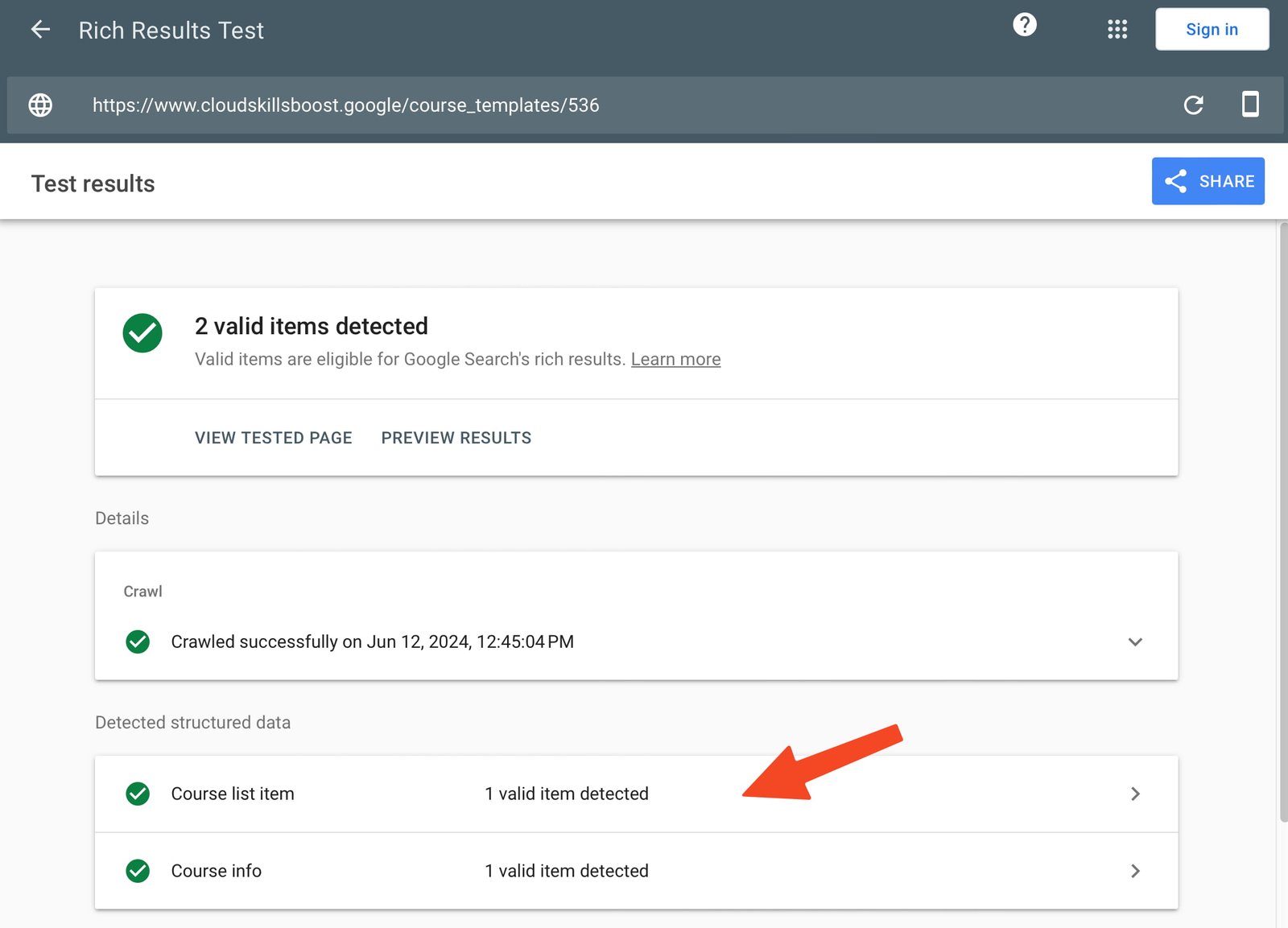
Whichever method you use, always validate before publishing.
How to Test and Validate Structured Data
Once your markup is live, don’t assume it’s correct — test it. Two tools should be part of your regular workflow:
- Google’s Rich Results Test — checks whether a specific URL is eligible for rich results and flags errors or warnings
- Google Search Central’s Structured Data documentation — the authoritative reference for required vs. recommended properties per schema type
- Schema.org Validator — a broader validator that checks markup against the full Schema.org vocabulary, not just Google’s supported subset
For sitewide audits, tools like SEMrush’s Site Audit can flag which pages are missing structured data entirely, which is often more useful than checking pages one at a time.
Make structured data validation part of your regular technical SEO checklist — not a one-time setup task. Site migrations, template updates, and plugin changes are common ways markup silently breaks.
Does Structured Data Actually Improve Rankings?
Here’s the honest answer: structured data is not a direct ranking factor, but it drives the things that are.
- Rich results are more visually prominent, which tends to improve click-through rate — and CTR is a strong behavioral signal.
- Clearer semantic signals help search engines (and AI systems) index and categorize your content more accurately, reducing the chance of being misunderstood or overlooked.
- Structured data supports E-E-A-T (Experience, Expertise, Authoritativeness, Trustworthiness) by making authorship, credentials, and organizational identity explicit and machine-readable — a concept drawn from Google’s Search Quality Rater Guidelines and increasingly weighted in its quality evaluations, and something AI systems use when deciding what to cite as a trustworthy source.
In short: structured data won’t rescue thin or low-quality content, but for genuinely strong content, it removes friction between what you’ve written and how clearly machines can understand and reward it.
Google’s Requirements — and Common Mistakes to Avoid
Google is explicit about what’s allowed. The most common ways businesses lose rich result eligibility (or worse, receive a manual action) include:
- Marking up content that isn’t visible on the page. Structured data must reflect what a user can actually see and verify.
- Missing required properties. Each schema type has required fields — skip them, and the page won’t qualify for the associated rich result.
- Letting data go stale. A product marked “in stock” that’s actually sold out, or a review score that hasn’t been updated, can get your rich result eligibility revoked.
- Blocking access. If your robots.txt, noindex tags, or a login wall prevents Google from crawling the content and its markup, none of it counts, and repeated violations of Google’s guidelines can lead to a manual action.
- Using JSON-LD is the strongly recommended format — but Microdata and RDFa remain technically accepted if you have a legacy reason to use them.
Structured data guidelines evolve regularly, so a quarterly review against Google’s current documentation is a good habit, not a one-time task.
Structured Data and AI Overviews: What’s Different in 2026
This is the area most guides still haven’t caught up on. AI Overviews and chatbot-style search tools don’t just rank pages — they synthesize them into a single answer, often citing two or three sources. To be one of those sources, your content needs to be:
- Unambiguous — structured data removes guesswork about what your page is and what it claims
- Well-attributed — Article and Person schema make it clear who wrote the content and when, supporting the trust signals AI systems weigh
- Directly answerable — FAQPage schema, in particular, maps almost perfectly onto how AI systems extract question-and-answer pairs
If you want your content to show up not just in Google’s blue links but as a cited source inside AI Overviews, Gemini, or ChatGPT responses, structured data isn’t optional supporting work anymore — it’s foundational.
Book a 15-minute SEO audit call
Frequently Asked Questions
Is structured data a direct Google ranking factor?
No. Google has stated structured data isn’t a direct ranking signal, but it improves click-through rate and content clarity, both of which support better performance indirectly.
Which structured data format does Google recommend?
JSON-LD. It’s easier to implement, less likely to break your page design, and is Google’s explicitly stated preference, though Microdata and RDFa are still technically supported.
Can I add structured data without touching my website’s code?
Yes, in most cases. WordPress SEO plugins and schema generator tools can add JSON-LD automatically for common content types like articles, products, and local business listings.
What happens if my structured data has errors?
Depending on the severity, your page may simply lose eligibility for the associated rich result, or in cases of misleading markup, Google can issue a manual action. Regular validation prevents both outcomes.
Does structured data help with AI Overviews and tools like ChatGPT?
Yes. Clear, accurate structured data makes it easier for AI systems to understand, trust, and cite your content when generating summarized answers.
How often should I check my structured data?
At minimum, quarterly — and immediately after any site migration, redesign, or plugin update, since these are the most common causes of broken markup.
Conclusion
Structured data has quietly become one of the most important technical foundations in modern SEO — not because it directly moves rankings, but because it’s the clearest way to make sure both search engines and AI systems understand exactly what your content is and why it deserves to be shown, cited, and trusted. Getting it right means combining the correct schema types, clean JSON-LD implementation, regular validation, and content that’s genuinely accurate on the page it describes.
If your website hasn’t been audited for structured data recently — or has never had it properly implemented — it’s one of the highest-leverage technical SEO fixes available in 2026, especially as more search behavior shifts toward AI-generated answers.