
Introduction
If you haven’t looked under the hood of your website’s SEO in the last few months, there’s a good chance something is quietly costing you traffic right now — a broken redirect, a slow-loading page, a piece of content that no longer matches what people are actually searching for. A website SEO audit is the process of systematically checking your site’s technical health, content quality, and search visibility so you can find and fix these issues before they show up as a ranking drop.
This isn’t a “set and forget” exercise. Google now rolls out algorithm changes on an almost daily basis — you can track every confirmed change on the Google Search Central Blog — and in 2026 search results are shaped not just by traditional ranking factors but by how well your content performs inside AI Overviews, AI chat assistants, and other generative search surfaces. A site that was fully optimised a year ago can lose visibility today simply because the rules — and the way people search — have moved on.
In this guide, we’ll break down exactly why regular SEO audits matter in 2026, the specific metrics and technical checks worth prioritising, how to align your content with both traditional Google ranking and AI-driven search, and a practical checklist you can start using immediately.
What Is a Website SEO Audit?

A website SEO audit is a structured review of your website across three core areas:
- Technical SEO – crawlability, indexing, site speed, mobile usability, structured data, and security
- On-page SEO – content quality, keyword relevance, search intent alignment, internal linking, and metadata
- Off-page SEO – backlink profile, brand mentions, and external trust signals
The goal isn’t just to collect data — it’s to turn that data into a prioritised action plan that protects and grows your organic visibility.
Why Regular SEO Audits Matter More in 2026
1. Google’s Algorithm Is Changing Faster Than Ever
Google doesn’t make one or two updates a year anymore — it makes continuous, ongoing adjustments to its ranking systems, alongside several confirmed core and spam updates throughout the year, all logged on Google’s own Search Status Dashboard. Recent 2026 core updates have shifted rankings noticeably, with sites relying on thin or unreviewed AI-generated content seeing the steepest drops, while sites built on genuine expertise and first-party experience have gained ground.
What this means for you: a quarterly (at minimum) SEO audit is no longer a “nice to have.” It’s how you catch ranking volatility early and understand whether a traffic dip is a temporary algorithm fluctuation or a genuine problem with your site.
2. Search Is Expanding Beyond the Traditional Results Page
Search behaviour in 2026 includes AI Overviews, conversational search, and AI assistants like ChatGPT, Gemini, Perplexity, and Claude pulling directly from web content to generate answers. This has given rise to new disciplines sitting alongside traditional SEO:
- AEO (Answer Engine Optimisation) – structuring content to directly answer specific questions
- GEO (Generative Engine Optimisation) – optimising content so AI tools can accurately cite and summarise it
- AIO (AI Optimisation) – ensuring your brand and content are represented correctly across AI-driven platforms
An SEO audit today has to check not just “can Google crawl this page” but “can an AI system understand, trust, and cite this page.”
3. Topical Authority Now Outweighs Individual Page Optimisation
Google increasingly evaluates how well your entire website covers a subject area — often referred to as topical authority — not just how well a single page is optimised. Sites with focused content clusters, strong internal linking, and consistent publishing in their niche tend to outperform sites that spread themselves across unrelated topics. A regular audit helps you spot content gaps and structure your blog around clusters — for example, grouping every article you write about SEO under a central pillar page.
4. User Experience Signals Are Now Ranking Factors, Not Just “Best Practice”
Page speed, Core Web Vitals, mobile usability, and clean navigation are now directly tied to how well your site ranks. A technical SEO audit is the only reliable way to catch these issues before they affect real users — and your rankings.
The 5 Metrics Every SEO Audit Should Measure
- Search Engine Rankings
Track your position for priority keywords over time using Google Search Console or a rank-tracking tool. A downward trend across multiple keywords — not just day-to-day fluctuation — is your signal to dig deeper.
- Click-Through Rate (CTR)
If you’re ranking well but not getting clicks, the problem usually sits in your title tag, meta description, or how well your snippet matches what the searcher actually wants. Compare your CTR against Search Console’s average CTR benchmarks for your position.
- Engagement Metrics (Pages Per Session & Dwell Time)
A high number of pages viewed per session and a healthy average time on page both signal that visitors are finding what they came for. If people land and leave immediately, that’s a strong sign of a search intent mismatch — the content doesn’t answer the question the way the searcher expected.
- Crawl Errors & Index Coverage
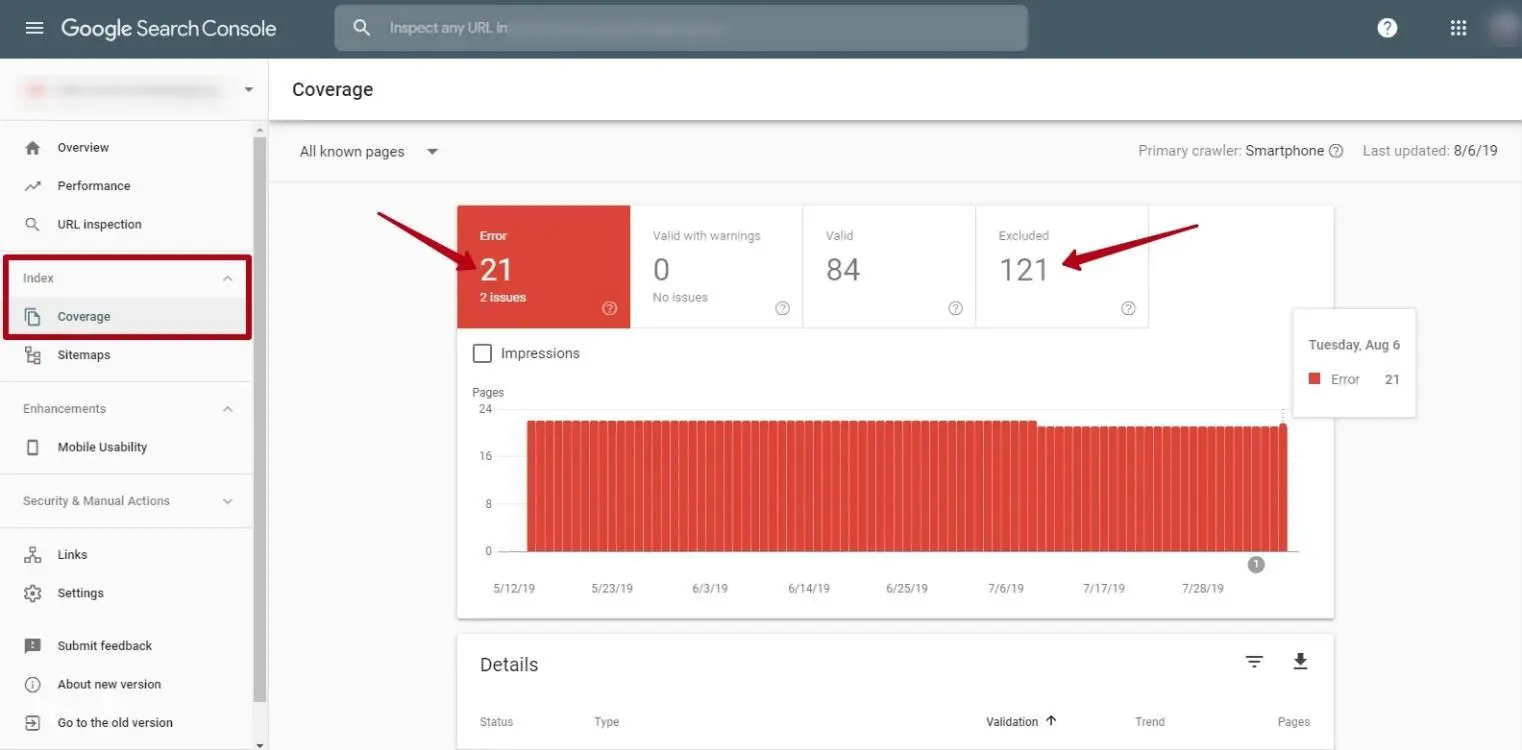
Use Google Search Console’s Coverage report to identify pages Google can’t crawl or has excluded from the index. Common culprits include broken internal links, incorrect canonical tags, accidental “noindex” tags, and duplicate content.
- Core Web Vitals & Page Experience
Google’s Core Web Vitals (Largest Contentful Paint, Interaction to Next Paint, and Cumulative Layout Shift) measure real-world loading speed, interactivity, and visual stability. Test these using Google PageSpeed Insights.
E-E-A-T: The Standard Your Content Needs to Meet in 2026
Google’s quality guidelines are built around E-E-A-T — Experience, Expertise, Authoritativeness, and Trustworthiness. This isn’t a ranking factor you can “add” to a page; it’s a lens Google (and increasingly, AI search systems) use to judge whether your content deserves to be surfaced. A strong SEO audit should check:
- Experience – Does the content reflect genuine, first-hand experience with the topic (case studies, original data, real examples), not just repackaged information?
- Expertise – Is the content written or reviewed by someone genuinely qualified to speak on the subject?
- Authoritativeness – Do other credible sites, industry publications, or customers reference your brand?
- Trustworthiness – Is your site secure (HTTPS), transparent about who runs it, and accurate in what it claims?
You can read Google’s own framework in the Search Quality Rater Guidelines to understand exactly how this is assessed.
Your Website SEO Audit Checklist
Technical SEO
- Confirm all key pages are indexed (Google Search Console → Pages report)
- Fix crawl errors and broken links
- Check Core Web Vitals scores on mobile and desktop
- Confirm HTTPS is active site-wide
- Review and fix duplicate content or canonical tag issues
- Validate structured data (schema markup) using Google’s Rich Results Test
On-Page & Content SEO
- Review top-performing and underperforming pages in Search Console
- Refresh outdated statistics, dates, and examples
- Check each page targets a clear, singular search intent
- Optimise title tags and meta descriptions for CTR
- Audit heading structure (H1–H3) for logical hierarchy
- Strengthen internal linking between related content
Off-Page SEO
- Review backlink profile for toxic or spammy links
- Identify new link-building or digital PR opportunities
- Check brand mentions and online reviews (Google Business Profile, industry directories)
AI Search Readiness
- Ensure key facts and answers appear clearly near the top of the page
- Use FAQ and How-To schema where relevant
- Check whether AI Overviews or AI assistants are already citing your content (or competitors’)
How Often Should You Audit Your Website’s SEO?
- Monthly: Quick technical check — crawl errors, rankings, and Core Web Vitals
- Quarterly: Full content and on-page review, including refreshing older blog posts
- After every confirmed Google core update: A targeted review of any pages that saw ranking movement
Treating SEO as a one-time setup rather than an ongoing process is one of the most common (and costly) mistakes businesses make.
Conclusion: Make SEO Audits Part of Your Routine, Not a One-Off Project
Search in 2026 rewards businesses that treat SEO as an ongoing discipline — not a project you finish and forget. Regular website SEO audits give you the real-world data needed to understand what’s actually working, what’s quietly holding your rankings back, and where the next opportunity for growth is hiding. Combined with a genuine focus on E-E-A-T, technical health, and content that’s built around real search intent, consistent audits are what separate businesses that recover quickly from algorithm shifts from those that lose visibility for months.
If you’re not sure where your website currently stands, that’s exactly where a professional audit adds the most value — a fresh, expert set of eyes can often spot in an hour what takes a business owner weeks to notice.
Frequently Asked Questions
What is a website SEO audit?
A website SEO audit is a comprehensive review of your site’s technical health, content quality, and search visibility, used to identify issues that are limiting your rankings and traffic, and to prioritise fixes.
How often should I audit my website’s SEO?
At minimum, run a full audit quarterly, with lighter monthly checks on rankings, crawl errors, and Core Web Vitals. Audit again after any confirmed Google core update that affects your traffic.
How long does an SEO audit take?
For a small to mid-sized business website, a thorough audit typically takes between a few hours and a few days, depending on site size and the depth of the review. Ongoing monitoring should continue between audits.
Can I do an SEO audit myself, or do I need an agency?
Free tools like Google Search Console and PageSpeed Insights let you do a basic self-audit. However, diagnosing deeper technical issues, content gaps, and AI-search readiness usually benefits from an experienced SEO team that can interpret the data correctly and prioritise fixes.
What’s the difference between a technical SEO audit and a content audit?
A technical SEO audit focuses on crawlability, indexing, site speed, and structured data. A content audit reviews how well your existing pages match search intent, whether information is outdated, and where content gaps or cannibalisation issues exist. A complete SEO audit covers both.
Does SEO still matter now that people use AI tools like ChatGPT and Gemini to search?
Yes — and arguably more than ever. Most AI search tools still rely on well-structured, crawlable, authoritative web content to generate their answers. Strong SEO fundamentals (site structure, E-E-A-T, clear answers to specific questions) are also what make your content more likely to be cited inside AI-generated results.