












SEO is constantly evolving, with each year introducing new challenges and opportunities for content creators and brands striving to dominate the Google SERP.
Key factors like content quality, backlinks, site speed, and UX metrics continue to be vital in determining a site’s ranking. However, there’s a new factor to consider: information gain.
In this article, we’ll dive into the concept of information gain, how it impacts SEO, and how content creators can leverage this strategy to outshine the competition.
Understanding Information Gain in SEO
Information gain, in the context of SEO, refers to a concept introduced in June 2022 that reshapes how search engines assess and rank content.
Unlike traditional SEO factors that prioritize keywords and backlinks, the information gain score evaluates content based on how much new, valuable information it offers compared to what has already been published online.
This approach prioritizes content that fulfills user intent by providing unique insights and fresh perspectives not readily available elsewhere, making it a key strategy for ranking higher in search results.
Indirectly, it encourages content creators to focus on crafting original, high-quality content that provides tangible value, boosting both rankings and user engagement.
Google’s Take on Information Gain
Google’s approach to information gain focuses on enhancing user satisfaction by delivering content that provides new knowledge or insights. Over time, Google’s algorithm updates have shifted toward favoring content that meets users’ needs directly, which is where information gain plays a role.
By rewarding pages that present novel, relevant information, Google aims to improve content quality across the web. This aligns with their larger goal of making search results more meaningful and useful to users seeking specific information.
Information Gain Scores and Their Impact on Search Algorithms
The information gain score is Google’s way of measuring how much a piece of content contributes to a broader understanding of a topic. These scores likely play a role in ranking content in search results, with higher scores given to content that offers new, valuable insights that aren’t covered by other sources.
This scoring system is part of Google’s broader push to evaluate content not just by keywords or backlinks, but by its overall quality and utility. As a result, SEO strategies now need to consider not only how well content is optimized for search engines, but also how well it serves and informs the user, creating a more informative and less redundant web.
Calculating the Information Gain Score
The process of calculating information gain scores for web pages involves several steps:
- Data Collection: Extract relevant content from pages, including full text and key semantic representations like feature vectors.
- Machine Learning Analysis: Feed this data into a trained machine learning model, which compares the new page against previously analyzed pages to evaluate its uniqueness and relevance.
- Score Generation: The model generates an information gain score based on how much new, valuable information the content provides compared to existing pages.
- Result Application: The highest-scoring pages, which offer the most novel information, are presented to users to maximize their knowledge gain.
Information Gain in SEO vs. Machine Learning
While the concept of information gain is shared between SEO and machine learning, their applications differ.
In SEO, information gain emphasizes the uniqueness and value of content in relation to existing web content. It’s about producing content that offers fresh perspectives and insights, improving its relevance in search results.
In contrast, in machine learning, information gain measures how effectively a feature splits data into target classes, particularly in decision trees. It helps determine the most informative features for optimal classification, supporting model efficiency.
SEO professionals must recognize this difference to optimize content not only for search engines but also for genuine user engagement and knowledge provision.
The Evolution of SEO: Beyond Traditional Methods
The introduction of information gain marks a shift in SEO strategies. The Skyscraper Technique, popularized by Brian Dean, which once relied on compiling top-ranking content into a more expansive form, is now evolving.
As Google increasingly values originality and user-centric content, the emphasis is on creating material that adds real value, rather than simply rehashing what already exists. This change challenges brands and creators to dig deeper into their subjects, offering fresh, previously unavailable insights to enhance the overall quality and depth of information online.
Adapting to Market Shifts: A Fresh Approach to Content Creation
With the sheer volume of content available today, it’s clear that nearly every niche is becoming more crowded and competitive.
At the same time, user expectations are on the rise—audiences are no longer interested in seeing the same content over and over again.
Today’s consumers demand quick, precise, and comprehensive answers right from the start. To stay ahead, you need to dig deeper and continually evolve your content to meet these shifting demands. This means understanding not just the information that’s already out there, but also anticipating emerging trends and addressing user queries that have yet to be fully explored.
In other words, it’s more important than ever to focus on…
Spotting Content Gaps and How to Find Them
Identifying content gaps is a key step in leveraging information gain for SEO. A content gap occurs when there’s an area within a topic where information is either missing or underdeveloped, providing an opportunity for creators to introduce fresh insights that meet user needs.
To effectively pinpoint these gaps:
- Use tools like Google Search Console to identify queries that drive traffic but don’t fully satisfy user intent, resulting in high bounce rates or low dwell times.
- Perform a content gap analysis using tools like Ahrefs or SEMrush.
- Analyze your competitors’ content to find questions that aren’t adequately addressed, revealing areas to fill in with more comprehensive material.
- Engage directly with your audience through methods like email surveys or social media interactions to uncover unmet needs and gain insight into potential areas for content expansion.
Creating Content for Maximum Information Gain
Now that you have a solid understanding of information gain in SEO, let’s explore actionable strategies to improve your content’s information gain score.
To do this, you need to look beyond the standard SEO metrics and focus on the depth, originality, and value of the content you create. Here’s how to get started:
Begin by analyzing existing content on your topic to understand what has already been covered, then identify key areas that remain unexplored. Use tools like Answer the Public or alsoasked.com to find real user questions related to your topic, and ensure your content addresses them with fresh, relevant insights that reflect current trends and data.
In the end, every piece should aim to contribute something new to the conversation—not just rehash what top-ranking content has already said.
Here are seven effective strategies to boost your information gain:
1. Integrating Original Research and Proprietary Data
Conducting your own research and gathering exclusive data on a relevant topic adds significant uniqueness to your content, positioning it as an authoritative source.
This immediately elevates your content’s originality. Whether it’s statistical analysis, survey results, case studies, or insights from proprietary company data, this type of content offers distinct value to users and is favored by Google.
For example, if you operate an e-commerce site, sharing data on customer behavior or case studies about your sales performance can provide valuable and unique insights for your target audience.
2. Collaborating with Experts for Genuine Insights
Collaborating with industry experts or thought leaders to gain their insights can significantly enhance your content’s credibility and information gain score.
Interviews (via email, video, or in person), expert commentary, or co-authored articles bring diverse, expert-driven perspectives that deepen the value of your content. This not only strengthens the authenticity of the information but also taps into the expert’s authority and network, expanding your content’s reach and engagement.
Moreover, expert contributions can break down complex topics that may be challenging for general content creators, ensuring that your content addresses nuanced user queries effectively, which enhances both user satisfaction and brand trust.
3. Differentiating Your Content with Unique Value Propositions
Original research and expert insights serve as your content’s unique value propositions (UVPs), helping to set your material apart from others in the niche.
Additionally, differentiating your content through creative storytelling formats (such as interactive elements) or offering a counterpoint to widely held beliefs can help make your content stand out.
Make these unique aspects clear from the beginning to grab your audience’s attention. Visually distinctive elements, like infographics or custom graphics, can also help your content shine in a crowded space.
4. Aligning Content with the User Journey for Greater Engagement
For your content to truly resonate, it must match the intent of your audience. Users on Google are at various stages of the buying funnel — from awareness and consideration to decision-making and advocacy.
Each of these stages requires specific types of content, such as: introductory posts for newcomers, in-depth guides for those seeking more detailed information, comparison articles for those in the decision-making phase, and post-purchase content or community stories for customer engagement and loyalty.
By tailoring your content to these stages, you can smoothly guide a visitor from casual browsing to becoming a loyal customer. This approach not only makes your content more relevant to different types of users but also boosts information gain by encouraging deeper engagement with your brand.
5. Shaping Your Content Marketing Strategy to Maximize Information Gain
Adjusting your content marketing strategy to prioritize information gain goes beyond creating unique content; it involves a fundamental shift in how you conceptualize and execute your content.
As mentioned earlier, integrate a stronger focus on user intent during the content planning phase. Understand why users visit your site and what specific questions they need answers to. Incorporating this data into your content creation ensures that each piece not only addresses those questions but also offers new insights.
Additionally, pay attention to the structure and presentation of your content. Breaking down complex information into easily digestible, engaging sections can enhance your content’s accessibility and value, ultimately boosting its information gain score.
6. Analyzing and Leveraging Differentiator Keywords
Differentiator keywords are those unique to your brand or niche that aren’t overly competitive or widely used. Identifying and utilizing these keywords helps you target niche markets and attract more focused traffic.
Use SEO tools like Ahrefs or Google Keyword Planner to discover relevant, less-saturated keywords within your industry. These might include long-tail phrases or “People also ask” questions. By incorporating these keywords, you not only improve your rankings but also enhance your content’s information gain, making it more aligned with the specific interests and needs of your audience.
7. Building Topical Authority with Silo Structuring
Establishing topical authority is a key aspect of SEO, and one effective method to achieve this is through silo structuring your content. This approach organizes your website into clear, distinct categories or ‘silos’ focused on specific topics. Within each silo, related content is interconnected with strategic internal linking that strengthens the theme and relevance of the section.
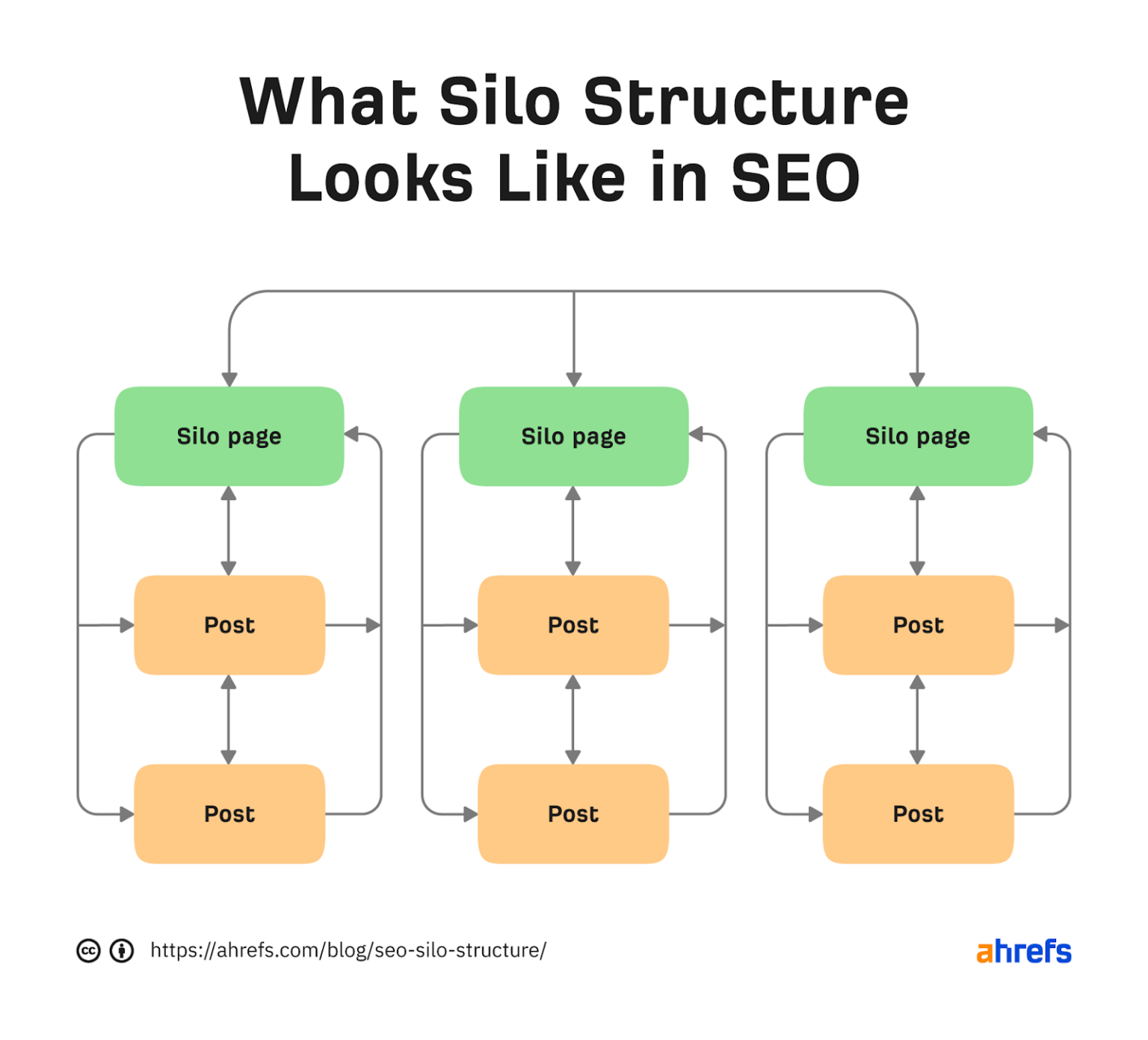
This structure helps search engines understand the depth of your expertise in a given area, while also providing a user-friendly experience that allows visitors to easily navigate and find related content. The result is improved content discoverability, enhanced user experience, and a higher information gain score for your site.
Case Studies and Tools for Enhancing Information Gain
The idea of information gain isn’t new — many successful companies have already adopted these techniques and reaped the benefits of creating unique, high-value content.
Take Ahrefs, for example. Their content marketing strategy revolves around delivering exclusive, data-driven insights. Through detailed tutorials, templates, and original industry analyses, they provide not only comprehensive information but also unique data and viewpoints, helping their content stand out in an otherwise saturated market.

Similarly, Zapier excels in its niche by producing in-depth, technical content that addresses complex topics in the automation space. Their strategy of filling content gaps with detailed tutorials and integration guides has helped them differentiate themselves in a competitive industry, boosting both their authority and organic rankings.

The good news is that there are tools designed to help you improve the information gain of your content. Here are two to consider:
1. Reddit Insights
Reddit Insights is a keyword research tool focused on analyzing content trends within Reddit. It scrapes and organizes questions from relevant subreddits based on your chosen keywords, providing valuable insights into common user inquiries and hot topics.
This tool clusters related keywords for deeper analysis, making it easier to identify unique content ideas and fine-tune your content strategy based on community-driven insights. It’s free to use, respects user privacy, and doesn’t store sensitive information.
2. Google Forum Search Bookmarklet
Our free Google Forum Search Bookmarklet enhances Google Search by enabling you to access and filter forum discussions from platforms like Reddit and Hacker News. This tool is particularly useful for uncovering user-generated content, diverse viewpoints, and community-driven solutions.
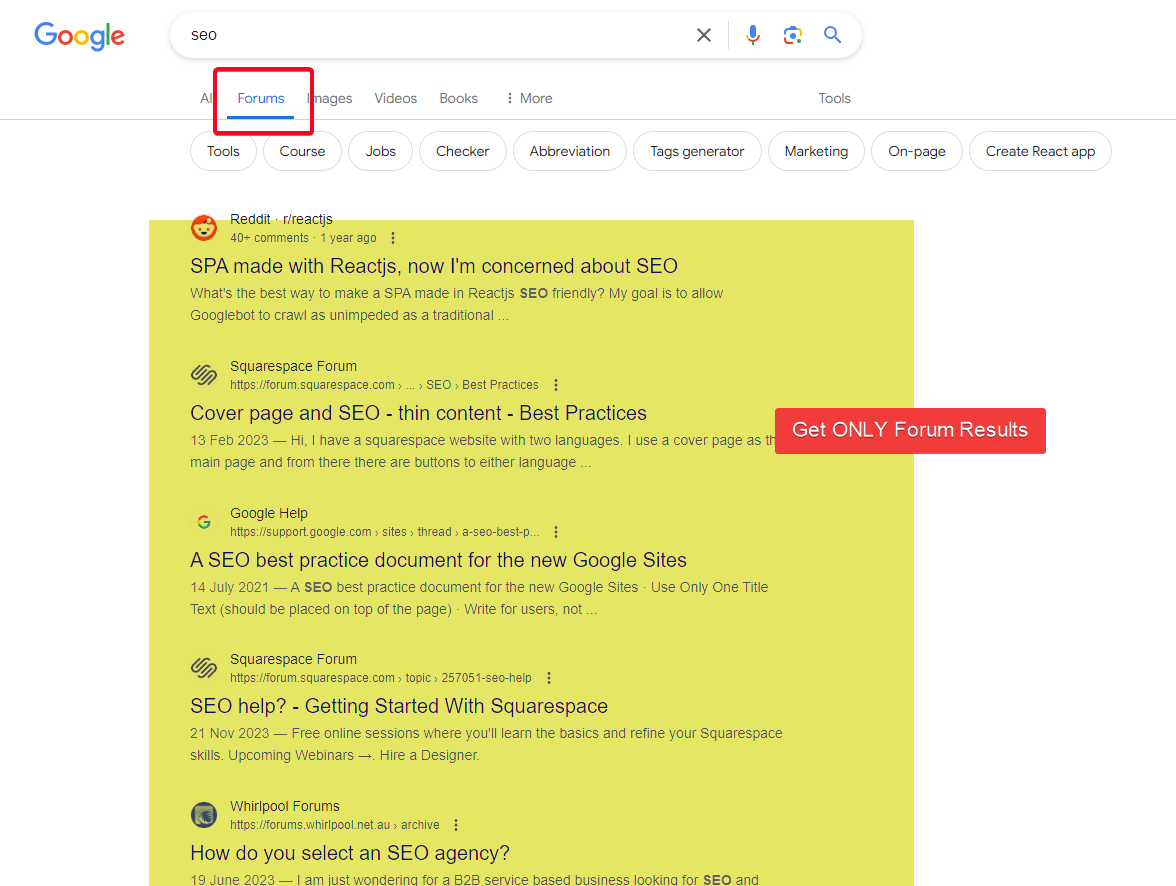
For SEO marketers, it offers valuable insights into trending topics and user questions, which can help shape your content strategy and improve keyword discovery from an information gain perspective.
The Future of SEO with Information Gain
As Google continues to refine its algorithms, the importance of information gain is reshaping the competitive landscape of search engine results pages (SERPs). With an increasing focus on content uniqueness and value, websites that consistently provide fresh insights and comprehensive answers to user queries are likely to see improvements in their rankings.
This shift could level the playing field, allowing smaller sites with high-quality, unique content to compete more effectively against larger, established websites that have historically dominated search rankings through volume and backlinks. As a result, we may see more diverse and valuable content on the first page of search results, as search engines become better at identifying and rewarding content that genuinely enhances the user’s knowledge.
Additionally, information gain is not just about improving individual pieces of content; it also plays a key role in personalizing user search experiences. By helping search engines identify content that offers fresh, valuable insights, information gain can be used to tailor search results more closely to individual users’ needs and search histories.
This could lead to more personalized search experiences, where the content displayed to a user is dynamically adjusted based on their past interests and preferences. Such personalization not only boosts user satisfaction but also promotes deeper engagement with content, as users are more likely to encounter new, relevant information that resonates with them.
Ultimately, information gain highlights the transition from a one-size-fits-all approach to a more nuanced, user-centered search strategy. This evolution could fundamentally change how we interact with search engines and discover content online.
Need help improving your SEO and information gain score?
Our team of expert SEO specialists and content marketers is here to help businesses enhance their organic search performance and achieve better results with information gain-focused strategies.
FAQs
What is information gain in SEO, and why is it important?
Information gain refers to the new and unique insights a piece of content offers compared to what’s already available online. It’s vital in SEO because it helps content stand out to both search engines and users by providing fresh perspectives or solutions not found elsewhere.
How can you calculate information gain for SEO?
To calculate information gain, evaluate the uniqueness and value of the content. This involves determining if the content offers new knowledge or insights beyond what’s already covered in top-ranking search results. Content analysis tools and SEO software can help assess these aspects.
What are information gain scores, and how do they affect SEO?
Information gain scores measure how much new and relevant information a piece of content contributes to its topic. High scores can boost SEO by increasing content visibility and ranking, as search engines prioritize content that effectively meets user intent with unique and valuable insights.