
Meta advertising (Facebook, Instagram, Messenger, and Audience Network) has evolved from manual campaign setup to fully AI-driven performance systems. In 2026, artificial intelligence is no longer an “add-on” — it is the core engine behind targeting, creative production, bidding, and optimization.
For marketers and businesses, this shift means one thing: either adapt to AI-powered Meta Ads or fall behind competitors who already are.
This guide breaks down how AI is transforming Meta advertising today, what’s changed in 2026, and how brands can use it to scale ROI-driven campaigns.
The New Era of Meta Advertising Powered by AI
Meta platforms now rely heavily on advanced AI systems such as Meta Advantage+, predictive analytics, and generative AI models to automate decision-making across campaigns.
Instead of marketers manually adjusting audiences, budgets, and creatives, AI now:
- Predicts which users are most likely to convert
- Automatically allocates budgets across ad sets
- Tests thousands of creative combinations in real time
- Optimizes campaigns based on conversion probability, not just clicks
The result: faster scaling, lower acquisition costs, and more precise targeting than traditional manual campaigns.
Key AI Technologies Powering Meta Ads in 2026
1. Machine Learning (ML) for Predictive Advertising
Machine learning models analyze billions of data signals—clicks, watch time, purchases, and engagement patterns—to predict future user behavior.
This powers:
- Lookalike audience expansion
- Conversion prediction models
- Smart bidding strategies
2. Generative AI for Ad Creation
Meta’s generative AI tools now assist in creating:
- Ad copy variations
- Background visuals
- Video scripts for Reels and Stories
- Multiple creative formats from a single asset
This reduces creative production time by up to 70–90% for many advertisers.
3. Computer Vision for Creative Optimization
AI analyzes images and videos to understand:
- Emotional tone
- Object recognition (products, faces, actions)
- Engagement likelihood
It then prioritizes creatives that are visually more likely to convert.
4. Natural Language Processing (NLP)
NLP helps Meta understand:
- User intent
- Sentiment in comments and interactions
- Context behind search and engagement behavior
This leads to better ad relevance and personalized messaging.
Book A Free Consultation
AI-Powered Targeting in Meta Ads (2026 Update)
From Demographics to Behavioral Prediction
Traditional targeting (age, gender, interests) is now secondary. AI focuses on:
- Purchase intent signals
- Engagement behavior across Meta platforms
- Cross-device activity patterns
- Predictive conversion likelihood
Advantage+ Audience Expansion
Meta’s AI automatically expands audiences beyond manual targeting when it detects high conversion probability users.
This means:
- Less manual audience segmentation
- Better scaling opportunities
- Reduced cost per acquisition (CPA) in many industries
Cookieless & Privacy-First Targeting
Due to privacy updates like iOS tracking restrictions and global data protection laws, Meta relies more on:
- First-party data
- Conversion API (CAPI) integration
- Aggregated event measurement
Reference: https://www.facebook.com/business/help (Meta Business Help Center)
Book A Free Consultation
AI in Creative Strategy: Smarter Ads That Sell
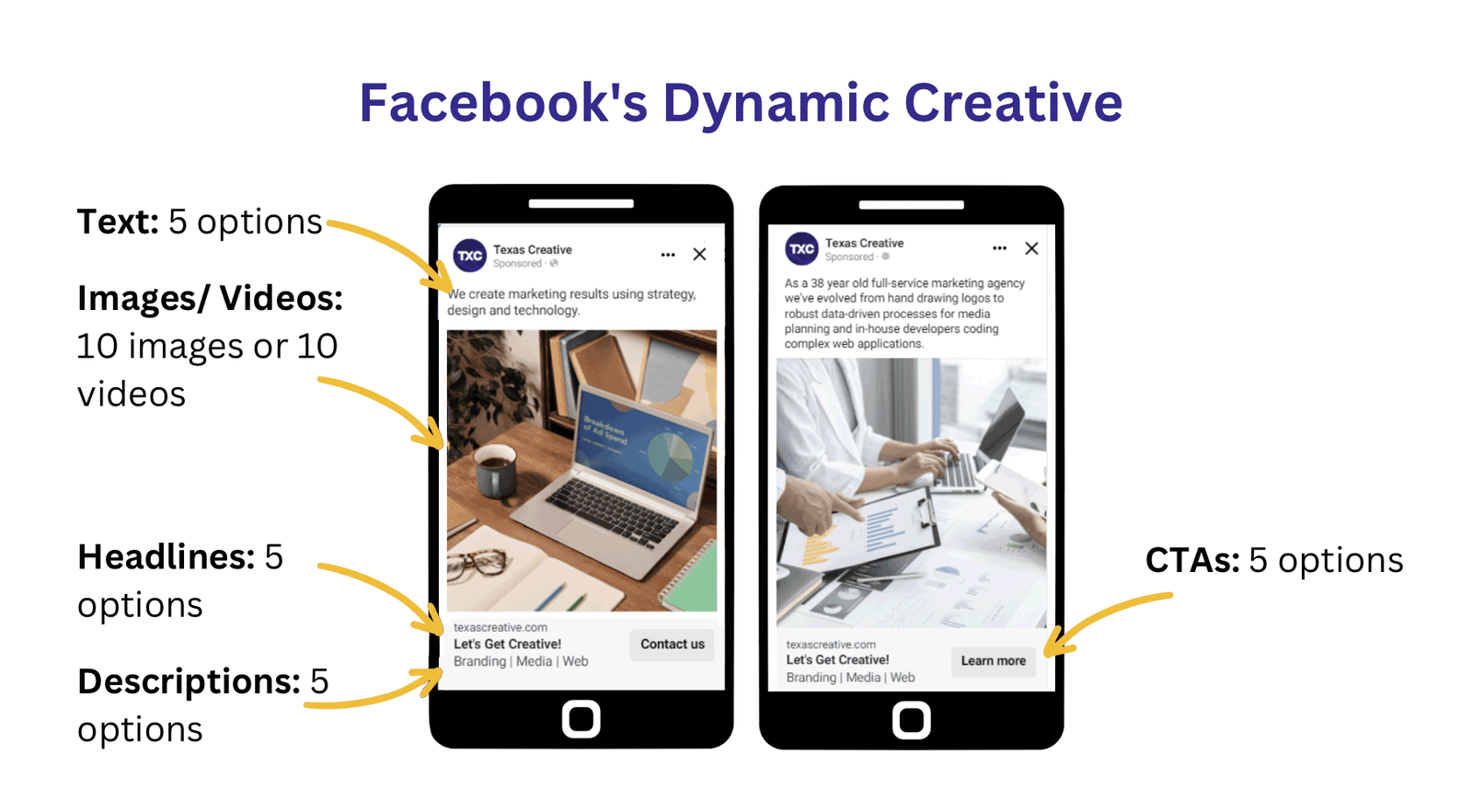
Dynamic Creative Optimization (DCO)
AI automatically mixes and matches:
- Headlines
- Images
- Videos
- CTAs
It tests combinations and pushes the best-performing version in real time.
Reels-First AI Optimization
In 2026, short-form video dominates Meta platforms. AI prioritizes:
- Watch-through rate
- Hook strength (first 3 seconds)
- Engagement velocity
Brands using Reels-focused creatives often see significantly lower CPMs.
Hyper-Personalized Ad Experiences
Instead of one ad for everyone, AI delivers:
- Different messaging for different intent levels
- Personalized product recommendations
- Location and behavior-based variations
AI-Driven Campaign Optimization & Budget Allocation
Real-Time Performance Optimization
AI continuously adjusts:
- Bids
- Placements (Feed, Stories, Reels)
- Audience distribution
This eliminates the need for constant manual optimization.
Smart Budget Distribution (Campaign-Level Optimization)
Meta’s AI automatically shifts budget toward:
- High-converting audiences
- Best-performing creatives
- Strongest placements
Incrementality-Based Measurement (2026 Shift)
Instead of relying only on last-click attribution, AI now focuses on:
- Incremental conversions
- Lift studies
- Multi-touch attribution models
Reference: https://analytics.google.com (Google Analytics)
Book A Free Consultation
AI and the Modern Customer Journey
Multi-Touch AI Tracking
AI maps user journeys across:
- Instagram Reels
- Facebook Feed
- Website visits
- Retargeting ads
Predictive Lead Scoring
AI assigns scores to users based on:
- Purchase probability
- Engagement depth
- Historical behavior patterns
This allows businesses to focus on high-quality leads instead of cold traffic.
Ethical AI Advertising in 2026
Data Privacy Compliance
Modern Meta advertising must comply with:
- GDPR (EU) → https://gdpr.eu
- Meta Privacy Policies
- Local data protection laws
Reducing Algorithmic Bias
To ensure fairness, advertisers must:
- Use diverse training data
- Avoid overly narrow targeting assumptions
- Regularly audit campaign outcomes
Transparency in AI Ads
Consumers increasingly expect clarity on:
- Why they are seeing ads
- How their data is used
- What personalization means
Future of Meta Advertising with AI (2026 and Beyond)
Fully Autonomous Campaigns
Future Meta Ads systems will:
- Launch campaigns automatically
- Generate creatives instantly
- Optimize without human intervention
AI + AR/VR Advertising
With Meta’s push into immersive tech, ads will become:
- Interactive AR product demos
- Virtual try-on experiences
- 3D shopping environments
Human + AI Collaboration Model
Despite automation, human marketers remain essential for:
- Brand strategy
- Creative storytelling
- Emotional positioning
Actionable Tips to Use AI in Meta Ads Effectively
- Use Advantage+ campaigns for scaling
- Feed high-quality first-party data into Meta Pixel + CAPI
- Test multiple AI-generated creatives weekly
- Focus on video-first content strategy
- Track incremental conversions, not just clicks
Conclusion
AI has fundamentally transformed Meta advertising from a manual media-buying process into a predictive, automated, and highly optimized ecosystem.
In 2026, success is no longer about “running ads” — it’s about training AI systems with the right data, creatives, and conversion signals so they can perform better over time.
Businesses that adapt early will enjoy lower ad costs, better targeting accuracy, and significantly higher ROI.
At DigiTotal, we help brands harness AI-powered Meta advertising systems to scale performance, reduce wasted ad spend, and drive predictable growth.
If you want to transform your ad performance, you can book a 15-minute introductory strategy call with our team today.
FAQs – AI in Meta Advertising
1. Is AI replacing Meta Ads managers?
No. AI automates execution, but strategy, creative direction, and business positioning still require human expertise.
2. What is Meta Advantage+?
It is Meta’s AI-powered campaign system that automates targeting, bidding, and creative optimization for better performance.
3. Do AI ads really reduce cost per conversion?
Yes, when properly set up. AI improves efficiency by focusing budget on high-intent users.
4. Is creative quality still important in AI ads?
Absolutely. AI can optimize distribution, but weak creatives still underperform.
5. How does AI handle privacy changes?
Meta uses aggregated data, first-party signals, and Conversion API to reduce dependency on cookies.
6. What industries benefit most from AI Meta Ads?
E-commerce, SaaS, education, real estate, and lead generation businesses see the strongest results.