Introduction: Why Facebook Ads Are No Longer the Same
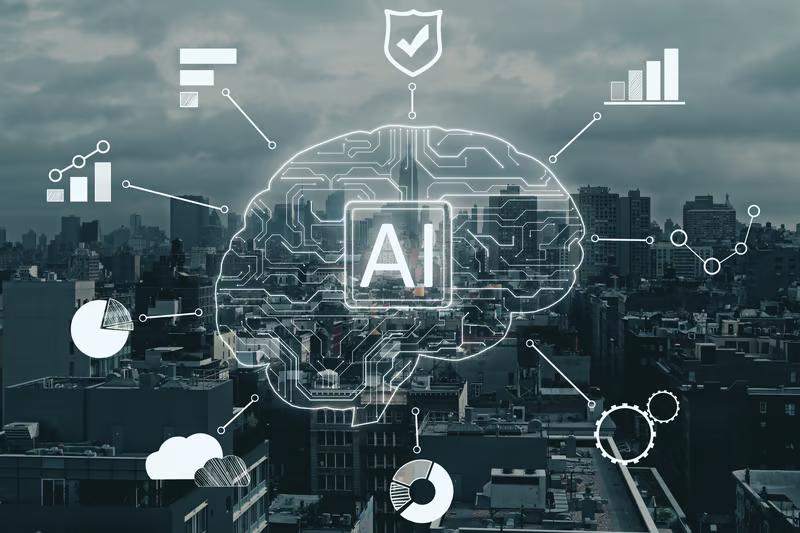
Facebook advertising is undergoing its biggest transformation since its launch. In 2026, success on the platform is no longer driven by manual targeting or guesswork—it is powered by Artificial Intelligence (AI), machine learning, predictive modeling, and automation systems.
Today’s Facebook Ads ecosystem is built to automatically learn from billions of user interactions in real time. This means your campaign performance is now shaped more by AI systems than by manual settings.
If you’re still running ads the “old way,” you’re likely overspending and underperforming.
This guide breaks down how AI is reshaping Facebook Ads, what has changed in 2026, and exactly what you can do to stay ahead and improve ROI.
What AI Means in Facebook Advertising (2026 Update)
Artificial Intelligence in Facebook Ads refers to Meta’s advanced machine learning systems that analyze:
- User behavior across Facebook, Instagram, and Messenger
- Purchase intent signals
- Content engagement patterns
- Cross-device activity
- Conversion history
Instead of relying on manual audience selection, AI now predicts:
- Who is most likely to click
- Who will convert
- What creative will perform best
- When users are most likely to take action
👉 In simple terms: AI now acts as your campaign strategist, media buyer, and optimizer—24/7.
How AI Is Changing Facebook Ads Forever
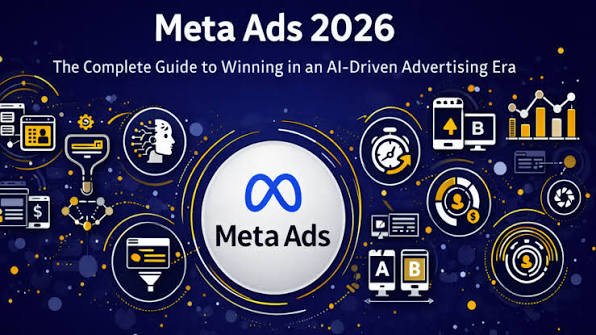
1. Hyper-Personalized Ad Targeting (Beyond Demographics)
Traditional targeting like age, gender, and location is now secondary.
In 2026, Meta’s AI uses behavioral prediction modeling to build audiences based on:
- Purchase intent signals
- Content engagement depth
- Video watch behavior
- Past conversion probability
- Cross-platform activity
What this means for advertisers:
Your ads are no longer shown to “audiences”—they are shown to individuals with predicted intent to buy.
Example:
Instead of targeting “women aged 25–40 interested in fitness,” AI identifies:
“Users likely to purchase protein supplements in the next 7 days.”
2. Advantage+ Campaigns and Full Automation at Scale
Meta’s Advantage+ campaigns now dominate ad delivery in 2026.
These AI-powered campaigns automatically handle:
- Audience selection
- Placement optimization
- Budget distribution
- Creative testing
- Conversion optimization
Key upgrade in 2026:
Advantage+ systems now use real-time conversion learning loops, meaning campaigns improve within hours—not weeks.
Result: Lower cost per acquisition (CPA) and faster scaling potential.
3. AI-Powered Creative Optimization (No More Manual A/B Testing)
Manual A/B testing is becoming obsolete.
Facebook now uses Dynamic Creative Optimization (DCO 3.0) which automatically:
- Tests multiple headlines
- Mixes images and videos
- Adjusts ad copy
- Learns top-performing combinations instantly
What changed in 2026:
AI now evaluates creative quality using:
- Engagement prediction scoring
- Emotional response modeling
- Attention retention metrics
This means creative performance is now decided before the ad even scales.
4. Smart Budget Allocation Using Predictive ROI
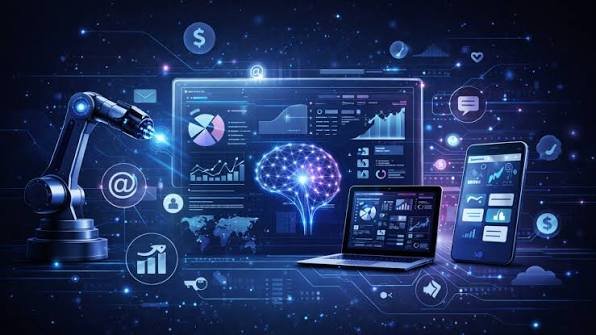
AI now manages your budget dynamically.
Instead of fixed budgets, Facebook Ads use real-time value optimization, where spending automatically shifts toward:
- Highest converting ads
- Best performing audiences
- Strongest creatives
- Lowest CPA placements
Key benefit:
Your budget is continuously reallocated without manual intervention.
Think of it as a self-driving financial system for ads.
5. Predictive Analytics: AI Knows What Will Happen Next
One of the biggest shifts in 2026 is predictive campaign forecasting.
Facebook AI can now estimate:
- Expected conversions before launch
- Seasonal demand spikes
- Audience fatigue risk
- Creative burnout timing
Real-world use case:
If AI detects declining engagement, it will automatically:
- Refresh creatives
- Shift targeting
- Adjust bidding strategy
This reduces wasted ad spend significantly.
6. Real-Time Performance Insights (No More Data Overload)
The old Ads Manager dashboard is being replaced with AI-driven insight summaries.
Instead of raw metrics, advertisers now see:
- Why performance changed
- What caused conversion drops
- What to fix immediately
- What to scale next
Example insight:
“CTR dropped due to creative fatigue in audience segment A. Recommend new video variation.”
This removes guesswork and speeds up decision-making.
What You Should Do in 2026 to Maximize Facebook Ads Performance
1. Shift to Advantage+ Campaigns
If you are still running manual campaigns, you are likely losing efficiency.
Start using:
- Advantage+ Sales Campaigns
- Advantage+ App Campaigns
- Advantage+ Leads Campaigns
Let AI handle optimization while you focus on strategy and creatives.
2. Focus on High-Quality Creative (This Is Now the #1 Ranking Factor)
AI has made creative the most important success factor.
To win in 2026:
- Use short-form video (6–15 seconds)
- Add strong hooks in first 3 seconds
- Use real human content (UGC-style ads)
- Test multiple storytelling angles
AI rewards engagement—not just targeting.
3. Use First-Party Data for Smarter Targeting
Build stronger AI signals using:
- Website pixel data
- CRM data uploads
- Email subscriber lists
- Purchase history
These improve:
- Lookalike accuracy
- Conversion prediction
- Retargeting efficiency
4. Leverage Video & Reels Ads for Higher Reach
Meta is prioritizing:
- Facebook Reels
- Instagram Reels
- Stories placements
Why it matters:
AI detects higher engagement in short video formats and automatically boosts distribution.
5. Monitor AI Decisions—Don’t Micromanage
AI performs best when:
- You avoid frequent manual changes
- You allow learning phases to complete
- You optimize at campaign level, not ad level
Over-editing campaigns resets AI learning cycles.
6. Test New AI Features Early
In 2026, Meta frequently rolls out experimental tools like:
- AI-generated ad creatives
- Automated copy suggestions
- Predictive audience expansion
- Voice-based ad creation tools
Early adopters consistently gain lower CPMs and better scaling advantages.
Future of Facebook Ads (Beyond 2026)
The next phase of Facebook advertising will include:
- Fully AI-generated ad campaigns
- Voice + conversational ads
- AR-based interactive shopping ads
- Real-time personalized ad variations per user
- Zero-manual campaign setup systems
👉 Marketing will shift from “campaign management” to “AI supervision.”
FAQs: AI in Facebook Ads (2026 Edition)
1. Is AI replacing Facebook Ads managers?
No, but it is changing their role. Marketers now focus more on strategy and creatives while AI handles optimization.
2. What is Advantage+ in Facebook Ads?
It is Meta’s AI-powered campaign system that automates targeting, budgeting, placements, and optimization.
3. Are manual Facebook Ads still effective in 2026?
They are less efficient compared to AI-driven campaigns, especially for scaling and performance optimization.
4. What type of ads perform best with AI?
Short-form videos, UGC-style content, and highly engaging creatives perform best.
5. How does AI improve ROI in Facebook Ads?
By automatically shifting budget to high-performing ads and predicting user conversion behavior.
Conclusion: The Future Belongs to AI-Driven Advertising
Facebook Ads in 2026 are no longer about manual targeting or constant tweaking. They are about working with AI systems that continuously learn, optimize, and scale performance automatically.
Businesses that adapt to AI-powered advertising will benefit from:
- Lower acquisition costs
- Higher conversion rates
- Faster campaign scaling
- Smarter audience targeting
The shift is clear: AI is not an option in Facebook Ads—it is the foundation.