

Introduction: Why “Ranking #1” Isn’t the Real Goal Anymore
Most business owners come to SEO with one question: “How do I get to the top of Google?” It’s the wrong starting question. The better one is: “How do I build a website Google can never penalise?”
Here’s why that distinction matters. In 2026, Google is no longer just ranking traditional blue links — it is also feeding AI Overviews, AI Mode, and third-party AI assistants like ChatGPT, Perplexity, and Gemini with your content. As of May 15, 2026, Google formally extended its spam policies to cover attempts to manipulate these generative AI answers, and it followed up with a global spam update in June 2026 that specifically targeted content-level manipulation. In other words, the rules haven’t loosened — they’ve expanded into new territory.
A penalty doesn’t just cost you a ranking position. It can wipe out months of organic traffic, disappear you from Google Discover, and now, potentially exclude you from AI-generated answers altogether. This guide breaks down exactly how Google penalties work in 2026, how to check if you have one, and — most importantly — how to build a site that never needs to worry about one.
Google’s official Search Spam Policies: https://developers.google.com/search/docs/essentials/spam-policies
Book a free 15-minute introductory call
What Is a Google Penalty, Really?
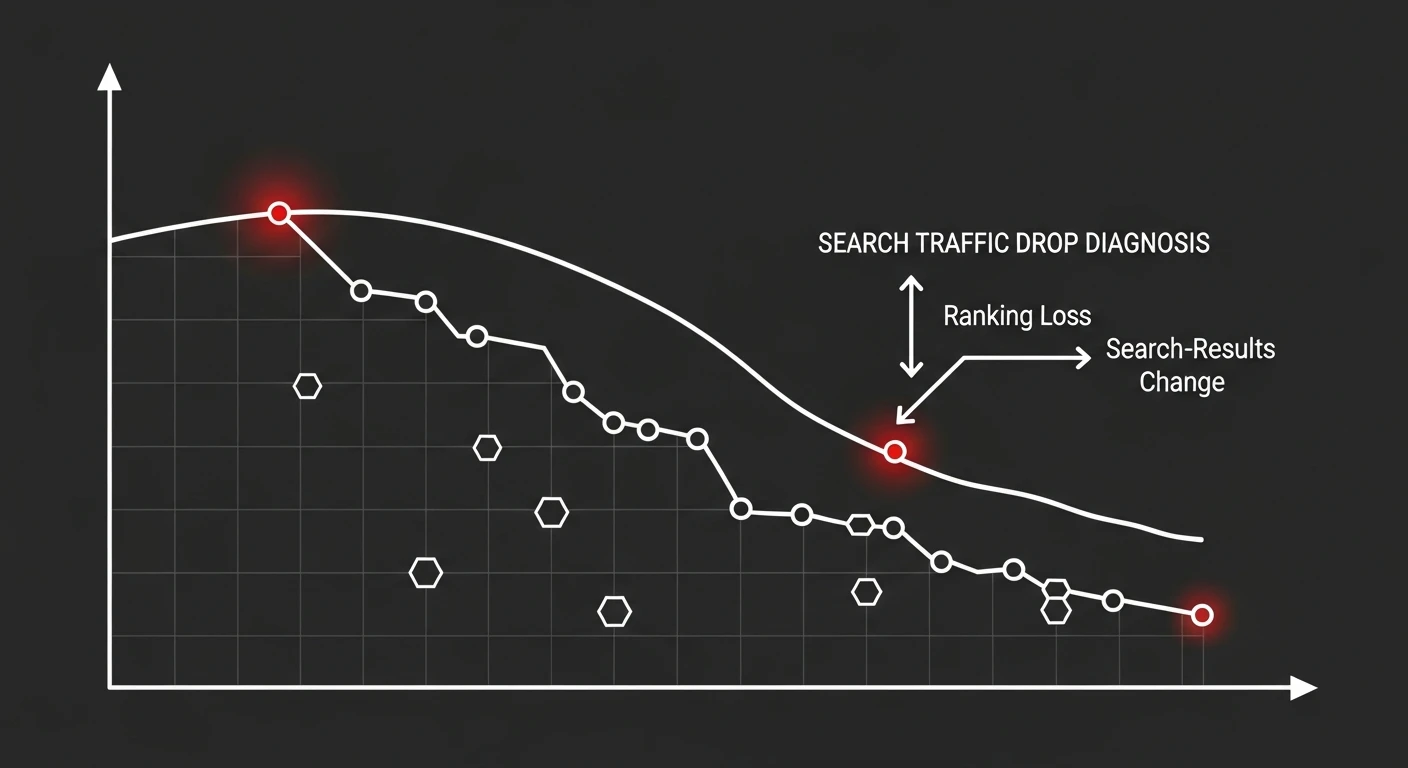
A Google penalty is a deliberate reduction in a website’s visibility, applied either by a human reviewer at Google or automatically by Google’s ranking systems, because the site has violated Google’s Search Spam Policies. It is different from simply “losing rankings” during a core update, where your site isn’t being punished — it’s just being reassessed against increasingly high-quality competitors.
There are two distinct types, and knowing which one you’re dealing with changes your entire recovery plan.
- Manual Actions (Human-Reviewed Penalties)
A member of Google’s Search Quality team manually reviews your site and applies an action for a specific violation — for example, unnatural links, thin content, or cloaking. You’ll be notified directly inside Google Search Console under Security & Manual Actions, with an explanation of the issue and the option to submit a reconsideration request once you’ve fixed it.
- Algorithmic Demotions (Automated, No Notification)
These are far more common and far less transparent. Google’s automated systems — including its AI-based spam-detection system, SpamBrain — quietly reduce your visibility without any message in Search Console. There is no reconsideration request. The only way to “recover” is to fix the underlying issue and wait, sometimes for several months, for Google’s systems to re-evaluate your site.
2026 update: Google confirmed its June 2026 spam update deliberately excluded link spam and site reputation abuse from its scope, focusing instead on content-level violations such as scaled content abuse, cloaking, and low-value AI-generated pages — a signal that content quality enforcement is intensifying even as link-based enforcement holds steady.
Book a free 15-minute introductory call
The 2026 Google Penalty Landscape: What’s Changed
SEO in 2026 looks different from even a year ago, mainly because of three developments every business owner should understand:
- AI Overviews now fall under spam policy enforcement. Since May 2026, Google explicitly treats attempts to manipulate AI-generated answers (through keyword-stuffed FAQs, fake authority signals, or AI-written filler content) as a spam violation — the same category as cloaking or hidden text.
- Google is running more frequent, narrower spam updates. Rather than one or two big core updates a year, Google is now shipping targeted spam updates (March and June 2026 so far) that isolate specific manipulative tactics rather than re-ranking the entire web.
- “Non-commodity content” is the new bar. Google’s generative AI optimisation guidance (updated June 2026) explicitly rewards content that isn’t interchangeable — meaning it can’t simply be regenerated by any other AI tool. If your content reads like something ChatGPT could produce in ten seconds, it’s now a liability, not just a missed opportunity.
Book a free 15-minute introductory call
How to Check If Your Site Has Been Penalised
Before fixing anything, confirm what you’re actually dealing with. Follow this three-step diagnostic:
Step 1: Check Google Search Console for a Manual Action
Go to Search Console → Security & Manual Actions → Manual Actions. If it’s empty, you don’t have a manual penalty — but you could still have an algorithmic one.
Step 2: Overlay Your Traffic Against Known Update Dates
Open Google Analytics and compare your organic traffic timeline against Google’s official Search Ranking Updates list (see external links below). A sharp, sustained drop that lines up with a spam or core update date is a strong signal.
Step 3: Segment the Drop
Did your entire site drop, or just a category, template, or set of pages? A site-wide drop often points to a core update or a broad quality issue. A drop isolated to specific pages (e.g., programmatic landing pages or AI-generated blog posts) usually points to a targeted spam action.
Third-Party Tools That Help
- MOZ’s Google Algorithm Change History — a timeline of every confirmed update.
- Semrush Sensor — tracks daily SERP volatility across industries.
- Search Engine Roundtable / Search Engine Land trackers — real-time reporting during active rollouts.
Book a free 15-minute introductory call>
Black Hat Tactics That Still Trigger Penalties in 2026
Google’s spam policies haven’t reversed course on any of the classics — they’ve simply gotten better at catching them. Here’s the current list, with what’s changed:
| Tactic | Still Risky in 2026? | What’s New |
|---|---|---|
| Buying or selling links | Yes | Same enforcement level; June 2026 update did not specifically target this, but it remains a standing violation |
| Cloaking | Yes | Now includes serving different content to AI crawlers vs. users |
| Keyword stuffing | Yes | Extends to keyword-stuffed FAQ schema built purely for AI Overview capture |
| Scraped or duplicated content | Yes | Explicitly named as a 2026 enforcement priority |
| Scaled content abuse (mass AI-generated pages) | Yes — increasing risk | Named as a primary focus of the June 2026 spam update |
| Doorway pages | Yes | Unchanged |
| Hidden text/links | Yes | Unchanged |
| Site reputation abuse (“parasite SEO”) | Yes, but not the current update’s focus | Excluded from June 2026 update scope, per Google’s comments to Search Engine Roundtable |
| Manipulating AI-generated answers | New in 2026 | Explicitly added to spam policy documentation, May 15, 2026 |
The takeaway: content-generation shortcuts are now under more scrutiny than link-based tactics. If you’ve been publishing high volumes of AI-written content without genuine editing, original insight, or fact-checking, that’s the area to audit first.
Book a free 15-minute introductory call
The White Hat Framework: Building a Penalty-Proof Site
Avoiding penalties isn’t about walking a tightrope — it’s about building on solid ground from the start. Here’s the framework we use with DigiTotal clients.
- Publish Content With Real Experience Behind It (the “E” in E-E-A-T)
Google’s quality raters guidelines prioritise Experience — has the author actually used the product, performed the service, or lived the situation they’re writing about? A generic “10 tips” post written entirely from research reads very differently from one written by someone who has actually managed the process. Add case studies, screenshots, first-hand results, and named authors with real credentials.
- Make Your Site Fast, Mobile-First, and Technically Clean
Google’s Core Web Vitals and mobile-first indexing aren’t going anywhere. Run a technical audit at least twice a year: check page speed, broken links, duplicate meta tags, and unnecessary render-blocking code.
- Earn Links and Mentions — Don’t Buy Them
Digital PR, expert roundups, original research, and genuinely useful tools earn backlinks organically. If a link-building offer sounds like “pay us and we’ll get you links,” it’s a red flag under Google’s link spam policy.
- Write for Humans First, Then Optimise for AI Visibility
Structure content with clear headings, direct answers near the top, and well-organised FAQ sections — this genuinely helps both human readers and AI Overview extraction. The difference between “helpful structure” and “spam” is intent: are you answering a real question, or stuffing keywords into a fake question format?
- Audit AI-Generated Content Before Publishing
If you use AI tools to draft content (many businesses do, and Google doesn’t forbid this), always add original data, personal insight, examples, and editing before it goes live. Google’s own guidance draws the line at content that is “unedited” or “mass-produced without sufficient value-add.”
- Keep One H1 Per Page and a Logical Heading Hierarchy
This is a small technical detail with an outsized impact on both crawlability and readability. One clear H1, followed by a logical nesting of H2s and H3s (like this article), helps Google and AI systems understand your content structure instantly.
Google Search Quality Rater Guidelines (E-E-A-T reference): https://guidelines.raterhub.com/searchqualityevaluatorguidelines.pdf
Book a free 15-minute introductory call
How Long Do Google Penalties Last?
There’s no universal timeline, but here’s the general pattern based on Google’s own guidance and observed recovery cases:
- Manual actions: Lifted as soon as your reconsideration request is approved — often within a few weeks of submission, assuming the fix is genuine and complete.
- Minor algorithmic issues (e.g., light keyword stuffing): Can resolve within 30–60 days of fixing the issue, once Google’s systems recrawl and reassess.
- Serious violations (e.g., large-scale scraped content, link schemes): Can take three months to over a year, and in severe or repeated cases, Google has stated ranking benefits from spammy links may never be regained even after removal.
There is no way to “buy back” trust faster. Consistent compliance over time is the only lever that works.
Book a free 15-minute introductory call
Frequently Asked Questions
Q1: How do I know if Google penalised my site or if I’m just losing to better competitors?
Check Search Console for a manual action first. If there isn’t one, compare your traffic drop date against Google’s official ranking update list. If your drop lines up with a core update rather than a spam update, it’s more likely a quality/relevance reassessment than a penalty.
Q2: Can using AI to write blog content get my site penalised?
Not by default. Google has stated it doesn’t penalise content simply because it was AI-assisted. It penalises content that is low-value, unedited, or mass-produced without genuine originality — regardless of whether a human or an AI wrote the first draft.
Q3: Will removing bad backlinks fix a link-based penalty?
Sometimes, but not always. Google has explicitly said that once its systems discount the ranking benefit of spammy links, that benefit cannot be regained — meaning removal stops further harm but doesn’t automatically restore prior rankings.
Q4: Do algorithmic penalties show up in Google Search Console?
No. Only manual actions appear in Search Console’s Manual Actions report. Algorithmic demotions are silent — you have to infer them through traffic analysis against known update timelines.
Q5: How often does Google update its spam policies?
Not on a fixed schedule, but 2026 has already seen a significant policy expansion (May 2026, covering generative AI manipulation) alongside two separate spam updates (March and June 2026), suggesting more frequent, targeted enforcement going forward.
Q6: Is keyword stuffing in FAQ sections built for AI Overviews a penalty risk?
Yes. Since Google’s May 2026 policy update explicitly covers manipulation of generative AI responses, FAQs or structured content created purely to game AI Overviews — rather than to genuinely answer user questions — fall within spam policy enforcement.
Book a free 15-minute introductory call
Conclusion: The Real Way to “Beat” Google
There is no permanent hack for Google rankings — and in 2026, that’s truer than ever. Every shortcut that used to work (link buying, keyword stuffing, mass content generation) is now explicitly covered by Google’s spam policies, and that enforcement now extends into AI-generated answers as well as traditional search results.
The businesses that consistently rank — and stay ranked — are the ones that treat SEO as an extension of good business practice: publish content built on real expertise, keep the technical foundation clean, earn links instead of buying them, and structure information clearly enough that both humans and AI systems can trust it.
If you’re not sure whether your current site is at risk, or you’ve noticed a traffic drop you can’t explain, don’t guess — get a professional audit.
Book a free 15-minute introductory call with DigiTotal’s SEO team to find out exactly where your site stands and get a clear, jargon-free action plan.