
Introduction: Why SEO Is Still the Backbone of Digital Growth in 2026
Search Engine Optimization (SEO) is no longer just about ranking keywords on Google—it has evolved into a multi-layered digital visibility system powered by AI-driven search engines, user intent modeling, and semantic ranking signals.
Today, platforms like Google, Bing AI, Perplexity, and ChatGPT-powered search experiences prioritize helpful, structured, and authoritative content over traditional keyword-focused pages.
For business owners, startups, and website developers, understanding SEO is no longer optional—it directly impacts:
- Website traffic and lead generation
- Brand credibility and trust
- Online visibility in AI search results
- Long-term digital growth and ROI
At DigiTotal, we simplify complex digital marketing systems into practical strategies that businesses can actually use. This guide breaks down the three core types of SEO, updated with modern 2026 best practices, real-world examples, and actionable strategies.
Click here to know more about Search engine optimization.
Book a 15-minute AI SEO strategy call with our team
Understanding SEO in 2026: Beyond Traditional Optimization
SEO today is no longer limited to Google rankings. Search engines now evaluate:
- User intent (what people really want)
- Content depth and originality
- Author expertise (EEAT signals)
- Website performance and Core Web Vitals
- AI-readability (structured, clear content formatting)
Language & Localization Still Matters in SEO
If your business serves global users, language variations play a critical role.
For example:
- “SEO optimization” (US English)
- “SEO optimisation” (UK/AU English)
Modern search engines can understand both, but consistent keyword targeting improves clarity and topical authority.
Best practice in 2026:
Use primary keyword variation + semantic synonyms instead of focusing on spelling differences alone.
Book a 15-minute AI SEO strategy call
The 3 Core Types of SEO (Updated for 2026)
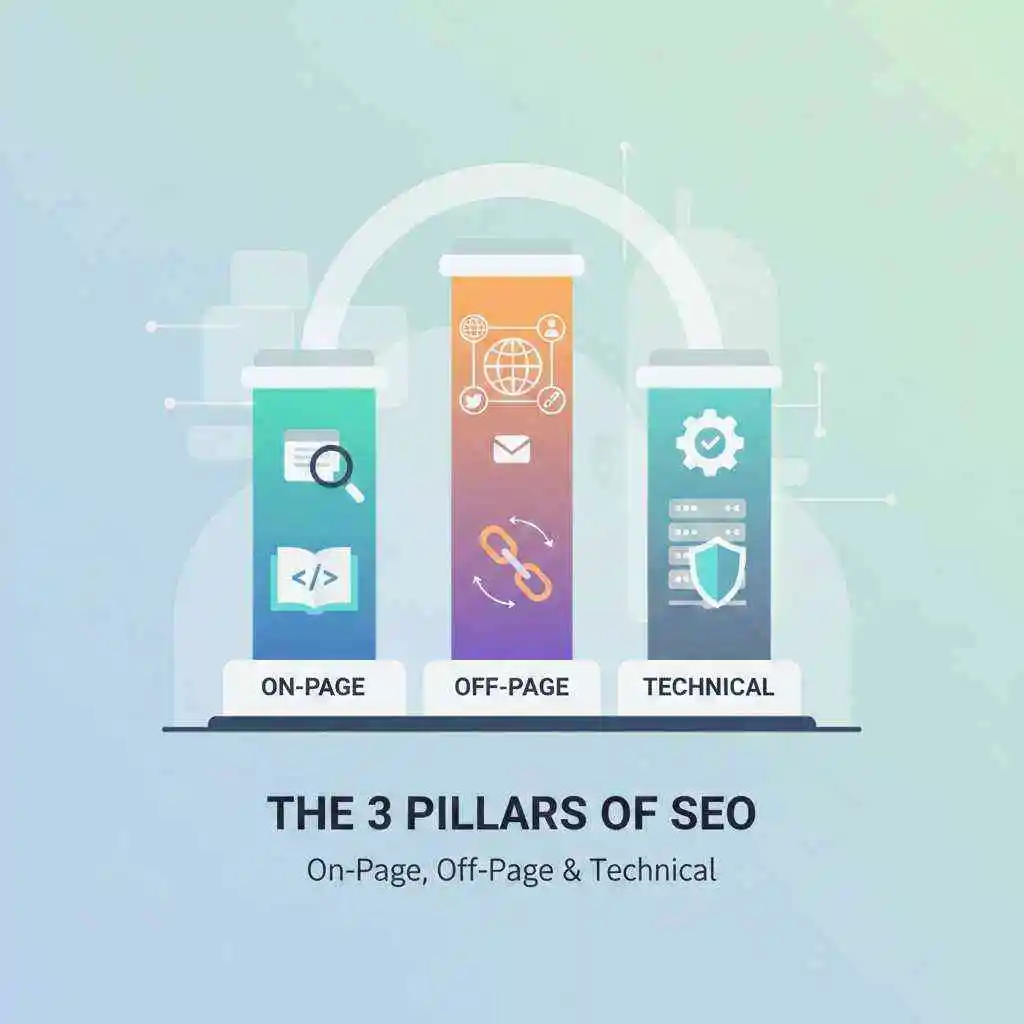
SEO is built on three foundational pillars:
- On-Page SEO
- Off-Page SEO
- Technical SEO
Let’s explore each one in depth with modern strategies.
1. On-Page SEO: Optimizing Content for Users and AI Search
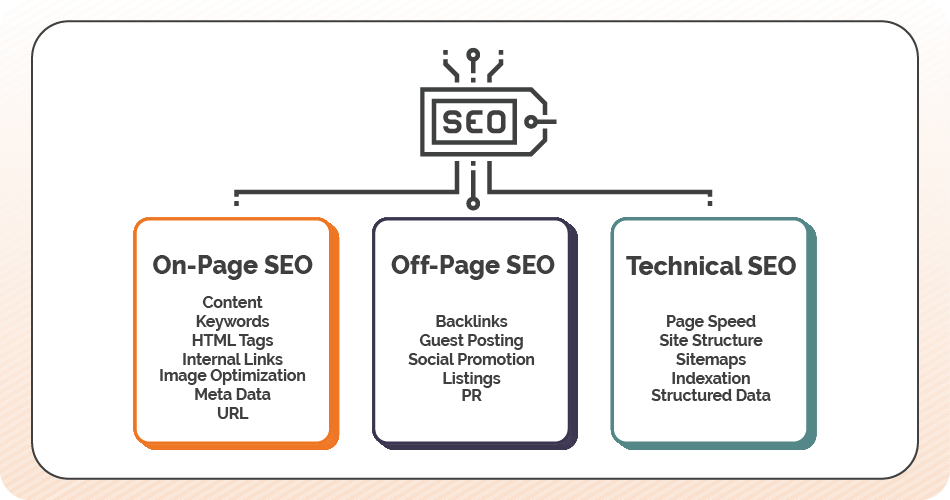
On-page SEO focuses on everything within your website pages that influences rankings and user experience.
In 2026, on-page SEO is heavily influenced by semantic search and AI content understanding, not just keyword placement.
Key On-Page SEO Factors (2026 Updated)
1. High-Quality, Intent-Based Content
Content must answer:
- What is the user searching for?
- Why are they searching it?
- What solution do they need?
Example:
Instead of writing “SEO tips,” modern content should be:
“SEO strategies for small businesses to increase leads in 2026”
2. Title Tags & Meta Optimization
- Include primary keyword naturally
- Focus on click intent (not just ranking)
- Keep titles engaging and descriptive
3. Image SEO (Now AI Image Recognition Friendly)
Search engines now analyze images using AI.
Optimize:
- File names (e.g., seo-strategy-2026.jpg)
- Alt text with descriptive meaning
- Context around images
4. Page Experience Signals
Google now prioritizes:
- Fast-loading pages (Core Web Vitals)
- Mobile-first design
- Interactive UX signals
5. Internal Linking Structure
Internal links help Google understand:
- Site hierarchy
- Content relationships
- Authority distribution
On-Page SEO Insight (2026 Update)
Google’s AI now evaluates whether your content is:
- Helpful
- Complete
- Original
- Experience-driven
Thin or generic content rarely ranks anymore.
Book a 15-minute AI SEO strategy call
2. Off-Page SEO: Building Authority Beyond Your Website

Off-page SEO refers to actions taken outside your website that improve trust, authority, and visibility.
In 2026, off-page SEO is less about quantity and more about relevance + credibility signals.
Key Off-Page SEO Strategies
1. High-Authority Backlinks
Backlinks remain one of the strongest ranking signals.
But modern SEO prioritizes:
- Contextual backlinks (within relevant content)
- Editorial links (earned, not purchased)
- Niche authority sources
2. Digital PR & Brand Mentions
Even unlinked mentions of your brand across trusted platforms improve authority signals.
Examples:
- News websites
- Industry blogs
- Forums and communities
3. Social Signals (Indirect SEO Impact)
While not direct ranking factors, engagement on platforms like:
helps improve:
- Traffic
- Brand visibility
- Content distribution
4. Guest Posting (Quality > Quantity)
Guest posting still works—but only when:
- Published on relevant websites
- Provides real value
- Includes natural contextual links
Off-Page SEO Insight (2026 Update)
Search engines now evaluate brand trust signals, not just backlinks.
Book a 15-minute AI SEO strategy call
3. Technical SEO: The Foundation of Search Visibility
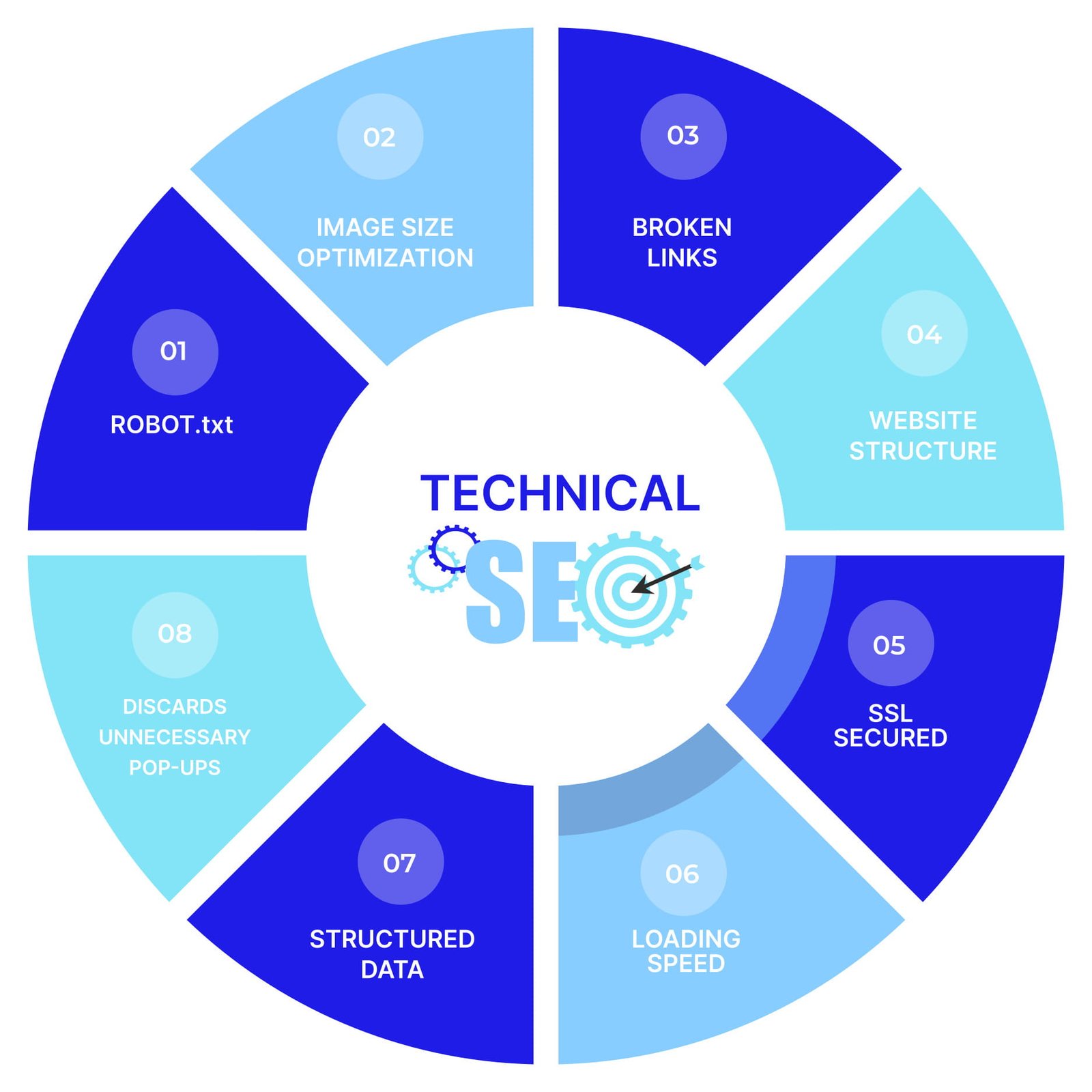
Technical SEO ensures that search engines can:
- Crawl your website
- Understand your structure
- Index your pages efficiently
Without strong technical SEO, even great content may not rank.
Key Technical SEO Factors (2026 Update)
1. Core Web Vitals Optimization
Focus on:
- Loading speed (LCP)
- Interactivity (INP replaces FID in modern SEO)
- Visual stability (CLS)
2. XML Sitemaps & Index Management
Ensure:
- Proper sitemap submission
- No broken URLs
- Clean indexing structure
3. Structured Data (Schema Markup)
Schema helps AI understand your content context.
Examples:
- Articles
- FAQs
- Services
- Reviews
4. Canonical Tags & Duplicate Content Control
Prevents:
- Content duplication issues
- Ranking dilution
5. Mobile-First Architecture
Google primarily indexes mobile versions of websites.
Technical SEO Insight (2026 Update)
AI-powered search engines prioritize:
- Clean structured data
- Fast rendering pages
- Crawl efficiency
Book a 15-minute AI SEO strategy call
When Should You Use Each Type of SEO?
On-Page SEO
Use when:
- Improving individual page rankings
- Enhancing content quality
- Targeting keywords
Off-Page SEO
Use when:
- Building brand authority
- Increasing traffic from external platforms
- Improving trust signals
Technical SEO
Use when:
- Launching or redesigning a website
- Fixing indexing issues
- Improving performance and scalability
Book a 15-minute AI SEO strategy
White Hat vs Black Hat SEO (2026 Perspective)
Black Hat SEO (Avoid Completely)
Includes:
- Keyword stuffing
- Spam backlinks
- Hidden content
- AI-generated low-value pages
Risk: De-indexing or ranking penalties
White Hat SEO (Recommended)
Includes:
- High-quality content creation
- Ethical link building
- User-focused optimization
- Transparent SEO practices
Result: Long-term, stable rankings
Book a 15-minute AI SEO strategy call
When Should You Hire an SEO Expert?
You should consider professional SEO support when:
- Your website is not ranking despite optimization
- You need scalable organic traffic growth
- You are entering competitive markets
- Technical SEO issues are affecting performance
DIY tools like WordPress and Wix are great for beginners, but scaling requires:
- Strategy
- Data analysis
- Technical expertise
Click here to know more about the SEO Updates.
Book a 15-minute AI SEO strategy call
Conclusion: SEO Is a Long-Term Growth Engine
SEO in 2026 is no longer a simple marketing tactic—it is a complete digital visibility system powered by content quality, technical performance, and authority building.
To succeed, businesses must balance:
- Strong on-page optimization
- Ethical off-page authority building
- Robust technical SEO foundations
At DigiTotal, we help businesses transform SEO into a predictable growth channel—not guesswork.
FAQ: Types of SEO (2026 Updated)
1. What are the main types of SEO?
The three main types are On-Page SEO, Off-Page SEO, and Technical SEO.
2. Which type of SEO is most important?
All three are essential. On-page SEO impacts content, technical SEO affects performance, and off-page SEO builds authority.
3. How long does SEO take to show results?
Typically 3–6 months depending on competition, website strength, and strategy.
4. Is SEO still relevant in 2026?
Yes. SEO has evolved with AI search engines and is more important than ever for online visibility.
5. Can I do SEO myself?
Yes for basics, but advanced SEO usually requires professional expertise for competitive industries.