
Two websites can offer the same service in the same suburb with the same keywords. One has a named owner, real project photos, licence details and reviews. The other has stock images and a contact form. Customers will trust the first, and Google’s quality systems are designed to favour the same signals.
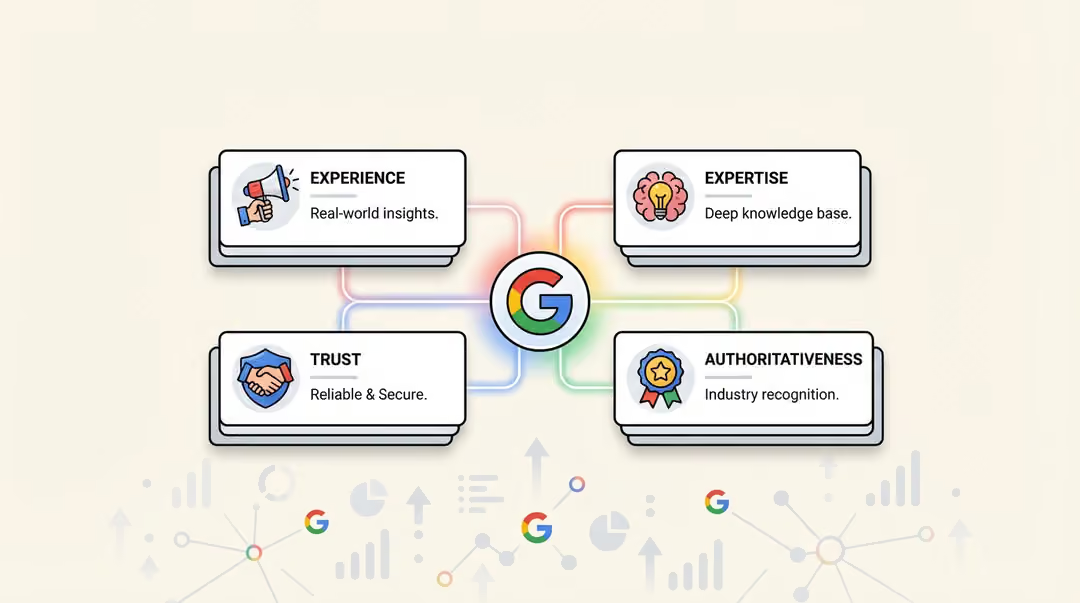
That’s the idea behind E-E-A-T: Experience, Expertise, Authoritativeness and Trustworthiness. This guide explains what E-E-A-T actually is, what it isn’t, and how to show it on your website, with specific advice for trades, legal and financial firms, medical practices and childcare providers.
Book a 15-minute introductory call
What E-E-A-T Is (and Isn’t)
It’s worth being precise, because many articles get this wrong.
- It’s a framework, not a plugin. Google’s Search Quality Rater Guidelines describe it. Raters use it to evaluate search results, and their feedback helps Google test and improve its systems. Raters don’t directly set your rankings.
- There’s no E-E-A-T score and no tag you can add. Google’s guidance on helpful, reliable, people-first content explains that its systems prioritise content that shows these qualities, and recommends asking yourself questions about who created the content, how and why.
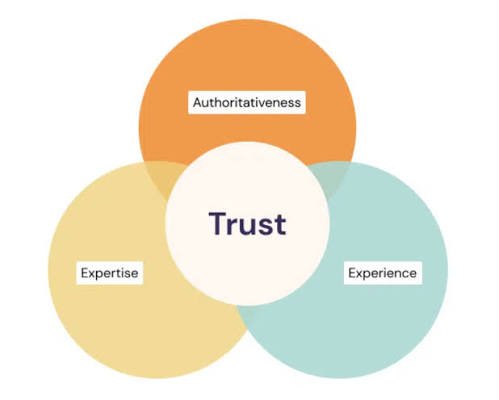
- Trust matters most. In Google’s framework, experience, expertise and authoritativeness all contribute to trust, and an untrustworthy page has low E-E-A-T however polished it looks.
- It matters more for sensitive topics. Google applies higher standards to “Your Money or Your Life” (YMYL) topics, where bad information could affect health, finances, safety or wellbeing. If you’re a lawyer, accountant, doctor or childcare provider, you’re in this group.
For general background, see Wikipedia’s overview of E-E-A-T.
Why E-E-A-T Matters for Your Business
Even setting Google aside, these signals do the same job a good reputation does offline.
- For search: pages that show real experience, clear authorship and reliable sourcing align with what Google’s systems are built to reward, particularly on sensitive topics.
- For AI answers: AI features in search draw on the same fundamentals as regular results (Google’s guidance on AI features). Clear authorship and cited sources make your content easier to trust and quote.
- For conversions: visitors decide in seconds whether you look legitimate. Reviews, licences, real photos and clear contact details remove doubt at the moment of enquiry.
- For competition: generic content is easy to copy. Your real projects, people and results aren’t.
Book a 15-minute introductory call
The Four Pillars in Detail
Experience: Prove You’ve Done the Work
Experience means first-hand involvement: you’ve used the product, completed the project or lived the situation. It was added to the framework to reward content that couldn’t be written by someone who’s only read about the topic.
How to show it:
- Project galleries with original before-and-after photos
- Case studies that explain the problem, what you did and the result
- Short videos of your process, with a real person speaking
- Honest lessons: what went wrong, what you’d do differently
- Original screenshots, data and photography instead of stock images
Example: A plumber’s page on “how to fix a leaking tap” with photos from an actual job, the tools used and the common mistakes seen on site beats a generic list of steps.
Expertise: Show the Knowledge Behind the Content
Expertise is about the creator’s skill and knowledge. For YMYL topics, formal qualifications matter. For everyday topics, practical know-how can count as much.
How to show it:
- Named authors with short bios, credentials and a link to a full profile
- Qualifications, licences and memberships stated clearly
- Accurate, up-to-date explanations in plain language
- A review step: have a qualified professional check sensitive content, and say so on the page
- Content that goes beyond the basics a competitor could copy
Authoritativeness: Be the Source Others Point To
Authority is your reputation in your field. You can’t claim it, but you can earn it.
How to build it:
- Mentions and links from credible sites, such as industry bodies, local media and suppliers
- Speaking, awards, publications and association roles
- Consistent, in-depth coverage of your specialist topics
- Strong, genuine reviews across Google and industry platforms
- Content other professionals cite or share
Trustworthiness: Make It Safe and Easy to Believe You
Trust is the foundation, and it’s often where small businesses lose points on simple things.
How to show it:
- Clear “About” and “Contact” pages with real names, address and phone number
- HTTPS on every page, and a privacy policy that matches what you do
- Honest claims, with sources for facts and statistics
- Transparent pricing guidance, terms and refund policies
- Genuine reviews, responded to professionally
- Consistent business name, address and phone details across your site, Google Business Profile and directories
- No misleading testimonials, fake reviews or exaggerated claims
E-E-A-T Checklist: What Your Website Needs
Use this as a self-audit.
Site-wide
- HTTPS enabled on all pages
- Clear About page with the real people behind the business
- Contact page with address, phone, email and opening hours
- Privacy policy and terms that are accurate and easy to find
- Consistent business details across the site and external listings
- Licences, insurance, certifications and memberships displayed
- Fast, mobile-friendly pages without intrusive pop-ups or deceptive ads
On content pages
- Named author with a bio and credentials
- Original photos, screenshots or data
- Sources cited for facts, with links to reliable sites
- “Last updated” date that changes only when the content really does
- Reviewer named for health, legal or financial content
- A clear purpose: the page helps the reader, not just search engines
Off-site
- Google Business Profile complete and active
- Reviews collected and answered
- Links or mentions from relevant, reputable sites
- Social profiles and directory listings match your website
Book a 15-minute introductory call
How to Add Technical Trust Signals
Structured data helps search and AI systems understand who you are. It doesn’t create E-E-A-T by itself, so only mark up information that’s visible on the page.
- Organisation or LocalBusiness markup with your name, logo, address, phone and social profiles. See Google’s Organization structured data guidance.
- Person markup on author profile pages.
- Article or BlogPosting markup with the author and publisher.
- Consistent author pages that list the person’s role, experience and published work.
E-E-A-T by Industry
For Trades (Plumbers, Electricians, Builders)
Customers are inviting you into their home, so proof of competence and safety matters.
- Show licence numbers and insurance. Link to your state or territory regulator’s licence check where possible.
- Publish job case studies with real photos, the problem, the solution and the timeframe.
- Ask every happy customer for a Google review and reply to each one, good or bad.
- Create short process videos that show you at work.
- Be upfront about pricing ranges and what affects the cost.
- Add the team’s names and photos, along with years of experience.
For Legal and Financial Professionals
This is YMYL territory, so expertise and accuracy carry extra weight.
- Detailed bios with qualifications, admissions, designations and areas of practice
- An author box on every article, linking to a full profile
- Dated, accurate updates when laws or regulations change, with sources
- Disclaimers that explain the content is general information, not personal advice
- Clear fee structures where possible
- Visible professional memberships and licence details. Financial services businesses should show their Australian Financial Services Licence details where relevant (check ASIC’s guidance)
For Medical Practices
Accuracy and privacy are central.
- Articles written or reviewed by named practitioners, with their registration and specialisations
- Plain-language content that answers real patient questions
- Practitioner profiles with qualifications and registration details. Australian health practitioners can be verified on the AHPRA register, and advertising must follow AHPRA’s rules, including the restrictions on using testimonials in health advertising
- Photos and video of the real clinic and team
- A secure site with a clear privacy policy that covers patient information
For Childcare and Care Providers
Parents and families are looking for safety above all else.
- Real photos and tours of your facilities (with appropriate privacy and consent)
- Staff profiles with qualifications and background checks noted
- Your approvals, ratings and licences. Australian providers can reference the National Quality Framework and ratings through ACECQA
- Clear safety, health and curriculum policies
- FAQs that answer common parent questions
- Genuine parent reviews, with permission where you quote them
Book a 15-minute introductory call
Common E-E-A-T Mistakes
- Anonymous content with no author or business details
- Stock photos where real project images would be more convincing
- Unsourced claims and statistics
- Fake or incentivised-sounding reviews, which are against Google’s policies and may breach Australian consumer law (see the ACCC’s guidance on fake reviews and testimonials)
- AI-generated pages published without expert review
- Inconsistent business details across the web
- Updating the date without changing the content
- Treating E-E-A-T as a one-off task instead of an ongoing habit
How to Measure Progress
E-E-A-T doesn’t have a score, so look at the outcomes it supports.
| What to track | Where | What it suggests |
|---|---|---|
| Branded searches | Google Search Console | Growing recognition |
| Review volume, rating and recency | Google Business Profile | Trust and reputation |
| Referring domains and mentions | Backlink tool | Authority |
| Engagement on author-led content | Google Analytics | Content quality |
| Enquiry rate from key pages | Analytics and CRM | Trust and conversion |
| Rankings for YMYL and expert topics | Search Console | Visibility |
Frequently Asked Questions
What does E-E-A-T stand for?
It stands for Experience, Expertise, Authoritativeness and Trustworthiness. These are the qualities Google’s quality raters use to assess how reliable content and websites are.
Is E-E-A-T a Google ranking factor?
Not directly. There’s no E-E-A-T score. Google says its ranking systems use many signals that align with the qualities E-E-A-T describes, and that it uses quality rater feedback to evaluate and improve those systems.
Which part of E-E-A-T is most important?
Trust. Google’s framework describes trust as the most important element, with experience, expertise and authoritativeness contributing to it.
How do I improve E-E-A-T on my website?
Show real authors with credentials, publish original examples and photos, cite reliable sources, display licences and reviews, keep business details consistent everywhere and earn mentions from credible sites.
What is the difference between experience and expertise?
Experience is first-hand involvement, such as having done the job or used the product. Expertise is skill or knowledge, often backed by training or qualifications. Strong content often shows both.
What is YMYL and why does it matter?
YMYL stands for “Your Money or Your Life.” It covers topics where poor information could harm someone’s health, finances, safety or wellbeing. Google holds these topics to higher standards, so E-E-A-T matters most here.
Do author bios help SEO?
They help show who created the content and why they’re qualified, which supports trust. They aren’t a magic ranking tool, but they’re a basic part of transparent, credible content.
Does E-E-A-T apply to small local businesses?
Yes. Local businesses show it through real reviews, licences, project photos, consistent contact details and named team members.
Can AI-generated content show E-E-A-T?
AI can help with drafting, but it has no first-hand experience. Add real expertise and original examples, check every fact and have a qualified person review the content before it’s published.
Do reviews count towards E-E-A-T?
Reviews are a strong trust signal for customers and for reputation research. Collect them honestly, respond professionally and never fake or selectively filter them.
How long does it take to see results from E-E-A-T improvements?
It varies. Quick fixes like author bios and contact details can be done in days, but reputation and authority build over months. Review progress quarterly.
Conclusion: Key Takeaways
E-E-A-T isn’t a checklist you tick once. It’s what happens when a business shows the real people, experience and proof behind its claims. Put real authors and credentials on your content, back statements with sources, show the work you’ve actually done, keep your details consistent everywhere and keep earning reviews and mentions.
Want to see how your site measures up? Book a free 15-minute introductory call with DigiTotal and we’ll point out your quickest trust-building wins.