

Most businesses don’t struggle to produce content. They struggle to produce content people are actually searching for. A well-written page about a topic nobody types into Google will sit unseen, no matter how good it is.
Keyword research fixes that. It shows you the exact words and questions your customers use, how many people use them, and how hard it will be to compete for them. This guide walks you through the process we use at DigiTotal, from your first brainstorm to tracking results, with examples you can adapt to your own business.
Book a 15-minute introductory call
Why Keyword Research Still Matters
Search is changing. Google now shows AI-generated summaries for many queries, and people increasingly ask full questions in conversational language. That makes keyword research more useful, not less. Google’s own guidance says AI features draw on the same foundations as regular search: helpful, crawlable, well-structured content (Google Search Central: AI features and your website).
Keyword research helps you:
- Spend effort where demand exists. You write about what people actually search for, not what you assume.
- Match intent. A person searching “buy running shoes” and one searching “how to choose running shoes” need different pages.
- Find realistic wins. New or smaller sites can rank for specific, lower-competition phrases long before they can rank for broad ones.
- Get cited in AI answers. Clear, direct answers to real questions are easier for search and AI systems to pull from.
Google remains the dominant search engine globally, and you can check the current split on StatCounter’s search engine market share.
Step 1: Start With Your Customers, Not a Tool
Open a blank document and answer these questions:
- Who buys from us, and where are they located?
- What problem are they trying to solve when they start searching?
- What words do they use, as opposed to our industry jargon?
Example: A Sydney accounting firm might call its service “tax planning.” Customers may search “how to pay less tax as a sole trader” or “accountant for small business near me.” The second set is your keyword list.
Where to find customer language for free: sales call notes, emails and enquiry forms, Google Business Profile questions, reviews, and social media comments.
Book a 15-minute introductory call
Step 2: Build a Seed Keyword List
Seed keywords are the broad topics tied to what you sell. List one group per service or product. For a kitchen renovation business:
- Kitchen renovations
- Kitchen designers
- Custom cabinets
- Benchtop replacement
Add location modifiers if you serve a local area. Don’t judge the list yet. You’re collecting raw material.
Step 3: Expand Your List With the Right Tools
Take your seeds into keyword tools to discover variations and measure demand.
| Tool | Best for | Cost |
|---|---|---|
| Google Keyword Planner | Volume ranges and related ideas straight from Google’s ad platform | Free with an Ads account |
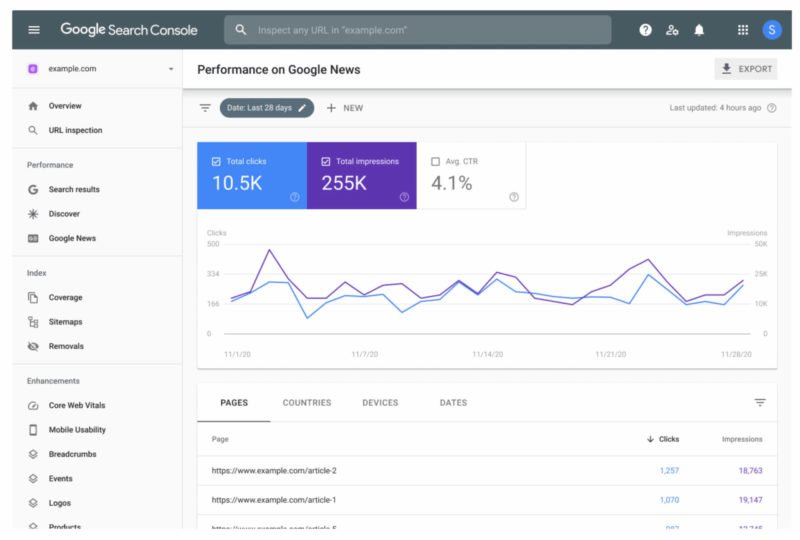
| Google Search Console | Seeing which queries your site already appears for | Free |
| Google Trends | Seasonality and rising topics | Free |
| Ahrefs / Semrush | Keyword difficulty, competitor keywords, content gaps | Paid |
| Google autocomplete and “People also ask” | Real phrasing and question ideas | Free |
| AI assistants (ChatGPT, Gemini, Claude) | Brainstorming variations and questions | Free or paid |
A practical tip: AI assistants are good for generating ideas but they can’t see real search data. Always validate AI-suggested keywords in a tool that shows volume and difficulty before you build content around them.
Quick win: In Search Console, open Performance → Search results and sort by impressions. Queries where you rank on page two (positions 11–20) are often the fastest to improve with a content update.
Step 4: Understand Search Intent Before Anything Else
Search intent is the reason behind a query. Getting this wrong is the most common reason well-optimised pages don’t rank. There are four main types:
| Intent | What the person wants | Example query | Best page type |
|---|---|---|---|
| Informational | To learn | how to do keyword research | Blog post, guide |
| Commercial | To compare options | best SEO agencies in Sydney | Comparison, review |
| Transactional | To buy or enquire | SEO services pricing | Service page |
| Navigational | To reach a specific site | DigiTotal contact | Brand or contact page |
How to check intent: Search your target keyword and look at page one. If every result is a how-to guide, a product page won’t rank, however well you optimise it.
Step 5: Know Your Keyword Types
Keywords differ by length and specificity:
- Short-tail (head) keywords: broad, one or two words, such as “accountant.” High volume, high competition, vague intent.
- Body keywords: more specific, such as “tax accountant.”
- Long-tail keywords: specific phrases, such as “tax accountant for sole traders in Sydney.” Lower volume, but clearer intent and easier to rank for.
For most small and mid-sized businesses, long-tail keywords deliver the best return early on. A page that attracts 30 highly relevant visitors a month often outperforms one that attracts 300 vague ones.
Book a 15-minute introductory call
Step 6: Judge Volume and Difficulty Together
Two numbers drive most decisions:
- Search volume: the average monthly searches for a term. Treat it as an estimate. Google Keyword Planner often shows ranges, and third-party tools use their own models.
- Keyword difficulty (KD): a score estimating how hard it is to rank. Each tool calculates it differently, so compare keywords within one tool rather than across tools.
A sensible rule: Don’t chase volume alone. A keyword with 200 monthly searches and clear buying intent is usually worth more than one with 5,000 searches and none. Also look at who ranks. If page one is full of major brands and government sites, a newer site will struggle. If you see small businesses and forums, there’s room.
Step 7: Study the Search Results and Your Competitors
Before you commit to a keyword, review the top five results and ask:
- What format dominates (guides, lists, tools, videos)?
- What do they cover that you could cover better or more clearly?
- What is missing: recent data, local context, real examples, a better explanation?
- Does Google show a featured snippet, “People also ask” box, or AI Overview? These signal what kind of answer is expected.
Then use Ahrefs or Semrush to see which keywords your competitors rank for that you don’t. This is called a content gap analysis, and it often reveals easy opportunities.
Step 8: Prioritise and Map Keywords to Pages
Create a simple spreadsheet with these columns: keyword, intent, volume, difficulty, target page, priority.
Rules to keep it clean:
- One primary keyword per page, plus a few closely related terms.
- Don’t create competing pages for the same intent (this is called keyword cannibalisation).
- Match page type to intent: service pages for transactional terms, blog posts for informational ones.
- Start with a mix: a few high-intent keywords that can bring enquiries, plus supporting content that builds topical authority.
Step 9: Put Keywords to Work On the Page
On-page basics that still matter:
- Title tag: include the primary keyword near the start, and keep it around 60 characters or fewer so it isn’t cut off.
- H1 and subheadings: use descriptive headings that include variations naturally.
- URL: short and readable, such as /kitchen-renovations-sydney/.
- First 100 words: state clearly what the page covers.
- Internal links: link related pages with descriptive anchor text.
- Images: descriptive file names and alt text.
Write for the reader first. There’s no ideal keyword density. Google’s guidance is to create people-first content rather than content built to manipulate rankings (Google: Creating helpful, reliable, people-first content). If a sentence sounds awkward read aloud, rewrite it.
Book a 15-minute introductory call
Step 10: Measure, Learn and Update
Keyword research is never finished. Every month or quarter:
- Check rankings, clicks and impressions in Search Console.
- Refresh pages that have slipped or are stuck on page two.
- Add new questions from “People also ask” and customer enquiries.
- Retire or merge pages that don’t perform.
Common Keyword Research Mistakes
- Chasing volume and ignoring intent
- Targeting terms that are too competitive for your site’s current authority
- Ignoring local modifiers if you serve a specific area
- Trusting one tool without cross-checking
- Stuffing keywords instead of answering the question
- Never revisiting the list as the market changes
How Experience and Expertise Strengthen Your Rankings
Google looks for content that shows experience, expertise, authoritativeness and trustworthiness (E-E-A-T). For keyword-led content, you can show this by:
- Adding first-hand examples from your own work, for instance “When we audited [type of client], we found…” (insert real, verifiable details)
- Naming a real author with credentials and linking to their profile
- Citing reliable sources and keeping facts current
- Showing real business details: address, phone, reviews, and an About page
- Updating the “last updated” date only when you’ve made genuine changes
Frequently Asked Questions
What is keyword research in SEO?
It’s the process of finding and evaluating the words and phrases people type into search engines so you can create content that meets their needs and ranks well.
How long does keyword research take?
A focused project for one website section can take a few hours to a few days. A full site strategy with competitor analysis may take one to two weeks. Reviewing and updating should be ongoing.
What is the best free keyword research tool?
Google Keyword Planner, Google Search Console and Google Trends cover most basics at no cost. Search Console is especially valuable because it shows real queries for your own site.
How many keywords should I target per page?
Aim for one primary keyword and a handful of closely related terms. Pages that cover a topic thoroughly tend to rank for many variations without needing extra effort.
What is a good keyword difficulty score?
It depends on the tool and your site’s authority. As a rough guide, newer sites do better with low-difficulty keywords, then move to harder ones as their authority grows. Compare scores within the same tool only.
Are long-tail keywords better than short-tail keywords?
They’re usually easier to rank for and more likely to convert because the intent is clearer. A healthy strategy uses both.
Does keyword research still matter with AI Overviews and AI search?
Yes. People still need to find your content, and AI systems favour clear, accurate answers to real questions. Researching how people phrase queries helps you write content that gets surfaced.
Can I use ChatGPT or Gemini for keyword research?
They’re useful for brainstorming and finding question-style phrases, but they don’t provide reliable search volume data. Validate ideas with a dedicated keyword tool.
How often should I update my keyword research?
Review quarterly at a minimum, and whenever you launch a new service, enter a new location, or notice ranking changes.
Conclusion: Key Takeaways
Good keyword research is less about finding the biggest numbers and more about understanding people. Start with your customers’ language, check the intent behind each query, balance volume against difficulty, and map each keyword to the right page. Then measure, refine and repeat.
Ready for a clearer SEO roadmap? Book a free 15-minute introductory call with DigiTotal and we’ll show you where your best keyword opportunities are.