
Ask a friend to recommend a plumber, and you get one name. Ask an AI search tool the same question and you also get one answer, often with three or four sources underneath. If your business isn’t among those sources, the customer may never see you, even if you rank on page one of the traditional results.
That’s the shift this guide is about. People now ask longer, conversational questions and get summarised answers from Google’s AI features, ChatGPT, Perplexity, Microsoft Copilot and others. This guide explains how those systems choose what to cite, what you can do to improve your chances, and how to track whether it’s working.
Book a 15-minute introductory call
How AI Search Works?
What is AI search?
AI search uses machine learning and natural language processing to interpret what someone means, not only the words they typed, and then returns a written answer, often with links to sources. It handles typos, synonyms and ambiguity. For example, “how to make salsa” returns recipes, not dance classes, because the system works out the likely intent. Google began moving this way years ago with systems such as RankBrain, and conversational tools have accelerated it.
The main types you’ll meet
| Type | How it works | Examples |
|---|---|---|
| Search engines with AI features | Traditional index and ranking, plus AI-written summaries above or alongside results | Google (AI Overviews, AI Mode), Bing with Copilot |
| AI answer engines | Take a question, retrieve sources from the web, and write a cited answer | Perplexity, ChatGPT search |
| Assistants | Answer by voice or chat, often using a search index behind the scenes | Siri, Alexa, Google Assistant, Meta AI |
| Visual search | Starts from a photo or camera view | Google Lens, Pinterest Lens |
What happens behind the scenes
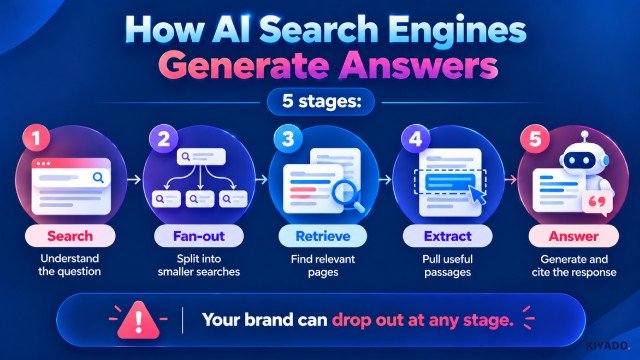
Most AI answer tools follow a similar pattern, often called retrieval-augmented generation (overview on Wikipedia):
- Understand the question and break it into sub-questions.
- Retrieve relevant pages from a search index.
- Select passages that answer each part clearly.
- Write a summary, usually citing the sources it used.
The practical takeaway: you win by being retrievable (accessible and indexed), selectable (clear, specific passages) and credible (a source worth citing).
SEO, AEO, GEO: Which Term Matters?
You’ll see AI search optimisation called AEO (answer engine optimisation), GEO (generative engine optimisation) and sometimes “AI SEO.” The names vary, but the work overlaps heavily with good SEO. Google’s own guidance says there are no extra requirements to appear in its AI features beyond being indexed and eligible to show a snippet (Google: AI features and your website).
What changes is emphasis: more focus on direct answers, brand reputation, and presence across the web, not only on your own site.
Which AI Search Tools Should Your Business Care About?
Start with where your customers already search.
| Tool | What to know | Practical focus |
|---|---|---|
| Google (AI Overviews, AI Mode) | Draws on the Google index; largest audience | Strong SEO fundamentals, snippet eligibility |
| Bing and Microsoft Copilot | Copilot uses Bing’s index | Verify your site in Bing Webmaster Tools |
| ChatGPT search | Retrieves web pages and cites sources | Allow its search crawler; clear, citable content |
| Perplexity | Cites sources prominently in every answer | Authoritative, specific, well-sourced pages |
| Meta AI and others | Growing, more consumer and social | Consistent brand presence and profiles |
Check your own analytics and ask customers how they search before spending effort on all of them. For most Australian small businesses, Google and Bing cover the base, and the rest is a bonus.
Book a 15-minute introductory call
Step 1: Make Sure AI Systems Can Reach Your Content
If a page can’t be crawled or indexed, it can’t be cited.
- Check indexing. In Google Search Console, confirm key pages are indexed and not blocked.
- Don’t block by accident. Review your robots.txt and any “noindex” or “nosnippet” settings. Google notes that content must be eligible to appear as a snippet to be used in AI features, and you can control snippets with meta tags.
- Know the crawlers. Different AI products use different bots, and some separate search from training. For example, OpenAI documents separate crawlers for search inclusion and for model training (OpenAI crawler documentation), and Perplexity documents its own (Perplexity bots). Blocking a training crawler doesn’t necessarily remove you from search results, and blocking a search crawler may. Decide deliberately, and check each provider’s current documentation.
- Note on Google-Extended. That control relates to some of Google’s AI model training and doesn’t change how your site appears in Google Search.
- Use server-side HTML for key content. Text that only appears after heavy JavaScript may not be seen by every crawler.
- Keep pages fast, secure and mobile-friendly. See our guide to optimising website images for SEO for a common speed fix.
- Use a clean sitemap and internal links so important pages are easy to find.
Step 2: Answer the Question First, Then Add Depth
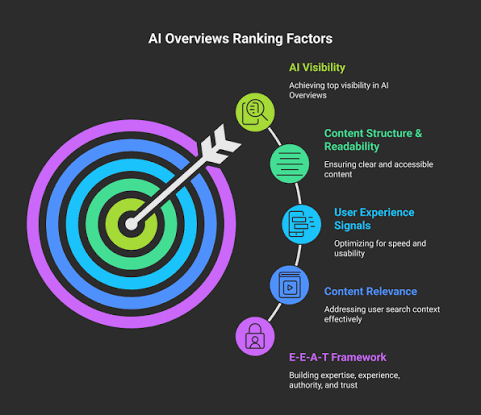
AI systems look for passages that answer a question clearly. Help them by writing in an “answer-first” style.
- Open sections with the answer in one or two plain sentences, then explain.
- Use question-style headings that mirror how people ask: “How much does a bathroom renovation cost in Perth?”
- Define terms briefly the first time you use them.
- Use lists and tables for steps, comparisons and specifications.
- Be specific. Prices, timeframes, conditions and local detail make a passage more useful than vague claims.
- Cover the follow-up questions in the same page: costs, timing, risks, alternatives.
Example:
Weak: “Costs can vary depending on many factors.”
Stronger: “A standard bathroom renovation commonly costs [range, with source or your own data]. The biggest cost drivers are plumbing changes, waterproofing, tiles and whether walls are being moved.”
Start with questions real customers ask. Our keyword research guide shows how to find them, and long-tail, conversational queries are now more valuable than before.
Book a 15-minute introductory call
Step 3: Show Real Experience and Expertise
AI answers need sources they can trust, and generic content is the easiest to replace. What others can’t copy is your first-hand knowledge.
- Use named authors with credentials and link to their profiles.
- Share original examples, photos, data and lessons from your own work.
- Cite reliable sources for facts and keep them current.
- Have a qualified person review health, legal and financial content.
This lines up with Google’s framework for quality. Our full guide to E-E-A-T covers it in detail, and Google’s helpful, people-first content guidance is the primary source.
Step 4: Build Authority Beyond Your Own Website
AI tools often draw on what others say about you, not just what you say about yourself. Brand reputation shows up in several places.
- Reviews: keep your Google Business Profile complete and collect honest reviews.
- Mentions and links: earn coverage from industry bodies, local media, suppliers and partners.
- Consistent details: keep your business name, address, phone and descriptions identical across directories and profiles.
- Active, relevant profiles: LinkedIn, YouTube, industry directories and, where relevant, forums where your customers ask questions. Answer helpfully and disclose who you are. Don’t spam.
- Wikipedia-style facts: if your organisation is notable, make sure public facts about you are accurate, but don’t edit pages about yourself in ways that breach their rules.
If you’ve recently changed your name or domain, see our guide to rebranding without hurting your SEO to keep mentions and listings aligned.
Step 5: Use Structure and Structured Data Sensibly
- Headings: one H1, logical H2 and H3 sections, descriptive wording.
- Short paragraphs, lists and tables make passages easier to extract.
- Structured data: mark up what’s visible on the page, such as Organization, LocalBusiness, Article, Product and FAQ, following Google’s structured data documentation and the Schema.org vocabulary. Structured data helps search engines understand your content, but it doesn’t guarantee citations.
- Be skeptical of shortcuts. Google has said there’s no special file or markup you need for its AI features. Treat claims about secret files that unlock AI visibility with caution.
- Images and video: descriptive alt text, file names and captions. Visual search and multimodal AI use them.
Step 6: Keep Important Pages Accurate and Fresh
AI answers that quote outdated advice damage trust, and sources know it.
- Review key service, pricing and FAQ pages at least quarterly.
- Update facts, screenshots, tools and links.
- Show a “last updated” date only when you’ve made real changes.
- Merge thin or overlapping pages so there’s one strong page per topic. Our guide to blogging for SEO explains how topic clusters and content refreshes work.
Book a 15-minute introductory call
Step 7: Strengthen Your Brand Story
When AI tools describe your business, they rely on the clearest, most consistent signals available. A clear positioning statement, consistent naming and a distinct point of view make you easier to describe correctly. If your messaging is muddled, summaries about you will be too. See our brand strategy framework for how to define this.
Step 8: Track Your AI Search Visibility
Tracking is imperfect, because AI answers vary by person, location and day. Combine several methods.
| Method | What it shows | Limits |
|---|---|---|
| Manual prompt testing | Whether you’re mentioned or cited for your key questions | Results vary; record date, tool and prompt |
| Google Search Console | Clicks and impressions from Google Search overall | AI feature traffic is counted within normal Web search data, not shown as a separate report |
| Google Analytics referrers | Visits from sources like chatgpt.com or perplexity.ai | Not every AI visit passes referrer data |
| Bing Webmaster Tools | Indexing and performance in Bing | Check which AI-related reports are available |
| SEO platforms (Ahrefs, Semrush and others) | AI Overview presence and brand mention tracking | Estimates; methods differ by tool |
| Enquiry tracking | Calls, forms and “how did you hear about us” answers | The metric that matters most |
A simple routine: pick 15 to 20 questions your customers ask, run them monthly in the main AI tools, and note whether you’re cited, who is cited instead, and what those pages do well. Treat gaps as your content plan.
Using AI Tools to Do SEO Work (Different From Ranking in AI)
The original version of this guide mixed the two ideas, so here they are separately. AI tools can help you work faster:
- Brainstorming topics and question lists
- Drafting briefs and outlines
- Summarising competitor pages
- Spotting content gaps and clustering keywords
But treat output as a draft. Check every fact, add your own experience, and edit thoroughly. Google’s spam policies target content mass-produced mainly to manipulate rankings, however it’s made. Use AI to assist your expertise, not replace it.
Common Mistakes in AI Search Optimisation
- Blocking all crawlers without understanding what each one does
- Chasing “AI tricks” instead of fixing indexing and content quality
- Publishing unreviewed AI-written pages
- Writing generic content that says what everyone else says
- Hiding key information in images, PDFs or scripts
- Inconsistent business details across the web
- Ignoring reviews and off-site reputation
- Measuring only rankings and not enquiries
- Letting facts and prices go out of date
- Promising or expecting guaranteed inclusion
Book a 15-minute introductory call
Frequently Asked Questions
What is AI search?
AI search uses natural language processing and machine learning to understand what a person means and return a summarised, conversational answer, usually with links to sources, rather than only a list of pages.
How do I rank in AI search results?
Make sure your pages are crawlable and indexed, answer real questions clearly, show first-hand experience and expertise, keep your business details consistent, build reviews and mentions, and keep content current. There is no guarantee of inclusion.
What is the difference between SEO and AI search optimisation?
They overlap heavily. SEO focuses on ranking pages in search results. AI search optimisation emphasises being a clear, trustworthy source that AI tools can retrieve and cite, including through off-site reputation and answer-first content.
What are AEO and GEO?
AEO means answer engine optimisation and GEO means generative engine optimisation. Both describe optimising to be cited in AI-generated answers. In practice, they build on the same fundamentals as good SEO.
How do I get my website into Google AI Overviews?
Google says there are no extra technical requirements beyond being indexed and eligible to show a snippet. Focus on helpful, accurate, well-structured content that demonstrates real expertise, and make sure the page isn’t blocked.
Do I need special schema markup to appear in AI answers?
No special markup guarantees inclusion. Structured data helps search engines understand your page, so use accurate markup that matches visible content, but don’t expect it to force AI citations.
Should I block AI crawlers?
It depends on your goals. Some crawlers collect data for training, and others support search features that can send you traffic. Read each provider’s documentation, decide which you want to allow and review the choice periodically.
Does ChatGPT use Google rankings?
Different AI tools use different sources and methods, and they change them over time. Rather than relying on one ranking, aim for strong visibility across multiple search indexes, including Google and Bing.
How can I track whether AI tools mention my business?
Test your key questions manually each month, review referral traffic from AI tools in your analytics, use SEO platforms that track AI mentions and, most importantly, track enquiries and ask new customers how they found you.
Is traditional SEO still worth it?
Yes. AI features draw on the same foundations as regular search, and many people still use standard results. Good SEO remains the base for AI visibility.
How long does it take to appear in AI answers?
It varies by topic, competition and how quickly your pages are crawled and trusted. Some improvements show in weeks, but building authority and reputation usually takes months.
Conclusion: Key Takeaways
Ranking in AI search isn’t about learning a secret technique. It’s about being the clearest, most credible answer to a real question and making sure systems can find you. Get your technical basics right, write answer-first content from real experience, build a reputation beyond your own site, and keep everything accurate. Then track mentions and enquiries and adjust.
Want to see where your business appears in AI search today? Book a free 15-minute introductory call with DigiTotal and we’ll show you your quickest opportunities.