

Introduction: Why AI Overview Rankings Are the New SEO Battleground
Search is no longer just about the “10 blue links.” In 2026, Google’s AI Overviews (powered by generative search systems) decide which brands get visibility before users even click a website.
That means your content is no longer competing only for rankings—it’s competing to be quoted, summarized, and referenced by AI systems.
If your content isn’t structured for AI comprehension, entity recognition, and topical authority, it simply won’t appear in AI Overviews—no matter how well-written it is.
This guide breaks down a proven, non-speculative SEO framework based on real-world performance patterns, modern Google updates, and content systems that consistently rank in AI-driven search results.
Book a 15-minute AI SEO strategy call with our team
What Are Google AI Overviews (2026 Update)?
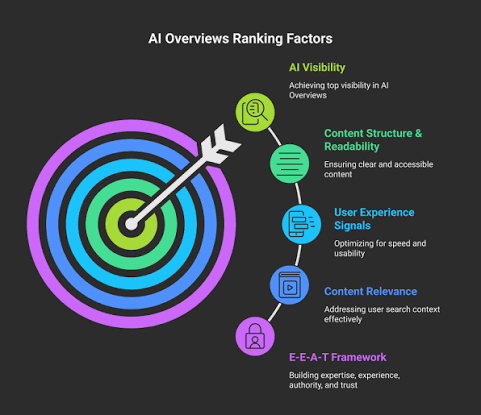
Google AI Overviews are AI-generated summaries that appear at the top of search results. They pull information from multiple trusted sources and synthesize it into a single answer.
Unlike traditional featured snippets, AI Overviews:
- Combine multiple authoritative pages
- Prioritize entity-rich, structured content
- Reward topical depth over keyword density
- Prefer “answer-ready” formatting
- Rely heavily on trust and source authority (E-E-A-T signals)
Why AI Overviews Matter for SEO
If your website is cited in AI Overviews:
- You gain top-of-page visibility without ranking #1
- You receive high-intent traffic
- You build instant topical authority
- You increase brand trust and conversions
In short: AI Overview visibility = SEO dominance in 2026.
Why Most AI SEO Content Fails to Rank (Even If It’s Good)
Most content fails in AI-driven search not because it’s “bad,” but because it’s not structured for machine interpretation.
- Thin Topical Coverage
Pages that only scratch the surface of AI topics lack semantic depth. Google prefers content that fully explores a subject cluster, not isolated explanations.
- Weak Entity Optimization
Modern search engines think in entities (people, concepts, tools, industries), not just keywords. Content without entity relationships is harder for AI to trust and reuse.
- Generic, Repetitive Writing
AI Overviews filter out content that sounds like every other article online. If your page doesn’t add new insights, it won’t be selected.
- No Clear Information Architecture
Walls of text confuse both users and AI models. Lack of structure reduces extractability.
- Missing Authority Signals
Without backlinks, brand mentions, or expert validation, your content lacks the trust layer needed for AI citations.
Get a free AI content audit for your website
The 2026 Framework to Rank in AI Overviews
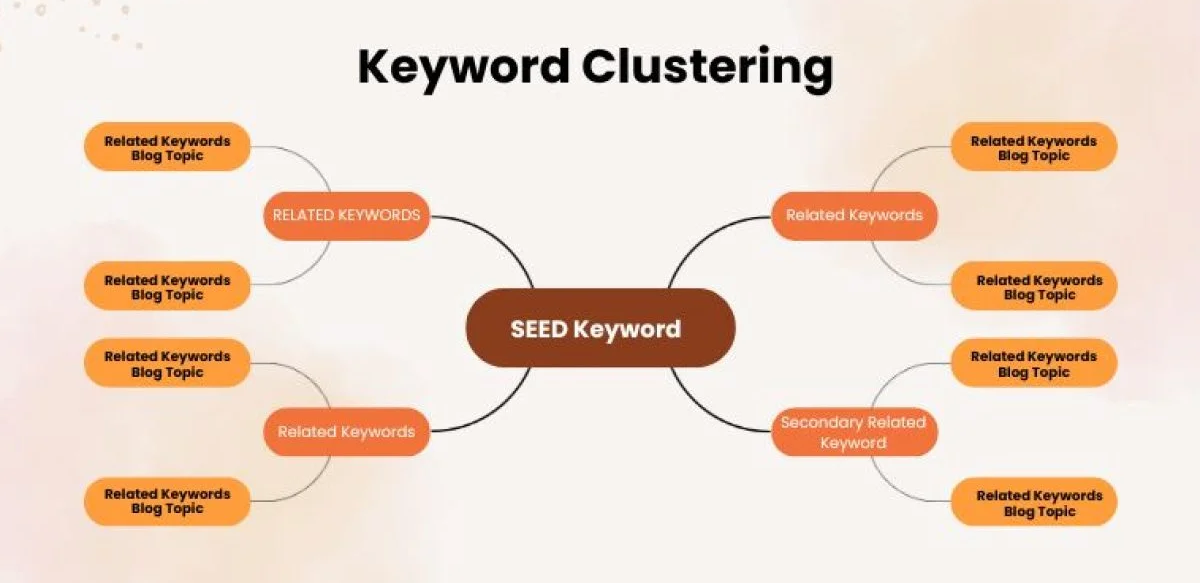
Below is a modern SEO system designed specifically for AI-driven search visibility.
1. Build Intent-Based Keyword Clusters (Not Just Keywords)
Old SEO focused on single keywords. In 2026, ranking requires topic clusters + search intent mapping.
Instead of:
- “AI marketing”
Build clusters like:
- AI marketing strategies
- AI marketing tools comparison
- AI content generation workflows
- AI marketing case studies
- AI marketing ROI measurement
Tools to use:
- Google Keyword Planner (https://ads.google.com/home/tools/keyword-planner/)
- Ahrefs (https://ahrefs.com/)
- SEMrush (https://www.semrush.com/)
💡 Pro Tip: Group keywords by user intent:
- Informational (what is AI marketing)
- Commercial (best AI marketing tools)
- Transactional (hire AI marketing agency)
2. Write for Entities, Not Just Keywords
Google AI Overviews prioritize entity-rich content, meaning your article should clearly define and connect:
- Concepts (machine learning, generative AI)
- Tools (ChatGPT, Gemini, Claude)
- Industries (healthcare, finance, eCommerce)
- Outcomes (automation, personalization, ROI)
Example:
Instead of saying:
“AI improves marketing”
Say:
“Generative AI improves marketing automation by enabling tools like ChatGPT to create personalized campaigns across Google Ads and Meta platforms.”
3. Structure Content for AI Extraction
AI systems prefer content that is easy to “lift” and summarize.
Use this structure:
- Clear H2/H3 hierarchy
- Short paragraphs (2–4 lines)
- Bullet points for facts
- Direct answers under headings
- Definition-first formatting
Example (Snippet Optimization):
What is Artificial Intelligence?
Artificial Intelligence (AI) is a branch of computer science that enables machines to simulate human intelligence, including learning, reasoning, and decision-making.
4. Build E-E-A-T Signals Into Every Page
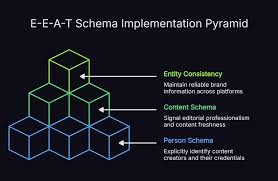
Google evaluates content using Experience, Expertise, Authoritativeness, and Trustworthiness (E-E-A-T).
Improve E-E-A-T by:
- Adding author bios with credentials
- Citing government or research sources
- Including real case studies
- Showing data or experiments
- Using expert quotes
Trusted references:
- Google Search Central: https://developers.google.com/search/docs
- Wikipedia AI Overview: https://en.wikipedia.org/wiki/Artificial_intelligence
- OECD AI Policy: https://www.oecd.org/ai/
5. Optimize for AI Overviews & Featured Snippets
To appear in AI summaries:
- Answer questions in 40–60 words
- Use “What / How / Why” headings
- Include definition blocks
- Avoid fluff introductions
💡 Winning format:
- Question heading
- Direct answer
- Supporting explanation
6. Strengthen Authority With Digital PR & Backlinks
AI Overviews rely heavily on trusted domains.
Build authority through:
- Guest posts on industry blogs
- Expert interviews
- Data-driven reports
- Social proof mentions
Platforms:
- LinkedIn (https://www.linkedin.com/)
- Google Business Profile (https://www.google.com/business/)
- Facebook Pages (https://www.facebook.com/)
7. Improve UX Signals (Hidden Ranking Factor)
Google evaluates how users interact with your page.
Track:
- Time on page
- Scroll depth
- Bounce rate
- Engagement rate
Improve UX by:
- Adding visuals and diagrams
- Using tables and summaries
- Including FAQ sections
- Adding internal links
Get a free AI content audit for your website
Conclusion: Winning AI Overviews Requires Strategy, Not Guesswork
Ranking in Google AI Overviews is no longer about publishing more content—it’s about publishing structured, entity-rich, authority-backed content that AI systems trust.
To succeed in 2026 SEO:
- Focus on topical authority, not isolated keywords
- Optimize for entities and intent clusters
- Build strong E-E-A-T signals
- Structure content for AI extraction
- Strengthen backlinks and brand authority
Brands that adapt early will dominate search visibility. Those that don’t will disappear from AI-generated results entirely.
Frequently Asked Questions (FAQs)
- What is a Google AI Overview?
It is an AI-generated summary that appears at the top of search results, combining insights from multiple trusted websites.
- How do I rank in AI Overviews?
Focus on entity-rich content, structured formatting, strong E-E-A-T signals, and topical authority.
- Are keywords still important in 2026 SEO?
Yes, but they are now part of topic clusters, not standalone ranking factors.
- How long does it take to appear in AI Overviews?
It depends on authority and content quality. Established domains may appear in weeks; new sites may take months.
- Do backlinks still matter for AI SEO?
Yes. High-quality backlinks remain a major trust signal for AI-driven rankings.