Introduction: Search Is No Longer Keyword-Driven—It’s AI-Interpreted
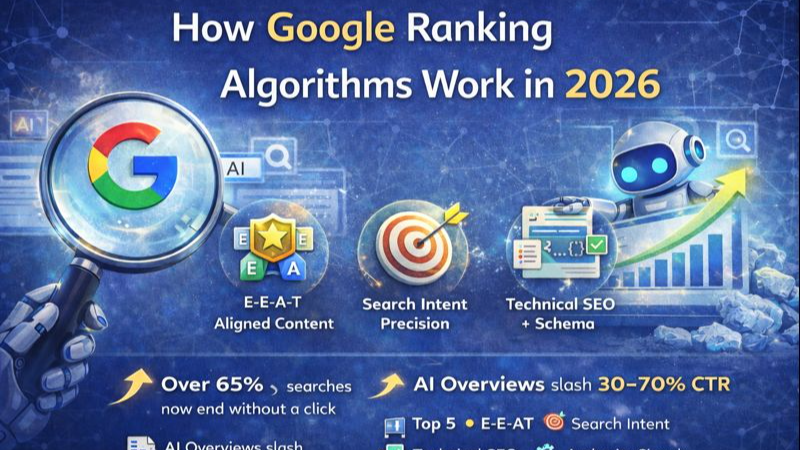
Google search in 2026 is fundamentally different from traditional SEO. Instead of simply matching keywords on a page, Google’s AI systems now interpret meaning, intent, context, and user satisfaction signals to decide which content deserves visibility.
This means two pages targeting the same keyword can rank completely differently based on how well they explain a topic, how users interact with them, and how clearly they establish authority through entities, structure, and topical depth.
If you want to rank today, you’re not optimizing for a search engine—you’re optimizing for an AI decision system that evaluates usefulness, clarity, and trustworthiness at scale.
This guide breaks down exactly how Google’s AI ranking works in 2026 and how to structure content that consistently wins visibility across organic search and AI-generated summaries.
Book a 15-minute introductory SEO consultation
Table of Contents
- How Google’s AI Ranking Systems Work in 2026
- Core Ranking Signals That Actually Matter
- The Rise of AI Search Queries
- Entity-Based SEO vs Keyword SEO
- How Google Compares Content Across the Web
- A Winning SEO Framework for 2026
- Technical SEO Foundations You Cannot Ignore
- Tools for Optimization and Validation
- Industry Shifts in AI Search
- Conclusion
- FAQs
How Google’s AI Ranking Systems Work in 2026
Google now uses multiple AI-driven systems working together to evaluate content quality and relevance.
Instead of scanning pages for keywords, these systems analyze:
- What the user really means (intent understanding)
- How well the content answers the topic (semantic coverage)
- Whether users are satisfied (behavior signals)
- How authoritative and connected the content is (entity relationships)
The 3 Core Layers of Google’s AI Ranking
- Query Understanding Layer
Google interprets:
- User intent
- Context of the query
- Past search patterns
- Content Understanding Layer
AI evaluates:
- Topic depth
- Entity coverage
- Semantic relationships
- Structural clarity
- Result Evaluation Layer
Google compares pages based on:
- Engagement performance
- Authority signals
- Content completeness
- User satisfaction outcomes
👉 Ranking is no longer absolute—it is competitive and comparative.
Book a 15-minute introductory SEO consultation
Core Ranking Signals That Matter Most in 2026
1. Search Intent Alignment (Most Critical Factor)
Google first classifies intent before ranking anything.
Main intent types:
- Informational (learn something)
- Navigational (find a brand/page)
- Commercial investigation (compare options)
- Transactional (buy or convert)
- Hybrid intent (multi-goal searches)
What wins rankings:
Content that directly satisfies intent without delay or confusion.
✔ Best practice:
- Answer the question early
- Match page format with intent type
- Avoid mixing unrelated intents on one page
2. Semantic Depth & Topic Coverage
Google now evaluates how completely a topic is covered—not keyword repetition.
AI checks:
- Supporting subtopics
- Related concepts
- Entity relationships
- Context completeness
Winning content includes:
- Comparisons
- Use cases
- Edge cases
- Decision frameworks
👉 Thin content rarely survives in competitive SERPs anymore.
3. User Behavior Signals (Quality Validation Layer)
Google analyzes anonymized engagement signals such as:
- Click-through rate (CTR)
- Dwell time
- Scroll depth
- Return-to-search behavior
What hurts rankings:
- Users bouncing back quickly
- Lack of engagement or scrolling
What improves rankings:
- Clear structure
- Fast answers
- Readable formatting
- Reduced friction
4. Entity Understanding (Major 2026 Ranking Shift)
Google identifies real-world “entities,” such as:
- Brands
- People
- Places
- Products
- Concepts
Why this matters:
AI builds a knowledge graph of relationships between entities.
Example:
Instead of understanding:
“best CRM tools”
Google understands:
“HubSpot vs Salesforce vs Zoho as CRM entities with distinct features and use cases”
✔ Winning strategy:
- Use precise terminology
- Avoid vague references
- Build internal topic connections
5. Technical SEO Integrity
Even in AI-driven search, technical foundations still matter.
Google prioritizes:
- Fast-loading pages
- Mobile-first usability
- Clean site architecture
- Structured data (Schema)
- Crawlable content
👉 Technical SEO is the “entry ticket” before AI even evaluates content quality.
Book a 15-minute introductory SEO consultation
The Rise of AI Search Queries in 2026
Search behavior is shifting from short keywords to conversational, multi-step questions.
Common AI-style queries:
- “What’s the best strategy for small businesses in 2026?”
- “Which option is better for long-term growth?”
- “Compare X vs Y with pros and cons”
What Google now prefers:
Content that includes:
- Comparisons
- Decision frameworks
- Scenario-based explanations
- Structured summaries
👉 Pages that “think like answers” win AI visibility.
Entity-Based SEO vs Keyword-Based SEO
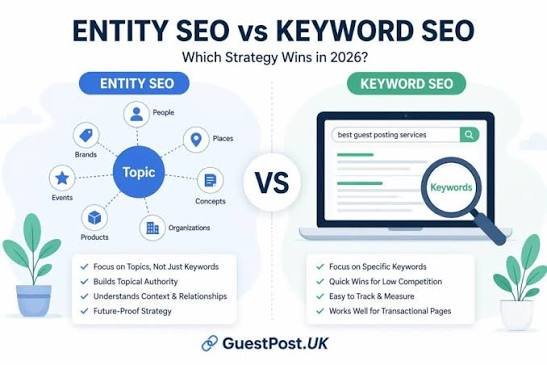
Traditional SEO (Outdated Model)
- Keyword repetition
- Exact-match optimization
- Backlink-heavy ranking
Modern AI SEO (2026 Model)
- Entity relationships
- Topic authority
- Semantic depth
- Content ecosystems
Key shift:
Instead of ranking single pages, Google ranks topic clusters.
✔ Example:
A website covering “Digital Marketing” should include:
- SEO
- Content marketing
- Paid ads
- Analytics
- Conversion optimization
👉 Isolated pages underperform compared to structured content ecosystems.
Book a 15-minute introductory SEO consultation
How Google Compares Content in 2026
Google does not evaluate pages in isolation—it compares them against competitors.
Key comparison factors:
- Depth of explanation
- Structural clarity
- Trust signals
- Engagement metrics
- Topic completeness
- Freshness of content
Winning pages usually have:
- Better formatting
- Clearer structure
- More complete answers
- Stronger entity coverage
👉 SEO is now a relative performance game, not absolute optimization. Click here to know more about Search engine optimization.
Winning SEO Strategy Framework for 2026
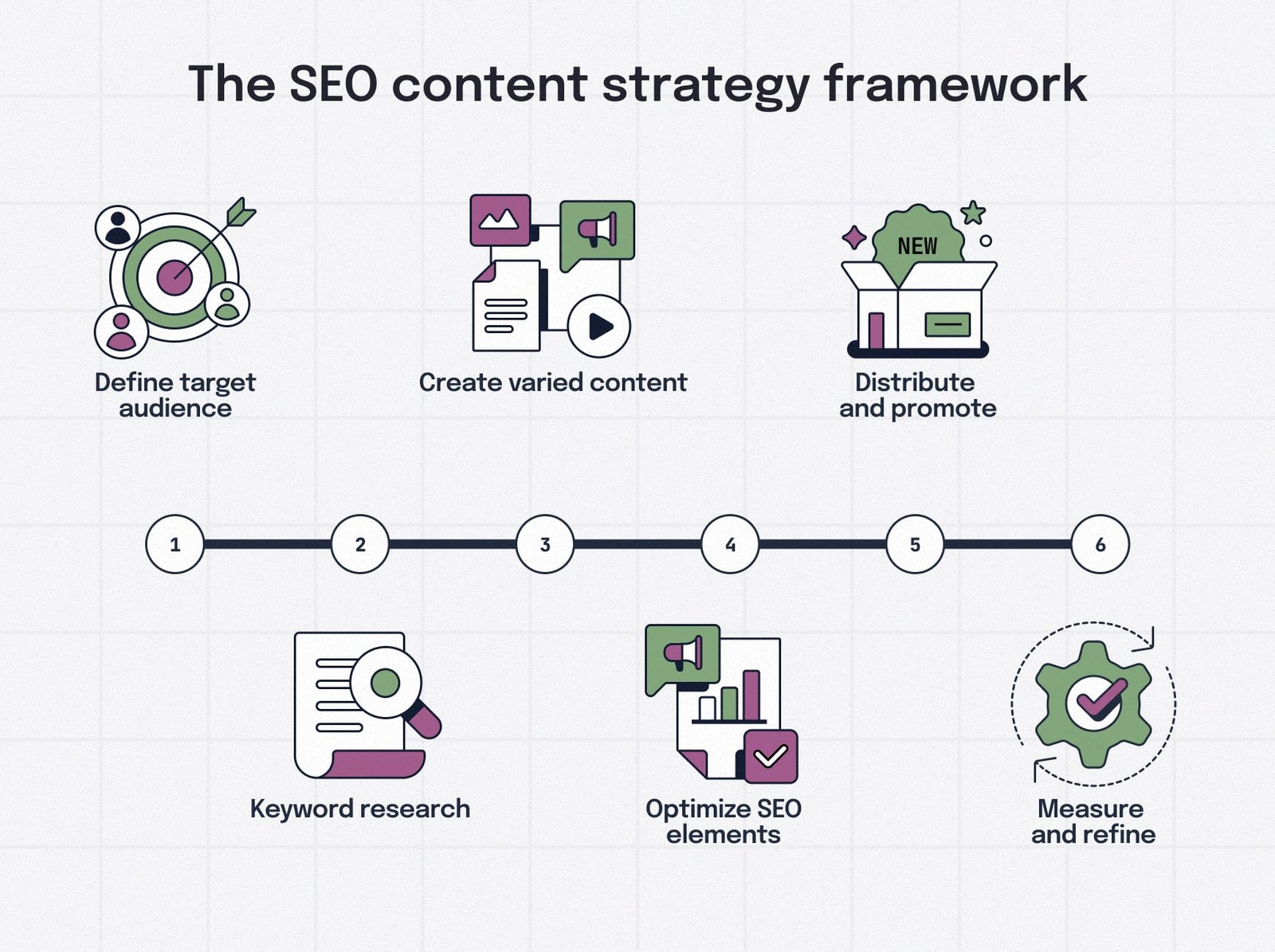
Step 1: Identify True Search Intent
Before writing, determine:
- What the user actually wants
- What problem they are solving
- What format they expect
✔ Tip:
Always analyze top-ranking pages before creating content.
Step 2: Build a Topic Ecosystem
Cover the topic fully:
- Main idea
- Supporting subtopics
- Comparisons
- FAQs
- Edge cases
👉 Think like a knowledge hub, not a single article.
Step 3: Structure Content for AI Extraction
Google’s AI prefers structured content.
Use:
- Clear H2 and H3 headings
- Short paragraphs
- Bullet points
- Tables for comparisons
Avoid:
- Long blocks of text
- Unclear headings
- Mixed topics in one section
Step 4: Strengthen Entity Signals
Make your content entity-rich:
- Use precise names
- Link related concepts internally
- Maintain consistent terminology
Step 5: Optimize for User Satisfaction
Improve engagement by:
- Giving quick answers early
- Reducing unnecessary filler
- Adding summaries
- Using clean formatting
Step 6: Optimize for AI Search Queries
Add sections like:
- “X vs Y comparison”
- “Which should you choose?”
- “Best option for [scenario]”
Step 7: Maintain Technical Excellence
Ensure:
- Fast page speed
- Mobile optimization
- Proper schema markup
- Clean internal linking
Step 8: Continuously Improve Content
Top-ranking content is constantly updated.
Track:
- Rankings
- CTR
- Engagement metrics
- Competitor improvements
Tools to Improve AI SEO Performance
- Google Search Console → performance tracking
- PageSpeed Insights → speed optimization
- Rich Results Test → schema validation
- Google Search Central → official SEO guidance
Industry Trends Shaping Search in 2026
- AI-generated search summaries dominate visibility
- Entity-first indexing replaces keyword-heavy ranking
- User satisfaction metrics influence rankings more heavily
- Content clusters outperform standalone blogs
- Conversational search is becoming the default
Book a 15-minute introductory SEO consultation
Conclusion: Winning in Google Search Now Requires Strategic Content Systems
Google’s AI ranking system in 2026 is no longer about keywords—it is about meaning, structure, intent satisfaction, and entity-based understanding.
To rank consistently, you must focus on:
- Clear intent alignment
- Deep topic coverage
- Strong entity relationships
- High user engagement
- Technical SEO excellence
Businesses that adapt to this AI-first search model will dominate visibility across both traditional Google results and AI-powered search experiences.
FAQs
Does Google use AI to rank websites in 2026?
Yes. Google relies heavily on AI systems that analyze intent, meaning, and user satisfaction rather than just keywords.
Are keywords still important for SEO?
Yes, but they are secondary. Keywords signal relevance, while AI evaluates context and topic depth.
What are AI search queries?
These are conversational or multi-step searches like comparisons, recommendations, and decision-based questions.
What is the biggest ranking factor today?
There is no single factor. Top influences include intent alignment, semantic depth, user behavior, entity clarity, and technical SEO.
How do I optimize content for AI search?
Focus on structured content, topic completeness, clear comparisons, and strong internal linking.